Eskom went R135.4 billion over budget on a power station that is still not finished 19 years later


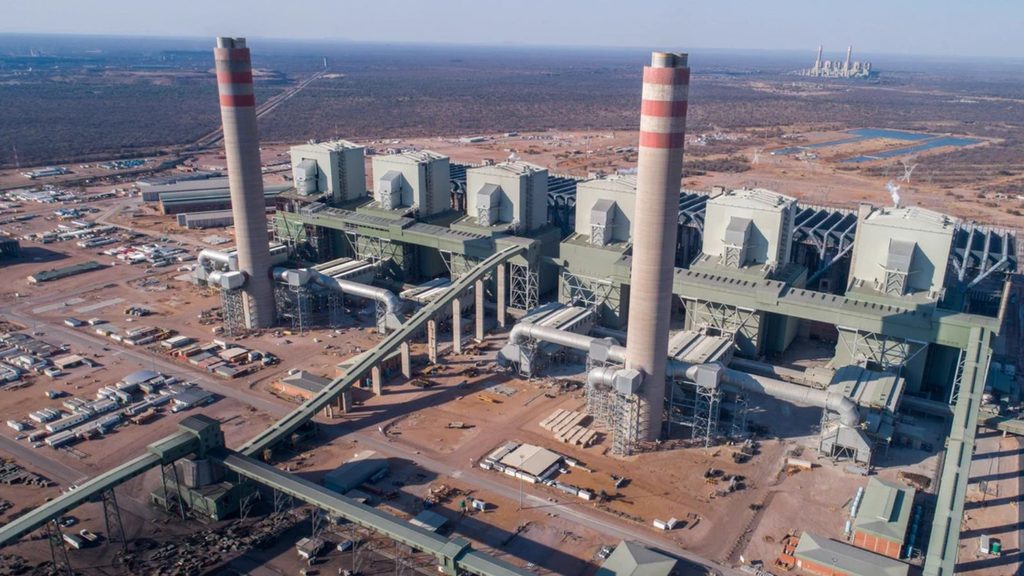
Eskom began building Medupi Power Station in 2007 with an approved budget of R105 billion and targeted its completion by 2015.
19 years later, the power station still requires significant work before it is closed out and fully completed. Eskom’s spending on the project has ballooned to R230 billion.
This is due to severe delays created by design flaws, strike action, and poor workmanship over the past two decades.
The overall cost of R230 billion makes Medupi the most expensive power station ever built, despite being neither the largest nor the most efficient.
Eskom recently said the latest approved budget for Medupi was R145 billion, with the utility having spent R131.1 billion of the budget.
Daily Investor analysed Eskom’s annual reports from 2010 to the present day and found that it is completely correct: The latest approved budget for Medupi is R145 billion.
However, the annual reports also show that Eskom’s approved budget does not include capitalised interest expenditure incurred during the construction of Medupi.
Eskom took on significant debt to build Medupi and Kusile because it could not fund the projects with cash flow from electricity sales.
This debt has to be serviced and ultimately paid back. Eskom disclosed in 2016 that the Medupi project had accumulated R43.7 billion of capitalised interest during construction.
Adding this to the approved budget takes the total cost of Medupi to R198.7 billion.
There is also the matter of Medupi’s flue gas desulphurisation (FGD) plant, which ensures the station complies with South Africa’s emissions standards.
Eskom also has to comply with these standards under the terms of a World Bank loan that financed Medupi’s construction.
The utility separates this plant from the station’s capability to complete and generate. However, Eskom’s latest annual report shows the FGD plant’s retrofit will cost R41.7 billion.
This is critical to the station’s proper functioning, and adding it to Eskom’s approved budget and capitalised interest brings the total cost of Medupi to R240.4 billion.
Eskom’s latest annual report also shows that Medupi is not complete, with the station being in the project close-out and remediation phase.
The utility said work remains to be done on the FGD retrofit, finding a permanent replacement for Unit 4’s generator stator, and completing auxiliary infrastructure.
Medupi lurches from crisis to crisis
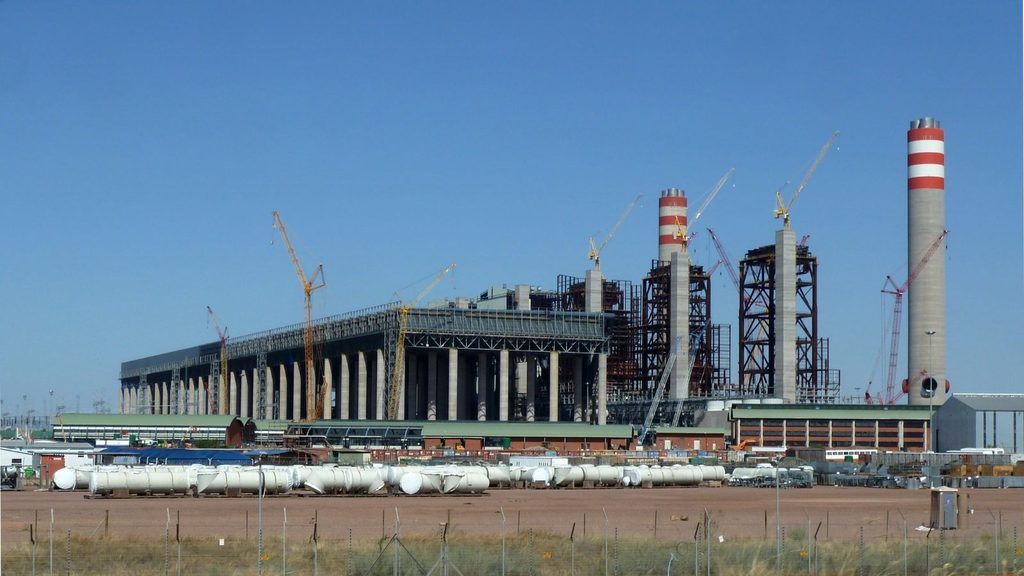
Medupi and Kusile were approved by the government in December 2005 as the country’s answer to a looming electricity generation shortfall.
The government had been warned in 1997 that the country’s demand for electricity would outstrip Eskom’s supply by 2007 and had sat on its hands until 2005.
In 2007, South Africa experienced its first bout of load-shedding, and the government pointed to Medupi and Kusile as the solution.
Medupi Power Station is a huge 4,800 MW dry-cooled coal-fired plant located in Lephalale, Limpopo.
While intended to be South Africa’s saviour, Eskom’s last 16 annual reports tell a story of design failures, poor planning, price inflation, and severe contractor underperformance.
The issues began in 2005 when the government approved the new power plant, but Nersa took two more years to grant its licence. Only then could construction begin.
Eskom said in its annual reports that because the decision to build was delayed, upfront planning was limited and construction timelines were severely compressed.
This also forced tenders for boilers and turbines to be placed in 2007 and 2008, in the middle of a global power boom. As a result, prices came in 30% higher than expected.
Higher prices were coupled with Nersa approving a lower-than-requested tariff for Eskom, creating liquidity pressure at Eskom and forcing it to further slow capital expenditure.
As construction ramped up, Eskom’s limited upfront planning was revealed in significant boiler and welder defects. This required extensive reworking from Hitachi.
Then, the control and instrumentation contractor’s work failed tests for the boiler protection system.
Eskom ultimately secured a replacement contract with a different contractor for Units 5 and 6, creating major integration challenges.
All the while, the utility had to contend with unprotected strikes, demonstrations, and intimidation of workers. This repeatedly halted construction and damaged property.
The delays were so severe that Eskom had to pay Exxaro R8 billion as it could not receive coal from the company at the mine.
Medupi’s coal stockyard was not completed by the agreed-upon date, preventing Eskom from receiving the coal and triggering an R8 billion penalty under its agreement with Exxaro.
These construction defects were coupled with engineering flaws that Eskom is still addressing, including those at the FGD plant.
Ultimately, Medupi’s Unit 6 achieved commercial operation in August 2015, three years after the 2012 target.
The final unit achieved commercial status on 31 July 2021, 14 years after site preparation began. Two months later, Unit 4 exploded and would only return to service in July 2025.
 Loading ...



Comments