South Africa’s government fraudulently gave away 21% of the largest iron ore mine in Africa



In 2009, the Department of Mineral Resources fraudulently gave a 21% mining right in Kumba Iron Ore’s Sishen mine to a politically connected third party.
When this was discovered by Kumba’s management team at the time, they raised it with every level of government, including the President.
The government proved unhelpful, and the company had to take the matter all the way to the Constitutional Court to take ownership of the 21% mining right.
Former Kumba CEO and South African mining stalwart Chris Griffith told Investec this was one of the most difficult periods of his career.
Other companies and CEOs would have capitulated rather than take the government to the highest court in the land.
But Griffith had the backing of Kumba’s parent, Anglo American, and fought for full ownership of its most valuable asset.
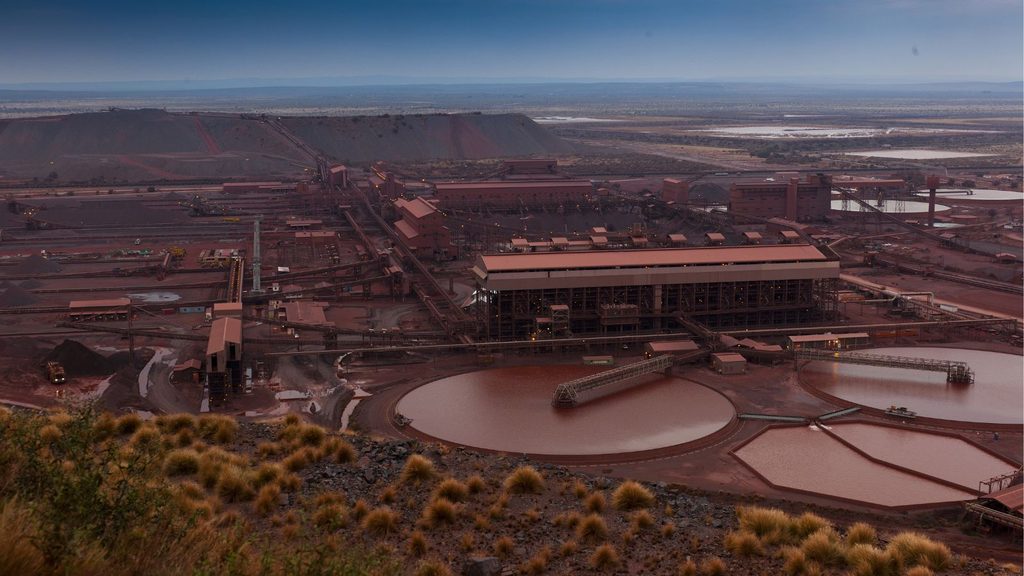
The Sishen mine is the largest of its kind in Africa and is one of the biggest open-pit mines in the world, producing 22 to 26 million tonnes of iron ore per annum.
While it is not as productive as some of its Australian and South American peers, the quality of its ore is among the best in the world.
Opened in 1947 to supply Iscor with iron to produce steel, the mine is located near Kathu in South Africa’s Northern Cape.
The mine supplied Iscor successfully for many years, with the large Kolomela mine opening nearby to meet booming demand from South Africa’s industrialising economy.
As the pace of industrialisation slowed, the mine needed to find a way to export its ore to global markets. This would provide vital foreign exchange earnings for South Africa.
This resulted in Iscor building the 861-kilometre-long Sishen-Saldanha Railway line to move material from the mine to the coast for export.
The trains that run on this line are among the longest in the world, at 375 wagons, and are capable of moving 60 million tonnes of ore on an annual basis.
Kumba acquired a majority stake in Sishen in 2006 after Anglo American reorganised its operations by mineral and listed them separately on the JSE.
The fraudulent transfer
Kumba was reorganised amid significant turmoil and changes in South Africa’s mining legislation, including the implementation of the Mineral and Petroleum Resources Development Act (MPRDA).
This significantly changed how mining rights were issued and affected their continued ownership in South Africa.
Apart from nationalising South Africa’s untapped mineral reserves, the legislation mandated that all mining rights be consolidated under the main operator.
Historically, mining rights were divided among several operators in the given area, with rights granted as companies pooled money and resources to develop mines.
This was the case with Sishen. ArcelorMittal South Africa was given a 21% share of the mining rights at Kumba’s Sishen mine after Iscor was split up.
Under the new rules, this was no longer allowed, and Kumba had to consolidate the mining rights. However, ArcelorMittal failed to apply to convert its 21% share.
Griffith said that to ensure full legal clarity, Kumba applied to acquire ArcelorMittal’s 21% share in the mining rights.
However, instead of processing Kumba’s application, the Department of Mineral Resources diverted the application documents and granted the 21% right to a politically-connected entity called Imperial Crown Trading.
“It was fraudulently given to them, and we engaged very, very seriously with all the different spheres of government to say that this should not be done,” Griffith said.
“We saw everybody in government, including the President at the time, and explained why this was a bad thing for South Africa.”
“The government was seen to be acting fraudulently and granting mineral rights in an incorrect way. Eventually, we said that we were going to have to take the government to court.”
Griffith said Kumba tried to avoid this at all costs, as it is never a good thing to take your own government to court, but there was no willingness to rectify the situation.
But they knew the precedent this would set and how destructive it would be for the industry if the government were able to fraudulently grant mining rights to politically connected companies.
Winning against the government

Taking the government to court is not an easy decision, given that it ultimately holds power over all companies in the country.
The government can make it extremely difficult for businesses to operate in the country if it chooses to, and it can exert immense pressure on management teams.
“We understood at the time that we were going to face massive pressure from government, both at an operating level and a company level,” Griffith said.
“We were also going to face pressure at the board level of Kumba and Anglo American, with court cases being costly and potentially damaging.”
Griffith said both boards were supportive of the company’s plan to take the government to court, given the value of the Sishen asset.
More significantly, the boards understood the profound impact on the industry if the government’s abuse of power went unchecked.
“It was incredible the way the boards and the chairmen all supported the management team. This was a watershed moment in South Africa,” Griffith said.
“We saw a slipper slope that. If you give in here and just accept this, it would have been a dreadful outcome for South Africa and for doing business in the country.”
“It would have damaged the rule of law in South Africa. It is something we pride ourselves on, that no matter how difficult things are, we can rely on the rule of law.”
Griffith said the company faced immense pressure from the government and faced “personal safety issues” at times.
“We went through all the spheres of government until eventually this was successful in the Constitutional Court of South Africa,” he said.
“We saved Kumba billions and billions of dollars worth of value over time, and I think we did the right thing for the country and for doing business and doing mining business in South Africa.”
 Loading ...




Comments