South Africa’s richest province running out of nurses


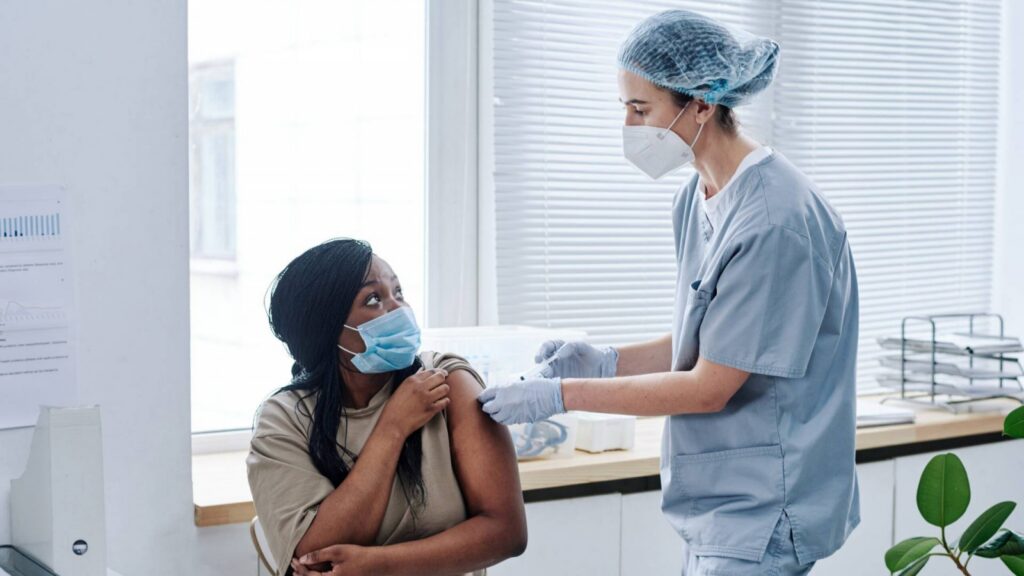
Gauteng’s public health system is losing nurses faster than new ones can be trained to replace them, with many moving to private hospitals or even relocating overseas.
According to the Democratic Nursing Organisation of South Africa (DENOSA), the sector is losing more than 100 nurses every month.
Many of them are being driven away from the public healthcare sector by stagnant salaries, hazardous working conditions, and outdated professional frameworks.
Speaking to Newzroom Afrika, DENOSA Gauteng Secretary Bongani Mazibuko explained that much of this was due to the sector’s Occupation Specific Dispensation (OSD).
This is a salary structure introduced for specific public service professions, including nurses, which is intended to attract and retain skilled individuals within these fields.
“One of the biggest challenges that we’ve got is that we had OSD implemented in 2007, and since then it has never been reviewed,” Mazibuko said.
“So the current state of OSD is not speaking to the realities of the nurses on the ground when it comes to salaries.”
Under the current nursing curriculum, it takes three years to receive a diploma in general nursing under the South African Nursing Council’s (SANC) Regulation R171.
Candidates who wish to obtain qualifications in midwifery must undertake a 4-year bachelor’s degree at a university under Regulation R174.
Mazibuko explained that the previous nursing curriculum included training in not only general nursing, but also in community nursing, psychiatry, and midwifery.
This more comprehensive qualification was available as either a four-year diploma or a four-year university degree, whereas many nurses produced under the current system are trained only in general nursing.
“What further compounds the problem is that after a person has been trained without midwifery to specialise in any nursing speciality, they need to get midwifery first,” Mazibuko said.
“This then poses a problem because it means after you’ve completed your basic nursing qualification, you must still go and train for midwifery to get a speciality in other spheres of nursing.”
Overworked and underpaid

According to Mazibuko, the salary disparity amongst Gauteng’s public nurses is just one facet of a larger issue facing the province’s healthcare system.
He explained that within the Department of Health (DPH), the well-being of South Africa’s nurses was not typically considered a high priority.
As a result, the conditions in which many of these nurses are expected to work often leave them dangerously overextended.
“They are working in situations where nurses in clinics have to see more than 50 or 60 patients at a time,” Mazibuko said.
“There have been instances which have been cited even by the Portfolio Committee where one nurse is responsible for more than 14 or 15 patients in a ward.”
Mazibuko said this leads to longer wait times for many of these patients, with some then taking out their anger and frustrations on the nurses, sometimes even violently.
He called for an urgent review of OSD for nurses, saying it was not just a provincial issue but a national one that involved the DPH and the Department of Public Service and Administration (DPSA).
He also called on the Gauteng Provincial Department of Health to improve working conditions for nurses and to ensure that it fills critical nursing vacancies.
“You cannot sit with vacancies of more than 2,000 nurses and then say that you are still planning to employ,” Mazibuko said. “Who is covering those services currently if you are still planning to employ?”
“What is expected is that as nurses are going out, the posts are vacant, so why are you not shortening the time to advertise and recruit those people that need to be employed?”
Countries such as Australia, Saudi Arabia, and the United Arab Emirates have continued to headhunt South African nurses, whom they believe are among the best-trained in the world.
Mazibuko said this showed that the quality of nursing care had not deteriorated in South Africa, but that nurses’ working conditions were increasingly pushing them out of the country.
He stressed that if these issues are not addressed and the “brain drain” of nurses continues, it will make the implementation of the National Health Insurance impossible.






Comments