Economist warns against an interest rate increase


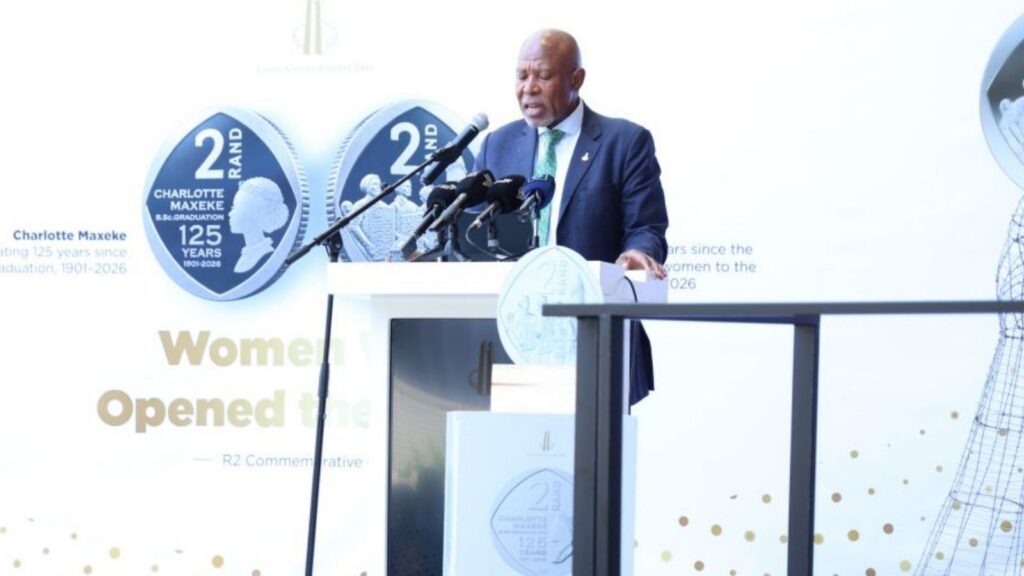
Aluma Capital chief economist Frederick Mitchell warned that another interest rate hike would do more harm than good, stifling South Africa’s fragile economy.
This is because South Africa’s high inflation is largely imported, influenced by rising fuel prices and external geopolitical and supply-side pressures.
Mitchell’s comments come as markets have priced in two more interest rate hikes for South Africa, with the next increase expected in September.
While the committee voted to keep rates unchanged at its July meeting, saying that monetary policy was restrictive enough, expectations of another hike have risen.
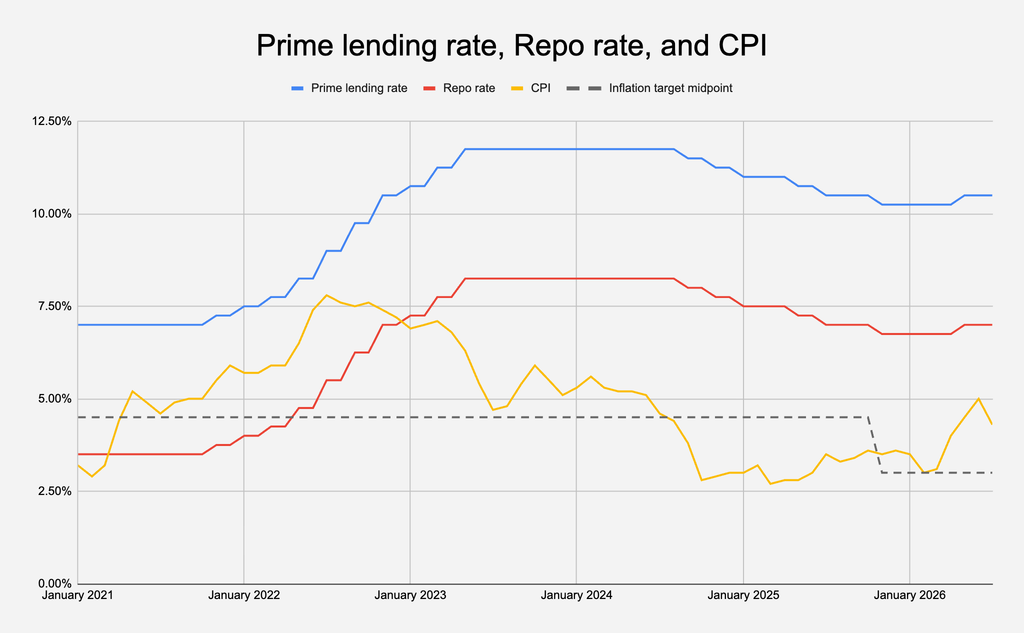
CPI inflation fell to 4.3% in July from 5% in June, but renewed tensions in the Middle East, which have driven oil prices higher, are expected to put upward pressure on inflation in the coming months.
The Reserve Bank’s Monetary Policy Committee (MPC) will meet on 23 September, with many economists predicting another 25-basis-point hike in the face of these inflationary concerns.
This would bring the repo rate to 7.25% and the prime lending rate to 10.75%, levels last seen in June 2025 before the MPC started its cutting cycle.
Mitchell argued that raising rates to combat this inflation would risk doing more harm than good and would place further pressure on households, businesses, and economic investment.
He explained that South Africa’s inflation is driven by supply-side, imported energy shocks, and this comes at a time when the economy is already fragile.
While the Reserve Bank is tasked with ensuring price stability, monetary policy must distinguish between demand-driven overheating and supply-side external shocks.
“South Africa’s current inflationary impulse is imported, driven by global conflict and petroleum logistics,” he said.
“Squeezing domestic demand with higher interest rates will not lower international oil prices.”
“Instead, it will drive up the cost of capital, suppress fixed investment, and accelerate corporate insolvencies in labour-heavy manufacturing and mining.”
He warned that raising interest rates in response to these supply-side, imported energy shocks would be a serious policy misstep that risks choking an already struggling real economy.
Instead, Mitchell recommended that the MPC look through the transitory fuel spike and hold interest rates steady at its September meeting.
He argued that the committee should allow structural economic reforms and trade diplomacy to support South Africa’s recovery.
South Africa’s imported fuel and inflation
Mitchell explained that South Africa ranks among the hardest-hit nations globally by the current energy crisis.
He estimated that the country has paid an additional R56.3 billion for imported fuel since the onset of the Middle East conflict in February 2026.
The rising price of oil has directly affected the price of goods in South Africa, because diesel powers freight rail alternatives, agricultural machinery, and long-haul food transport.
This means a R3 per litre jump in the price of diesel cascades through the entire value chain.
“Higher transportation costs affect nearly every price in the economy, eroding consumer purchasing power and compressing corporate margins,” Mitchell said.
“This heavy multiplier effect has prompted public sector unions to demand urgent petrol price tax relief to ease the burden on workers.”
“Raising interest rates does not pump a single extra barrel of oil or reopen maritime shipping lanes.”
In other words, an interest rate hike will not sufficiently tame inflation, which is caused by external rather than domestic factors.
Mitchell said an interest rate hike would merely penalise domestic businesses and households that are already bearing an external energy tax.
Domestic interest rates are currently 25 basis points higher than at the start of 2026, following a 25-basis-point hike announced in May.
Another 25-basis-point hike in September would bring the cumulative increase in 2026 to 50 basis points.
Over the same period, CPI inflation has risen from 3.5% in January 2026 to 4.3% in July, having peaked at 5% in June 2026.
Investec chief economist Annabel Bishop said that if the currently predicted fuel price increases occur as planned, or are higher, CPI inflation will reach 5.0% in the fourth quarter of 2026.
“This would place upward pressure on interest rates for further hikes this year,” she said.
She said the Forward Rate Agreement curve has factored in two 25-basis-point hikes for South Africa by the end of the year.






Comments