The Chinese car brand selling more cars than Mercedes-Benz, and Mazda in South Africa


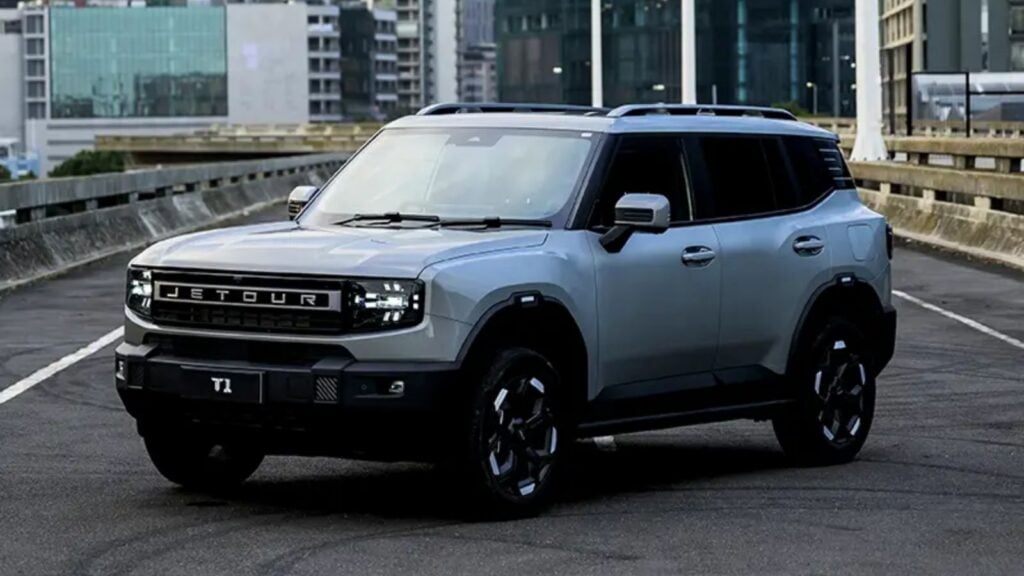
Two years after making its debut in South Africa, Chinese vehicle manufacturer Jetour is putting pressure on established brands such as Nissan, Mercedes-Benz, and Mazda.
Since its South African launch in August 2024, Jetour has increased its monthly sales from 250 to 1,220 in August 2026. It has sold 22,415 cars in South Africa over the past two years.
This was revealed in a recent Daily Investor analysis of Naamsa’s monthly Industry New Vehicle Sales data from 2024 to 2026.
This analysis showed that Jetour has gone from strength to strength in the South African market, overtaking manufacturers that have been operating in the country for years.
Founded in 2018 as a marque of Chery Holding Group, Jetour has since become an independent brand operating across 60 countries.
Headquartered in China, Jetour made its South African debut in August 2024, selling 320 cars in its first reported month of September 2024.
Naamsa did not consistently report the manufacturers’ sales data until January 2025, when it revealed that Jetour sold 1,110 cars that month.
Since then, the brand has consistently sold between 573 and 2,054 cars every month in South Africa, outpacing the growth of more established brands.
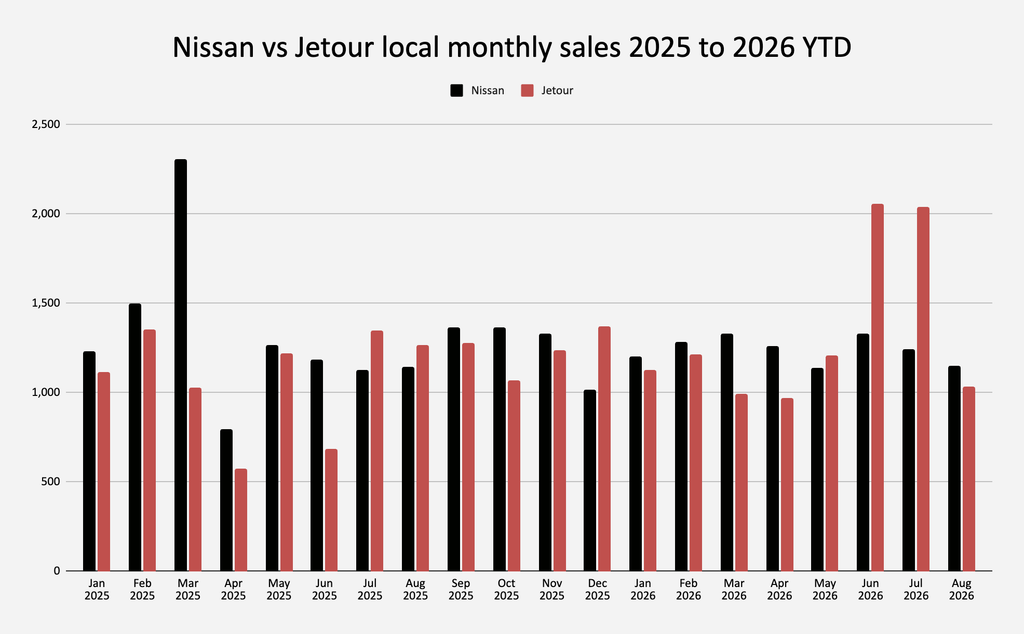
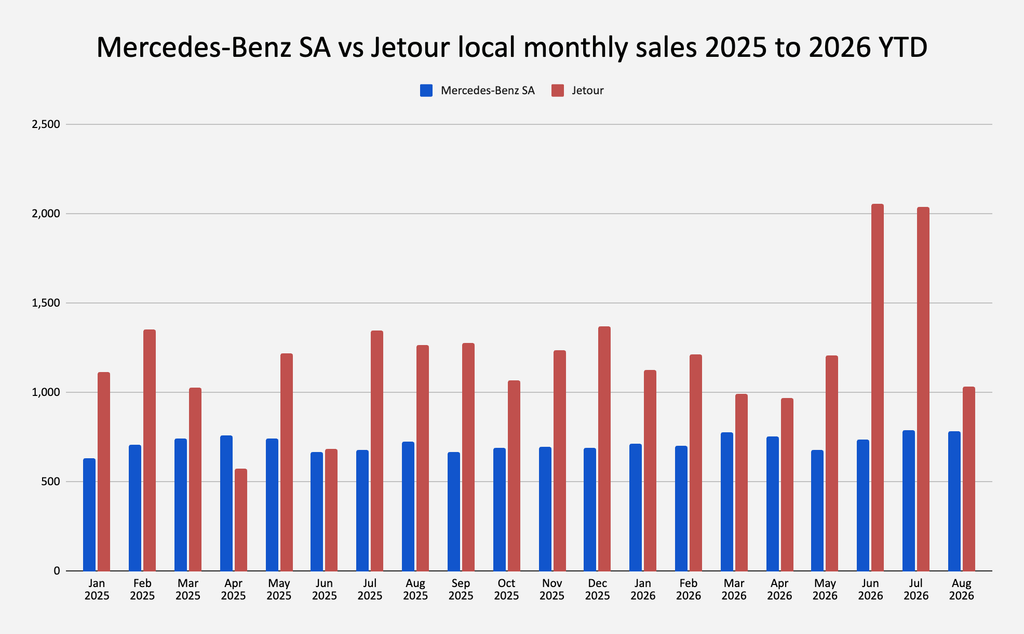
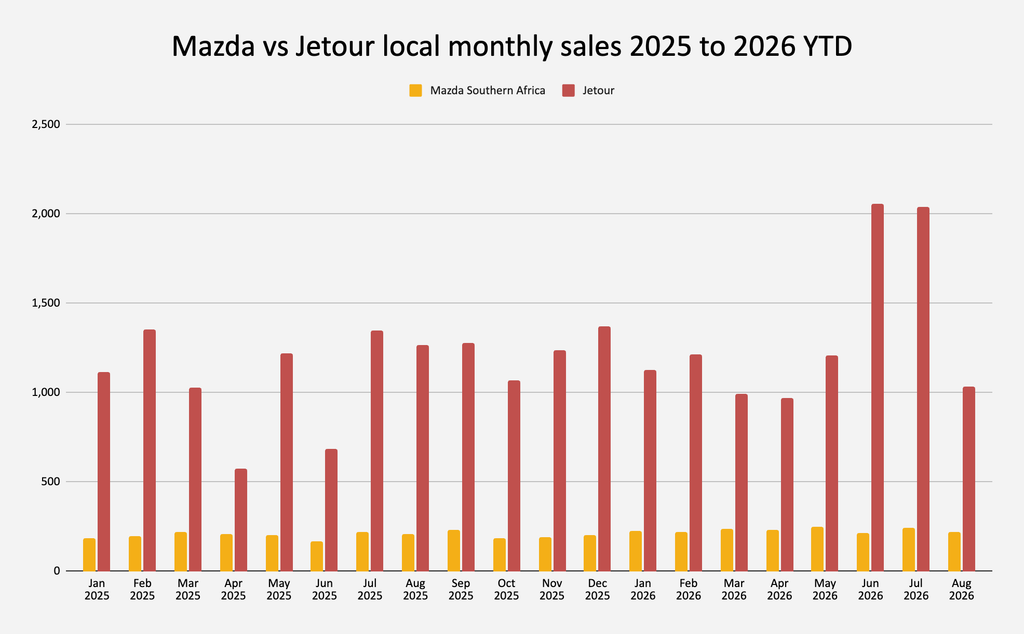
For example, in June 2026, Jetour recorded its highest monthly sales yet, at 2,054. That same month, Nissan sold 1,330, Mercedes-Benz sold 788, and Mazda sold 239.
August 2026 was a weaker month for Jetour, with 1,032 vehicles sold, which meant it was outpaced by Nissan, which sold 1,146.
Nissan first established a presence in South Africa in the late 1950s and early 1960s, followed by formal operations involving imported and locally assembled vehicles in 1963.
Mercedes-Benz is one of the oldest brands in South Africa, having entered the market in 1896 when the first Benz Velo was imported into the country.
Mazda is the most recent entrant among the three, entering the South African market as an independent operator in 2014 after it parted ways with Ford, though its older models had been sold in the country for decades.
Despite these manufacturers’ longer history in South Africa, they and many other traditional brands have come under pressure from Chinese manufacturers in recent years.
Chinese car brands taking over South Africa
Jetour is not unique in South Africa’s automotive sector, with many Chinese car brands having taken the market by storm.
In FirstRand’s 2026 results, Wesbank reported that South Africa’s automotive sector faced challenges and growth opportunities, shaped by local and global trends.
“Chinese car brands are entering the market rapidly, offering advanced technologies, electric and hybrid options and competitive pricing,” the group said.
“WesBank has partnered with several of these brands through multiple supplier and dealer alliance agreements, which bolstered advances’ growth.”
It explained that these partnerships have enabled WesBank to participate meaningfully in the expansion of Chinese OEMs entering the South African market.
At the same time, the group hopes to maintain strong origination quality and dealer relationships.
While some non-Chinese brands remain best-sellers in South Africa, particularly Toyota and Volkswagen, other brands have come under pressure.
Nissan has been among the hardest hit, going from selling well over 2,500 cars per month in 2020 to between 1,135 and 1,330 in 2026.
Notably, this decline comes as new vehicle sales are picking up in South Africa, with Naamsa’s latest report for August 2026 showing that aggregate sales jumped 11.4% year-on-year.
The automotive council explained that vehicle purchases remain particularly sensitive to financing costs, household disposable income, and total cost of ownership.
“The combination of moderating inflation and stable interest rates, therefore, provided some relief to consumers navigating still-elevated living and borrowing costs,” it said.
“The August market performance suggests that greater economic stability, improving product choice, and more predictable financing conditions are helping to support vehicle demand.”





Comments