South Africa wasted R19 billion a year buying expensive petrol and diesel


Between 2021 and 2024, South Africa paid R76 billion in avoidable import costs for refined petroleum products.
This works out to R19 billion a year in avoidable costs, or 0.3% of gross domestic product (GDP).
This was revealed in an economic bulletin released by researchers from the South African Reserve Bank on South Africa’s refinery closures and their macroeconomic impact.
The bulletin was released in September 2026 and authored by researchers Mathias Manguzvane, Palesa Mnguni, Mapule Mofokeng, and Nkhetheni Nesengani.
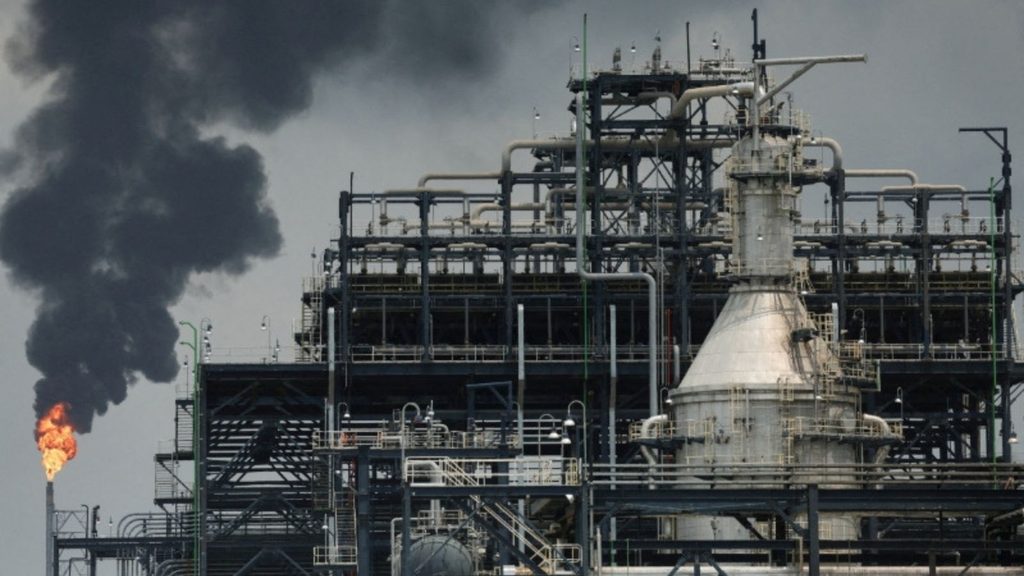
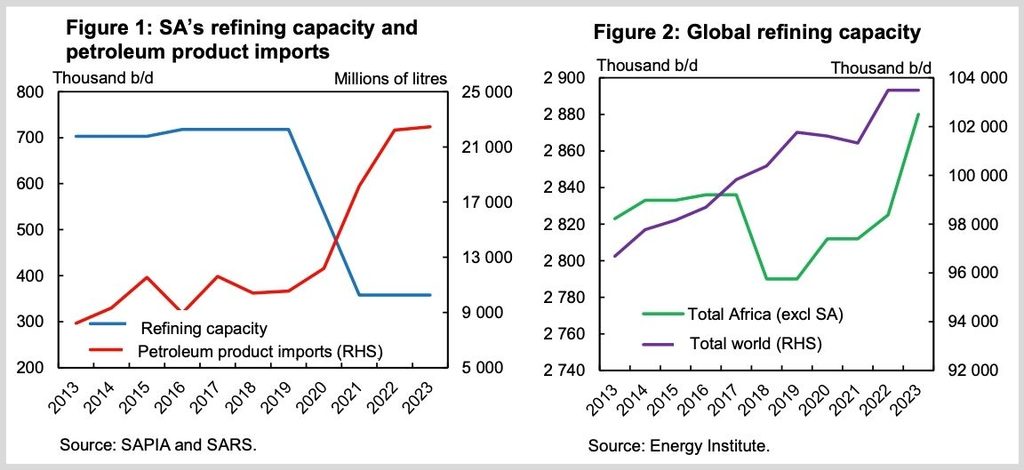
The researchers found that South Africa’s refining capacity has halved over the past decade.
While South Africa has installed crude oil refining capacity of 525,000 barrels per day, its output is less than half that, at 250,000 barrels per day.
This significant capacity loss was due to the decommissioning or repurposing of several refining plants over the past decade.
Due to this lost capacity, South Africa has become dependent on imported refined products, which now supply more than half of domestic fuel demand.
The bulletin explained that this reliance on expensive refined products has made South Africa highly vulnerable to rand volatility and led to billions in avoidable costs.
It is important to distinguish between crude oil imports and refined petroleum product imports.
While South Africa imports both, its lack of domestic refining capacity, due to the closure of local refineries, has led to increased imports of refined products over the past five years.
Refined petroleum products inherently cost more per barrel than crude oil because they require processing and refining.
The researchers explained that, between 2014 and 2024, imported refined products cost an average of 12% more per barrel than crude oil, an average differential of R156 per barrel.
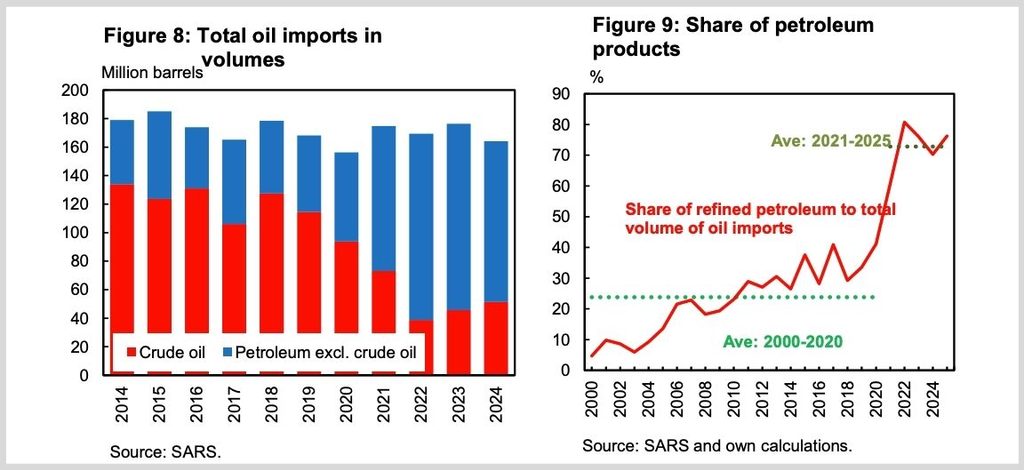
Following the closure of multiple local refineries, refined products surged to between 69% and 81% of South Africa’s oil import volume from 2021 to 2024.
This, the researchers found, has led to billions in avoidable costs over that period.
Avoidable costs
The researchers found that, if South Africa had maintained its historical baseline of 75% crude oil and 25% refined products, it could have saved R76.04 billion between 2021 and 2024.
They said that, on average, fixing the share of crude oil at 75% would have reduced South Africa’s oil import bill by 6.1%.
These lost savings translate to R19 billion per year, or 0.3% of South Africa’s GDP.
They explained that in 2022 alone, oil imports accounted for 6% of GDP.
This means that, aside from paying unnecessary costs, South Africa’s reliance on imported refined products has also widened the country’s trade deficit.
This puts structural pressure on the country’s current account balance, with the researchers explaining that South Africa has become highly vulnerable to external shocks.
“The shift towards refined-fuel imports has heightened South Africa’s vulnerability to external shocks,” they said.
“When global oil prices rise, the import bill increases more sharply than when crude oil was processed domestically, worsening the trade balance and the current account.”
This has an indirect inflationary impact, as larger external deficits weaken the rand and raise the domestic cost of all imports.
“With refined products now dominating the fuel mix, South Africa has less ability to absorb global price shocks through domestic production, reducing its terms-of-trade buffer,” they said.
“As the country becomes more reliant on imports, resilient fuel logistics, storage infrastructure and supply-security mechanisms will become increasingly important to maintain macroeconomic and energy-system stability.”






Comments