One country buys 8% of South Africa’s exported fruits and vegetables


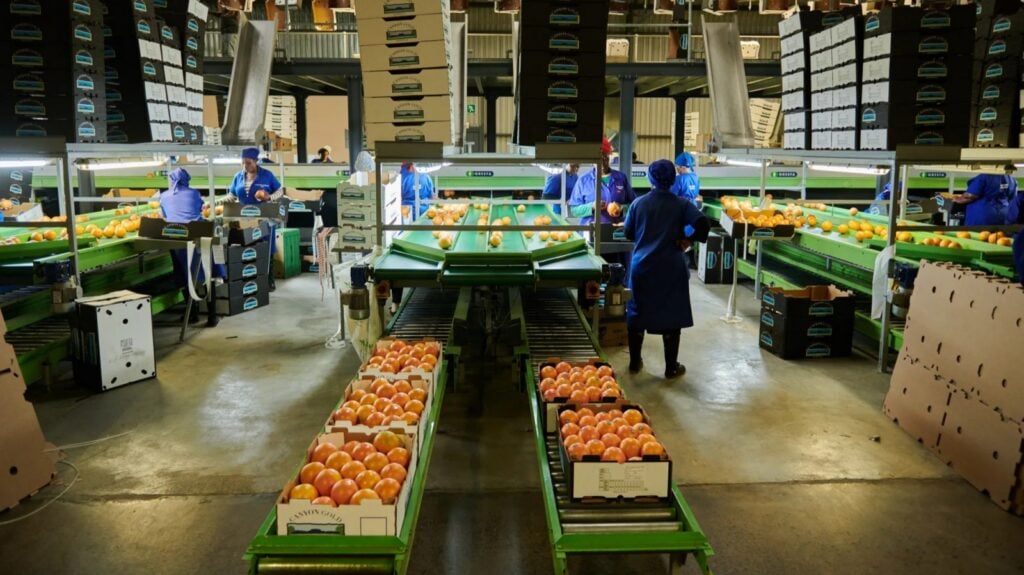
Zimbabwe is one of South Africa’s most important agricultural markets, accounting for 8% of the country’s total fruit and vegetable exports in 2025.
The South African neighbour is the second biggest market for the country’s agricultural products after the Netherlands, which receives between 36% and 40% of its exports.
Agricultural Business Chamber chief economist Wandile Sihlobo argued that Zimbabwe is a more important market for South Africa than the European country, however.
“Given that the Netherlands is an entry point to the European Union with key ports, one can speculate that some products exported through the Netherlands are likely distributed to other EU countries,” Sihlobo said.
“From an individual country perspective, Zimbabwe is likely the most significant export market for South Africa’s agriculture.”
In 2025, the value of South African agricultural products exported to Zimbabwe totalled $1.2 billion, equalling the value of products the country exported to the Middle East and members of BRICS.
The products exported to Zimbabwe differ from those exported to other regions, consisting mainly of maize, soybeans, bottled water, condiments, animal feed, wheat, preserved vegetables, and fruit juices.
South Africa generally exports less processed and prepared products to other countries in the world, such as meat, fruits, wines, nuts, and grains.
Zimbabwe is itself an exporter of agricultural products, with the country exporting $1.6 billion worth of agricultural products in 2025.
These products included various fruits, nuts, tea, spices, and tobacco products, with Zimbabwe exporting these to markets such as Mozambique, Belgium, and the United Arab Emirates.
South Africa was the second largest market for these products after China, purchasing 12% of Zimbabwean agricultural exports valued at $202 million.
This made up just 2.6% of South Africa’s agricultural imports during that year, which totalled $7.8 billion. South Africa mainly imports wheat, palm oil, rice, poultry, and whisky.
Promoting closer ties between the two countries

Agriculture has been a cornerstone of the Zimbabwean economy for much of its history, with the sector accounting for 9.5% of the country’s GDP today.
Despite this, the country faces a number of political and governance challenges which have deterred investment in the country’s agricultural sector.
Land reform programs implemented by the Zimbabwean government since its independence have diminished its agricultural capacity, turning the country into a net importer of food.
Sihlobo said Zimbabwean authorities should work to improve general governance and infrastructure to create a more attractive environment for investors.
“When such reforms occur and the rule of law is strengthened, there will need to be ongoing public communication to build credibility and enable investors to assess progress,” Sihlobo said.
“This would also entail improving the country’s statistics so that it is easier for investors to gauge economic conditions and the reforms the country undertakes.”
In the meantime, however, Sihlobo said the current trade arrangement between Zimbabwe and South Africa would remain the most viable option for both countries.
As such, he suggested that the two countries should continue to strengthen their trade relations even further as members of the Southern African Development Community (SADC).
South Africa recently hosted the South Africa-Zimbabwe Bi-National Commission Business Forum, which took place on 21 August 2026.
The event, which was visited by Zimbabwean president Emmerson Mnangagwa and a delegation, centred on strengthening trade and industrialisation between the two nations.
This included discussions on developing regional value chains across the agricultural sector with the aim of achieving a more balanced trade between South Africa and Zimbabwe.
Beyond the trade of finished agricultural products, it was suggested that trade in seeds, machinery, agricultural technologies, and agro-processing be investigated.
“Engagements with Zimbabwe require the same level of acknowledgement as those with Middle East or BRICS countries, since Zimbabwe’s export value equals these regions,” Sihlobo said.
“There is a need to boost shared prosperity in this region by importing certain products from Zimbabwe and exploring developments in regional value chains.”






Comments