Eskom spent R8 billion and 20 years building a railway that does not work properly


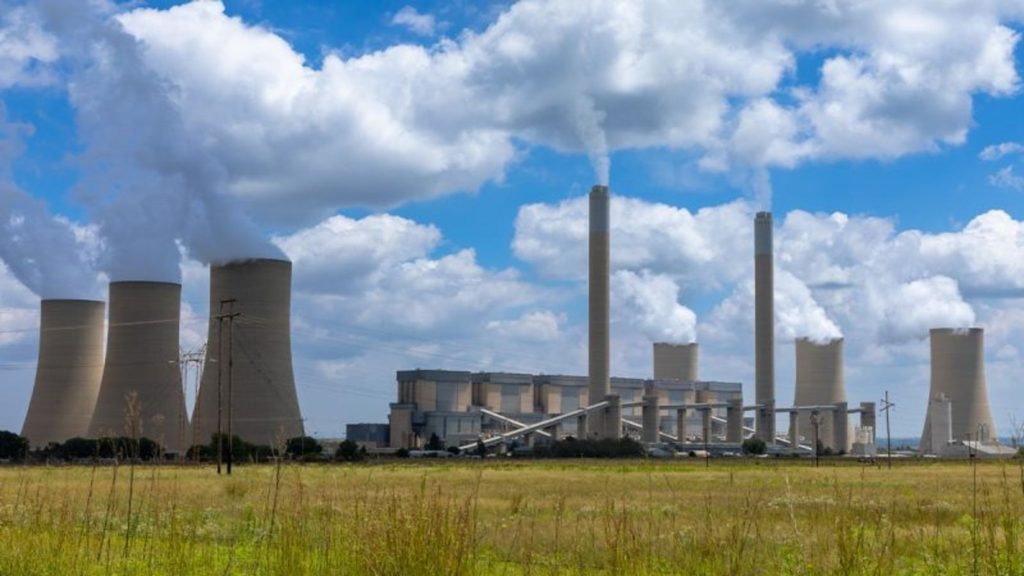
Eskom spent R8 billion to build a 68-kilometre railway from Ermelo to its Majuba Power Station to transport coal by rail rather than by truck.
While a good idea, the project was initially budgeted at R1.5 billion and was expected to take four years to build. It was only finished in 2024 at five times the cost.
The utility also had to write down the value of its assets in 2025 to account for the cost overruns and accumulated inefficiencies.
Eskom CFO Calib Cassim put it simply by saying the project cannot be economically justified at its historical cost to the utility.
To put the cost of the Majuba Rail Project in context, the laying of a new railway between Durban and Gauteng in 2019 cost R18.2 million per kilometre of rail.
Using this cost per kilometre, the Majuba project should have cost Eskom R1.24 billion.
The project was outlined in 2005 as the flagship of Eskom’s road-to-rail migration plan to reduce its use of diesel trucks for coal transport.
These trucks were expensive to run and damaged the roads around Eskom’s power plants, forcing it to pay “shadow tolls” to SANRAL to keep coal flowing.
These tolls cost over R100 million a year in the late 2000s, and Eskom had to pay a massive R950 million fee to SANRAL to repair roads.
Historically, Eskom avoided these problems by building coal-fired power stations close to large coal fields, enabling the fuel to be transferred via conveyor belt.
As the coal fields were depleted, this became less viable as Eskom could not move the power stations it had already built.
Majuba was initially built close to a large underground colliery that supplied it with coal. However, the colliery was shut down prematurely.
This forced Eskom to transport 36 million tonnes of coal per year from distant collieries to supply the 3,843 MW power station.
The stopgap was to use 1,500 heavy-haul coal trucks to travel Mpumalanga’s provincial roads daily to supply Majuba.
This was soon found to be unsustainable due to road damage and numerous fatalities.
In 2005, Eskom proposed building a 68-kilometre heavy-haul railway line from Ermelo to Majuba to move 14 million tonnes of coal a year.
Majuba rail disaster
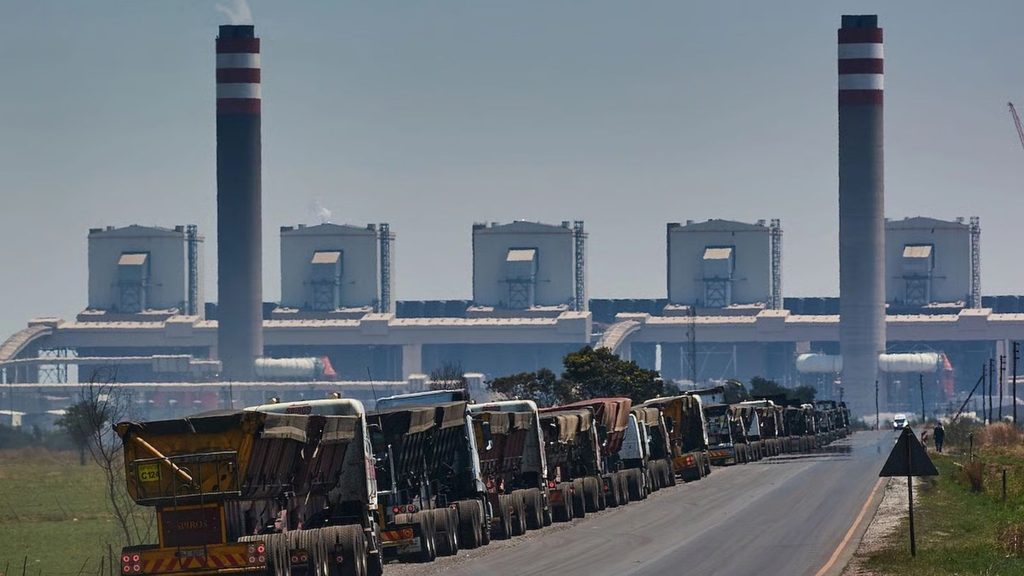
Eskom’s proposed railway project was designed to be completed in four years at a cost of R1.5 billion. However, reality turned out to be vastly different.
The Majuba Rail Project degenerated into a 20-year saga of delays caused by bureaucracy, poor workmanship, and funding constraints.
The project had the unfortunate timing of being announced just before Eskom implemented load-shedding for the first time in 2007.
Overnight, much of the utility’s focus shifted to ending load-shedding by building Kusile and Medupi. Majuba’s railway had not gotten beyond the drawing board.
Eskom’s annual reports from 2005 to the present day show that the first major delay was announced in 2009, the year the project was supposed to be completed.
Ministerial approvals were still pending, and contractors launched disputes with Eskom for early bulk earthworks.
In 2011, Eskom told the public that the project had been suspended and placed on hold indefinitely due to severe funding constraints.
For six years, the project would lie abandoned, with no work taking place as Eskom battled increasingly frequent load-shedding.
Construction restarted in 2017 under a revised R4.2 billion budget, but the delays did not end, as poor workmanship became apparent.
Poor contractor performance, delayed environmental approvals, and slow progress on the construction of the Vaal River bridge led Eskom to delay completion once again.
In 2019, the project was also hit by a tippler fire, which destroyed Majuba’s take-out conveyor and coal silo. This left the station unable to receive coal by rail.
Eskom’s revised completion date of December 2022 was missed. Rising cable theft and equipment vandalism were cited by the utility’s management as the reason for the delay.
The utility’s tender to repair the lines was also rejected by the market, with no supplier responding. Eskom cancelled the tender in 2022 and conducted repairs internally.
It would only be in March 2024 that Eskom could announce the commercial operation of Majuba’s rail line.
However, the line does not operate at full capacity due to logistical bottlenecks and still requires major infrastructure repairs.
Eskom’s 2026 annual report indicates it is still looking to work with Transnet to secure the railway infrastructure.
The report also shows that the utility remains a heavy user of road freight to transport coal to Majuba, despite the railway’s aim to eliminate this need.
The offloading infrastructure at Majuba also still requires repairs following the tippler fire.






Comments