South Africa went from hero to zero


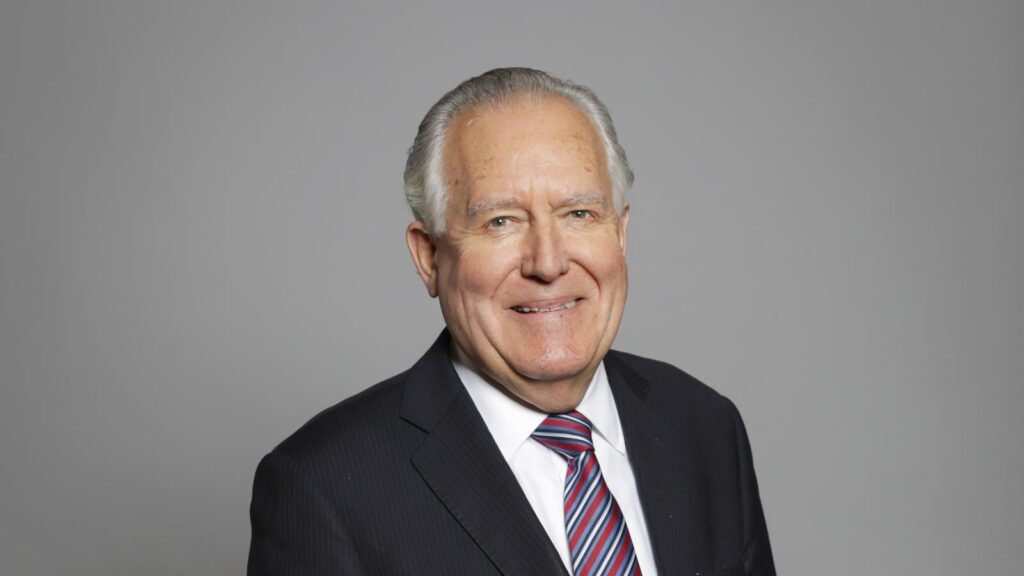
British politician and former anti-apartheid activist Lord Peter Hain said that South Africa went from hero under President Nelson Mandela to zero under President Jacob Zuma.
Hain shared his view on South Africa and its history in a discussion on the SMWX podcast last week.
He said that things have to get better in South Africa, as it has squandered its position as a hero under former President Nelson Mandela.
“South Africa was sort of a hero under Nelson Mandela and a beacon of liberation and democracy,” Hain said.
“I’m not saying it fell to zero under Jacob Zuma, but it came pretty close and lost its status as a beacon for liberation and democracy.”
Hain cited the South African Revenue Service (SARS) as an example of a key state institution that was intentionally dismantled or disabled.
“The South African Revenue Service was deliberately disabled under Zuma on advice from a global corporate firm, Bain & Company,” he said.
He said that after President Cyril Ramaphosa took over, many people expected rapid reform and an end to corruption. This did not happen.
Although corruption today is less brazen and shameless than under Zuma, it remains extremely dangerous.
“Under Zuma, corruption was brazen and shameless, dragging South Africa from hero to zero as key state bodies like SARS were intentionally dismantled,” he said.
“Under Ramaphosa, while leadership has appointed better heads to institutions like SARS and upheld constitutional democracy, he has disappointed many.”
“The threat today has shifted from overt state capture to a serious, subterranean infiltration of law enforcement by criminal mafias.”
However, all is not lost. He said that the ANC broke with other regional liberation movements by accepting the election results after losing its majority.
This means that South Africa’s constitution held up, which means that it can be used to fix other things in the country.
“There is still potential to use the constitution and the law to enforce measures that tackle crime and corruption,” he said.
However, he said, it will need to involve confronting the infiltration of law enforcement agencies by criminal mafias.
South Africa after 1994 is a tale of two eras
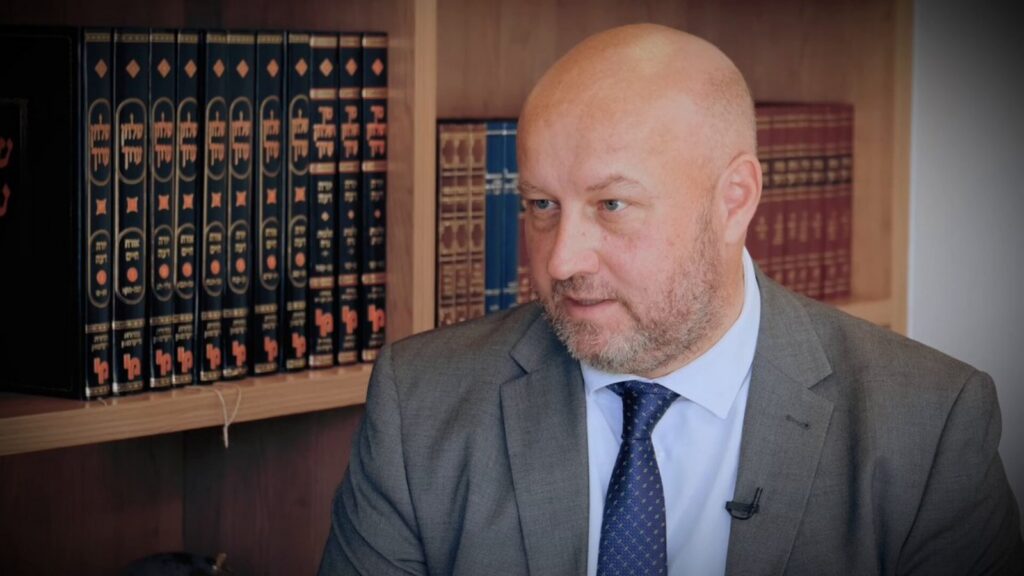
Frans Cronje, head of the Social Research Foundation, shared a view similar to that of Lord Peter Hain regarding South Africa going from hero to zero.
He explained that before South Africa’s first democratic election in 1994, its economy stagnated. Economic growth averaged 0.2% between 1990 and 1994.
The country faced strict international trade embargoes and boycotts, crippling its ability to import oil and other vital commodities.
As a result, South Africa was battling rising debt and a weakening currency and was heading for bankruptcy.
Instead of accepting international bailouts, Mandela and Deputy President Thabo Mbeki created a policy framework to reduce government debt and grow the economy.
They successfully reduced the fiscal deficit, avoided a debt trap, and limited any real increase in recurrent government expenditure.
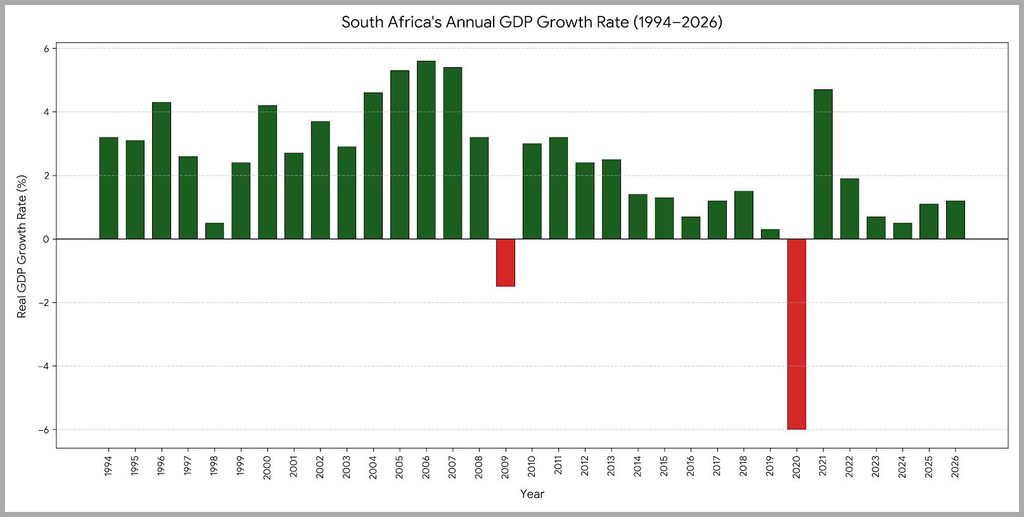
The Mandela administration stabilised the economy and achieved a steady growth rate of 2.7%. This accelerated after Mbeki became president.
The result of this economic growth was that the basic living standards of most South Africans increased rapidly during the first 15 years of ANC rule.
The share of households without electricity declined from 49% in 1996 to 19% in 2006, while the number of people employed increased from 7.48 million to 14.5 million.
The state’s welfare system also expanded, with the number of people receiving social grants rising from 2.4 million in 1996 to 14.9 million in 2010.
“The ANC were doing a good job at raising the basic standards of living of millions and millions of people,” Cronje said.
“There are no emerging markets that can compete at scale with what the ANC achieved here in terms of service delivery in its first 15 years.”
However, this trend stagnated as President Zuma came to power in 2009, and by the end of his tenure in 2018, living standards had begun to decline.
This decline is closely tied to the country’s dismal economic performance since 2008. Over the next 15 years, GDP growth averaged 1%.
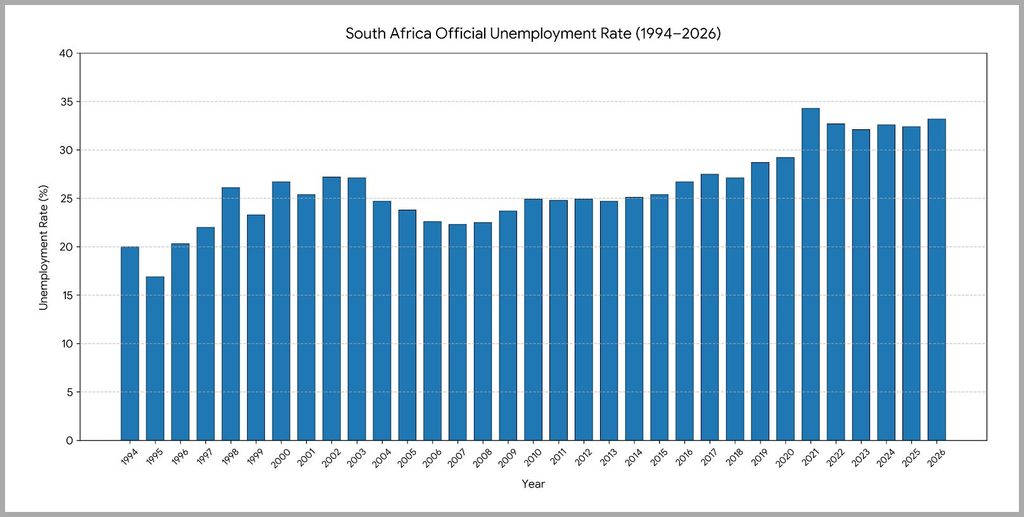
Unemployment increased from 21.5% in 2008 to 33.6% in 2026. South Africans became poorer, and poverty increased.
In 2008, gross loan debt amounted to R627 billion, or 26% of GDP. It increased to R6.09 trillion, and 78% of GDP, in 2026.
“Under Ramaphosa, economic growth was nearly non-existent, and he has struggled to create more than 100,000 new jobs per year,” Cronje said.
This performance is unsurprising, as Ramaphosa failed to lift the fixed investment rate in South Africa. It currently sits roughly half the emerging-market average.
“Despite the Government of National Unity (GNU), we are a 1% growth economy with an investment rate that’s half that of our emerging market peers,” he said.
South Africa is now in a worse economic situation than at the start of 1994, which means that all the good work under Mandela and Mbeki has been undone.
This is why many experts view post-1994 South Africa as two eras, with the first characterised by positive developments and the second by their destruction.
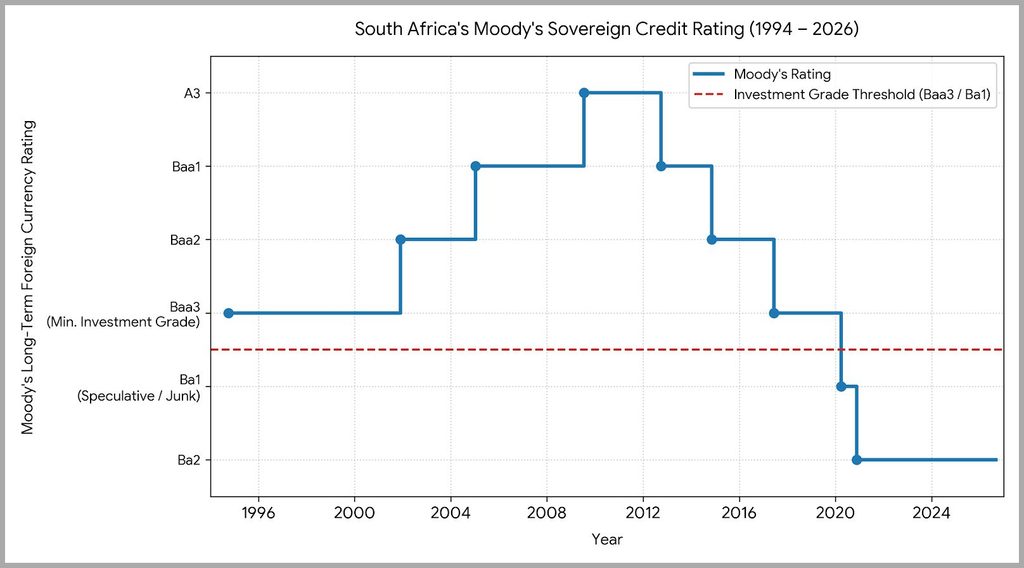
South Africa’s credit rating: 1994 to 2026
South Africa’s economic growth: 1994 to 2026
South Africa’s unemployment rate: 1994 to 2026



Comments