The R90 billion fast-food industry that competes against KFC, McDonald’s, and Steers in South Africa


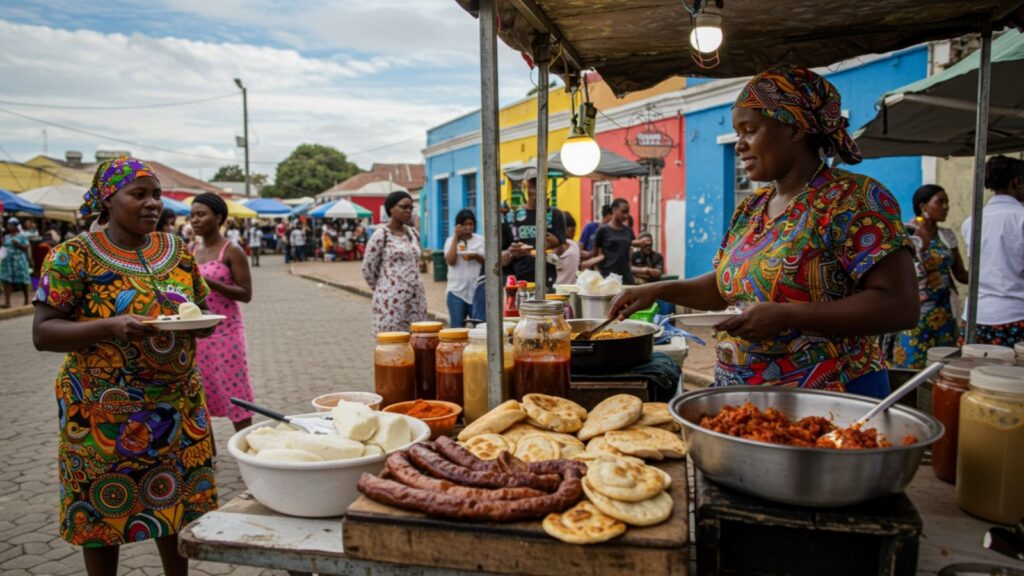
South Africa’s informal fast-food sector dwarfs major chains with sales of R90 billion coming from highly localised meals and snacks.
This accounts for one part of the country’s much larger informal economy, which has been estimated to be worth between R750 billion and R1 trillion.
There are 50,000 informal fast-food outlets operating across South Africa, outperforming chains such as KFC and Steers in townships and rural areas.
These out-of-home outlets sell a range of popular South African street foods and snacks, such as kotas, vetkoek, and chicken dust.
Despite the size and success of this sector, activist and informal-economy expert GG Alcock said many South Africans remain unaware of its true scale.
In a recent episode of the Standard Bank Talks series, Alcock said mainstream businesses fail to see the scale of this economy because they focus on individual street-level stalls.
“It’s important for businesses to look in the mirror, and not out the window,” Alcock said. “Look at what’s around you, and not out elsewhere.”
“Suddenly, it starts adding up. The ‘kasikos’ food sector is R90 billion a year. Everyone says, ‘We know kotas, amaplate, and chicken dust’, but we don’t add it up.”
Alcock also challenged the terming of this sector as “informal” because it implies it is unstructured, small-scale, and low-turnover, which is not the case.
To illustrate his point, Alcock used an example of a woman he met in Thembisa who had been selling street foods and snacks for 26 years.
According to Alcock, the woman’s business was successful enough to allow her to put her two children through university while her husband remained unemployed.
“We don’t recognise the scale of that, and how much people have invested in making those businesses work,” Alcock said. “They’re incredibly resilient and innovative businesses.”
Township fast food is booming
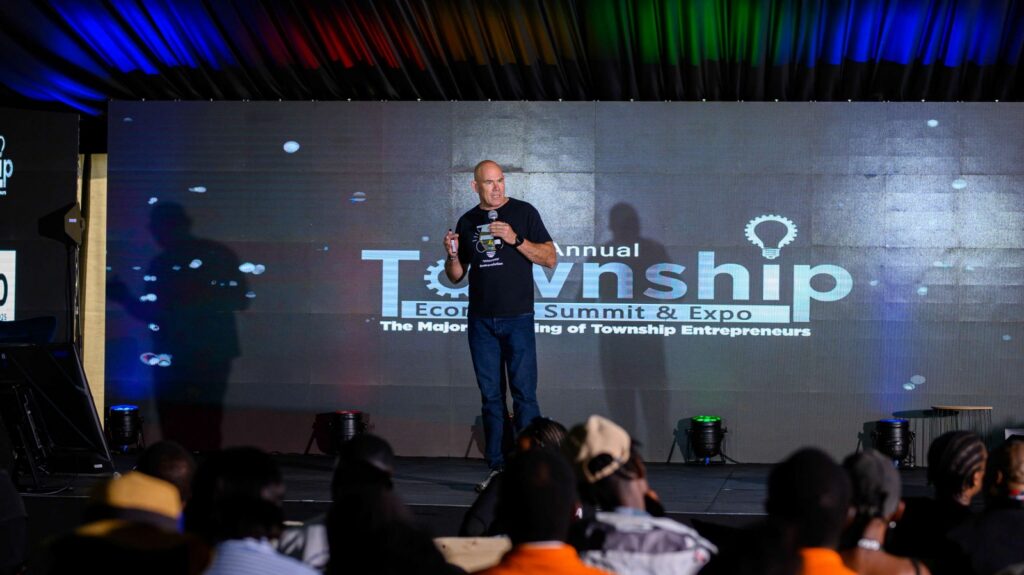
Alcock identified fast food as one of the fastest-growing sectors in the informal economy, alongside construction, beauty, rentals, and the automotive industry.
He identified several factors driving this growth at a BizNews Conference in 2024, the most important of which was a change in living spaces.
South Africa’s townships have seen a trend in recent years towards smaller, single-person or two-person households living in compact “back room” rentals.
“Most of those people who live in a little one-room unit don’t want to cook food in that home, so they rather walk out and buy chicken dust or a kota somewhere,” Alcock said.
Alcock has also explained that most people choose to purchase informal fast food over major brands because they genuinely prefer it.
He dispelled the myth that it was because these businesses were a cheaper alternative to fast-food chains, saying informal food sellers were generally more expensive than formal takeaways.
This, he said, was the reason why many of these informal food vendors turned higher profits on average than well-known fast-food outlets such as Nando’s.
It has also created business opportunities for formal brand manufacturers to form supply-chain partnerships with these informal food sellers.
This includes businesses such as informal bakeries, of which Alcock said there are 10,000 across South Africa’s townships.
Alcock was instrumental in establishing a township cheese business for dairy producer Parmalat, which is now valued at R3 billion a year.
This came about in 2005 when Parmalat approached Alcock’s agency, Minanawe Marketing, to assist in selling individually wrapped cheese slices in township school lunchboxes.
Since township children often received pocket money to purchase lunch rather than pre-packed lunchboxes, Alcock recommended targeting the informal street food market.
“With just this food economy, you can imagine the impact of that on the demand that it’s creating for people like Rainbow, Astral, and Parmalat,” Alcock said.




Comments