CEO of iconic South African company receives R42.9 million pay package


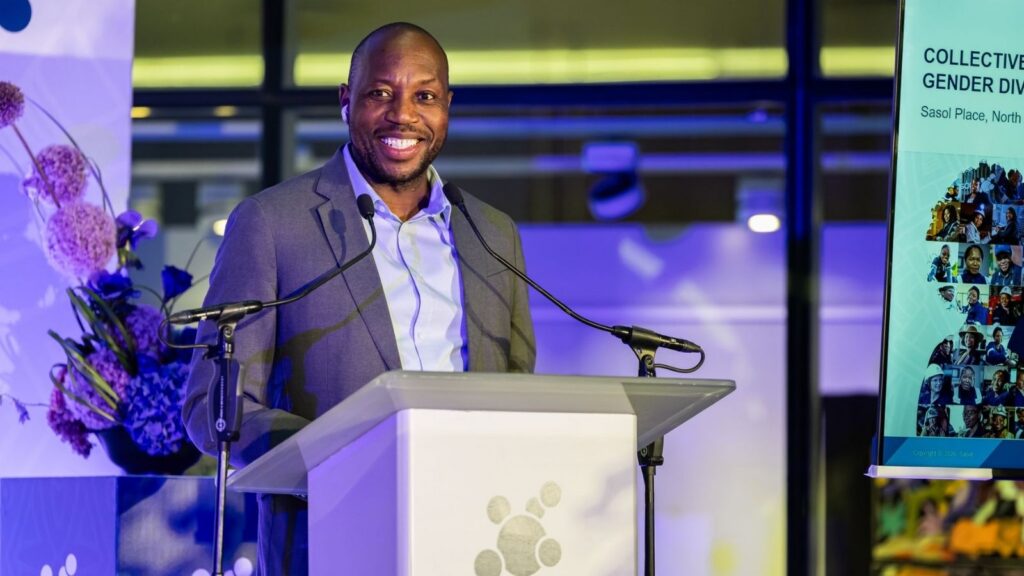
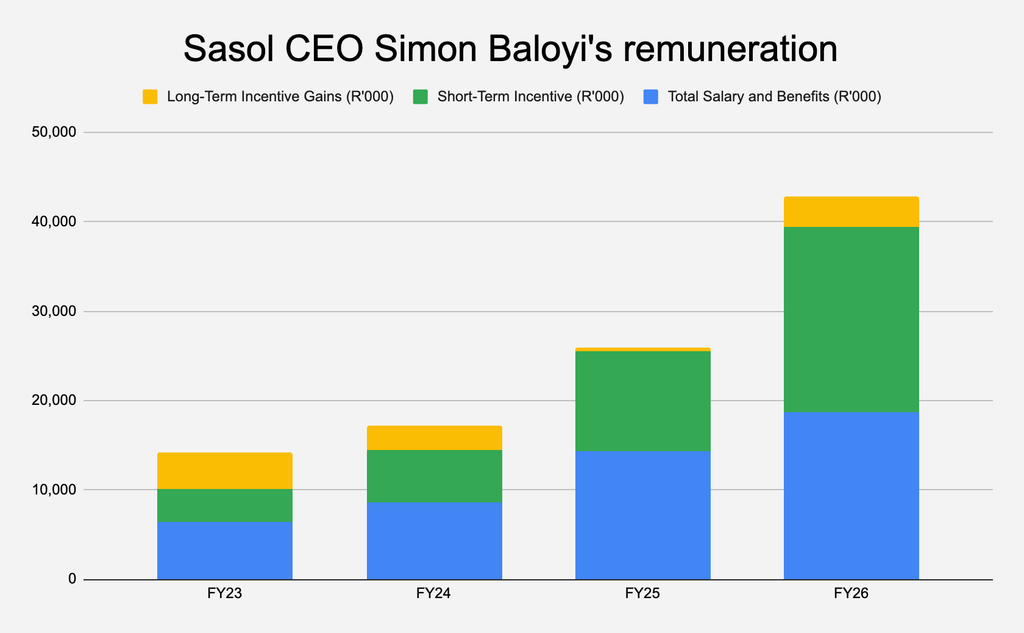
Sasol CEO Simon Baloyi’s efforts to turn the chemical manufacturing giant around have paid off, with the chief executive’s annual remuneration rising from R25.9 million in 2025 to R42.9 million in 2026.
This marks a 65.64% increase over the past year, and includes an annual short-term incentive of R20.7 million.
This was revealed in Sasol’s results for the year through June 2026, which showed a mixed performance.
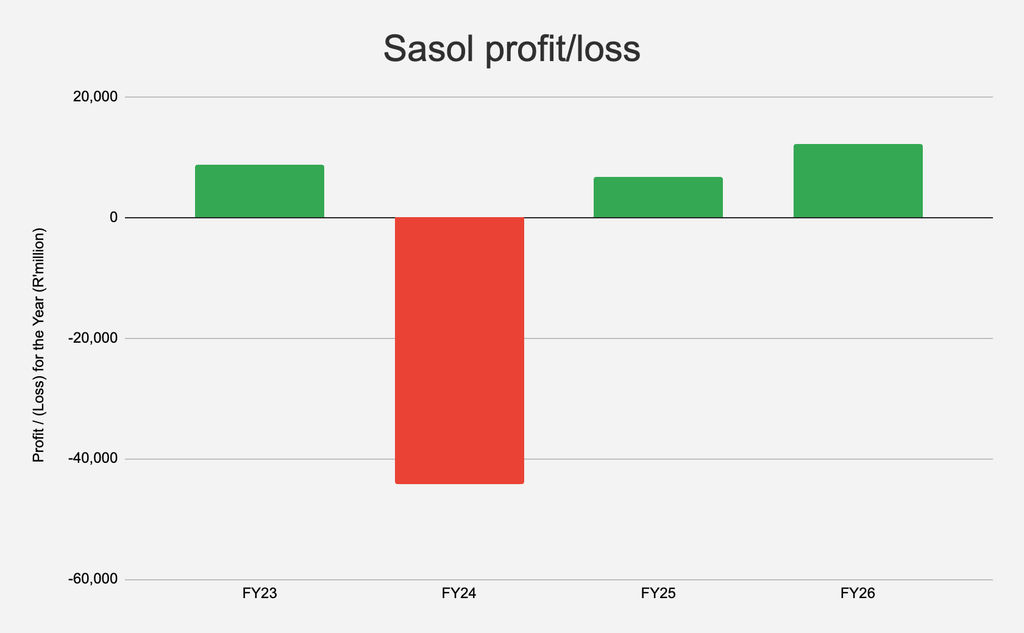
The company reported a 9.24% jump in turnover to R272.12 billion, and earnings of R14.46 billion for the year, up 87.13% from 2025.
This is a far cry from the R44.25 billion loss Sasol reported in 2024, when Baloyi first took the helm and began implementing a turnaround plan.
Baloyi took the reins from former Sasol CEO Fleetwood Grobler in April 2024, stepping into the top job at a difficult time for the company.
Baloyi had been with Sasol since 2002, when he joined as a process engineer, armed with a Master’s degree in Chemical Engineering from the University of the Witwatersrand.
In the two decades to follow, he worked his way up in the company, reaching the position of executive vice president before becoming CEO.
When Baloyi took over, Sasol was still transitioning from post-pandemic commodity highs, and 2024 would mark one of its worst financial performances on record.
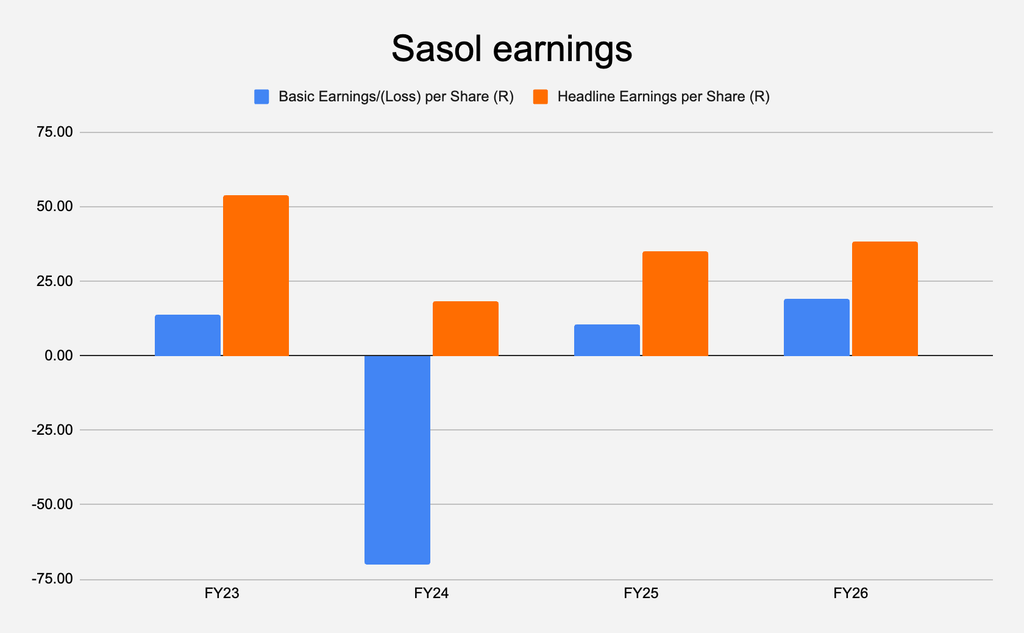
The company went from basic earnings per share of R14 in 2023 to a loss of R69.94 per share in 2024.
In the 2024 financial year, Sasol’s impairments spiked to a record R76.04 billion, largely driven by its struggling Lake Charles operations in the United States and Secunda liquid fuels refinery in South Africa.
As the then-incoming CEO, Baloyi was tasked with steering Sasol through these rough waters and continuing the implementation of the company’s “Sasol of the Future” strategy.
This strategy began to take shape in the 2019 financial year and saw Sasol undertake a broad operational restructuring and a strategic reset.
Sasol’s reset and Baloyi reaping the rewards
Between 2023 and 2026, Sasol’s management team overhauled how the company was structured, operated, and allocated capital.
Sasol’s 2025 Capital Markets Day updated the company’s strategic roadmap, focusing on restoring its production stability and operational reliability across the Southern African value chain.
It also reset the group’s international chemicals business, which had been struggling to gain momentum, by shifting away from pure volume expansion toward margin defence and asset rationalisation.
This strategy has paid off well for the company, with Sasol returning to profitability in the 2025 financial year, with big rewards for the man in charge of this turnaround.
Baloyi’s overall annual remuneration package rose from R25.9 million in the 2025 financial year to R42.9 million in 2026.
Notably, his base salary only increased from R12.51 million in 2025 to R16.29 million in 2026, a 30.22% market-related adjustment.
Therefore, the significant rise in Baloyi’s remuneration package came from a substantial annual short-term incentive.
80% of Baloyi’s short-term incentive (STI) payout is tied directly to Sasol’s overall STI performance.
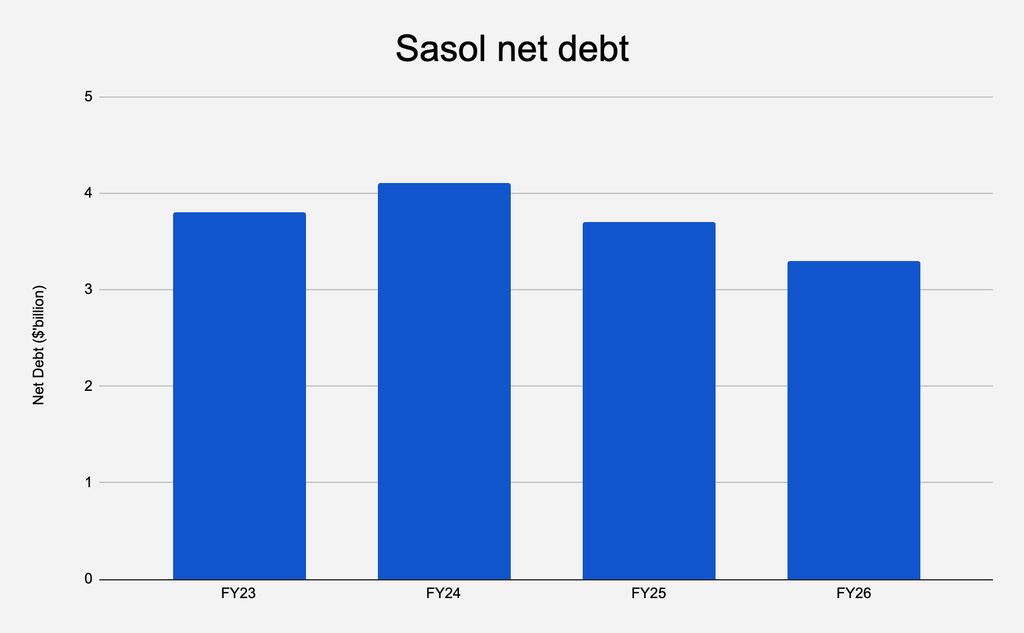
Sasol’s financial targets improved in the 2026 financial year, with a 79% and 9% rise in basic and headline earnings per share, respectively, and an 11% reduction in net debt.
20% of Baloyi’s STI reflects his individual performance metrics, as set by Sasol’s board.
For 2026, the CEO’s individual scorecard focused on executive priorities such as balance sheet de-risking, business streamlining, operational reliability, and strategic repositioning.
The formula used to calculate Baloyi’s payout also includes a potential fatality penalty deduction, aimed to improve the company’s safety track record.
Notably, Baloyi’s 2026 payout includes an 891.22% increase in his long-term incentive gains to R3.5 million.
Sasol’s improved financial performance since Baloyi took the helm is shown in the graphs below.



Comments