Eskom CEO’s guaranteed pay package increased by 180% while it sold 20% less electricity


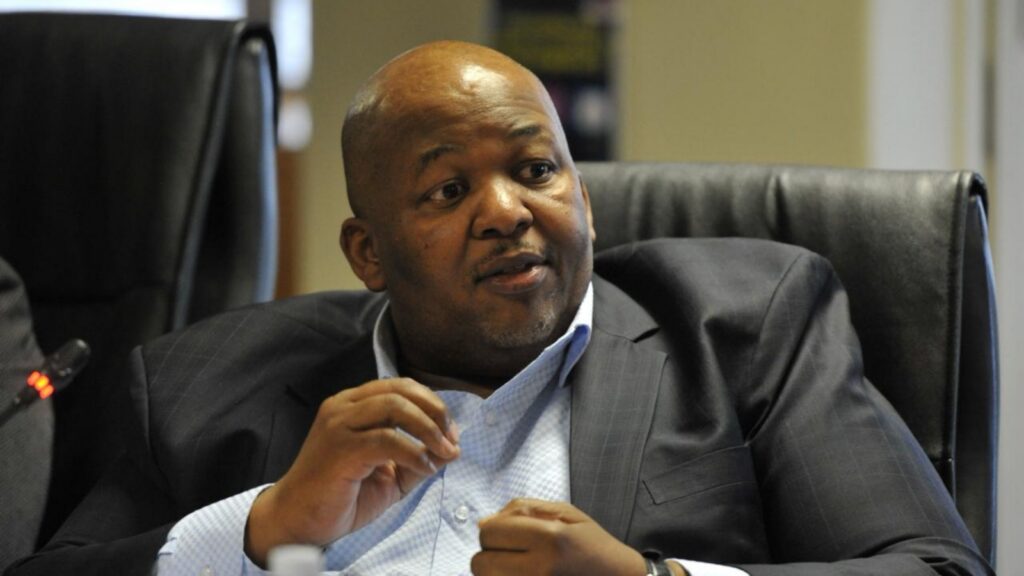
The guaranteed pay of Eskom’s CEO has risen by 180% over the past 15 years, while the amount of electricity the utility sold plunged.
‘Guaranteed pay’ refers to the basic cost-to-company package guaranteed to Eskom’s current CEO, Dan Marokane, including salary, medical aid, and pension funds.
This excludes all short-term incentives (STI), long-term incentives (LTI), and other payments allocated to the CEO for achieving key performance targets.
In Eskom’s 2026 financial year, Marokane’s remuneration package was R12.18 million, of which R9.54 million consisted of his guaranteed pay.
He also received an STI of R2.5 million, with other payments accounting for the remaining R142,000 of his total remuneration.
Eskom appointed Marokane as CEO in March 2024, succeeding André de Ruyter, who resigned in February 2023.
Marokane is the 12th person to serve as Eskom CEO in the last 15 years, with many of his predecessors holding the position for less than six months.
During this 15-year period, Brian Dames held the position of CEO for the longest time, serving an almost four-year tenure from July 2010 to March 2014.
At the close of Eskom’s 2010/11 financial year, Dames’ total remuneration package was recorded at R5.74 million.
Of this, R3.4 million was his guaranteed salary, with an STI of R1.31 million and an LTI of R821,000, alongside other payments of R212,000.
Compared with Marokane’s guaranteed pay of R9.54 million in 2026, the Eskom CEO’s guaranteed salary has increased by 180.7% over the last 15 years.
Factoring in bonuses and other payments, Marokane’s remuneration package is 112% higher than Dames’ was 15 years ago.
Paying more while selling less
While the Eskom CEO’s salary continued to climb over the past 15 years, the amount of electricity the utility sold has declined.
In the 2010/11 financial year, Eskom’s electricity sales volumes totalled 224.45 TWh, up 2.7% from the previous year as the country recovered from the 2008 global financial crisis.
The utility’s sales volumes would see a slight increase the following year, up to 224.79 TWh, which is where it peaked.
Following this, Eskom’s sales volumes started to drop year-on-year, with the utility recording sales of 178 TWh in its most recent financial year.
This is a 6.2% decline from the year prior, and represents the lowest annual sales volumes for the utility since 2000, during which it also sold 178 TWh of electricity.
This means that over the last 15-year period, as the CEO’s guaranteed pay rose by 180.7%, Eskom’s annual sales volumes declined by 46.41 TWh, or 20.7%.
“Eskom’s sales volumes have declined by around 2% annually over the last decade, driven by depressed economic conditions,” Eskom said in its 2026 results.
“In FY2026, local sales dropped by around 10.5 TWh. This was largely because of curtailments by smelter customers, the closure of the Mozal aluminium smelter in March 2026, and slower-than-anticipated demand recovery.”
The company pointed to other factors, such as increased adoption of self-generation and reduced demand from energy-intensive industries, as factors behind its declining sales.
Non-technical losses, including electricity theft and illegal connections, also contributed to the drop in sales, accounting for 13.1 TWh or 7.35% of sales in 2026.
While much of this loss of sales has been counterbalanced by rising electricity tariffs, this has also pushed more South Africans towards self-generation and independence from Eskom.
“We recognise that tariff increases alone are not sustainable,” Marokane said. “Enhancing revenue will depend on diversifying revenue streams.”
“It will also depend on modernising tariff structures for a reformed market, strengthening collection, and retaining and growing sales.”

Comments