South Africans cannot afford to buy beer


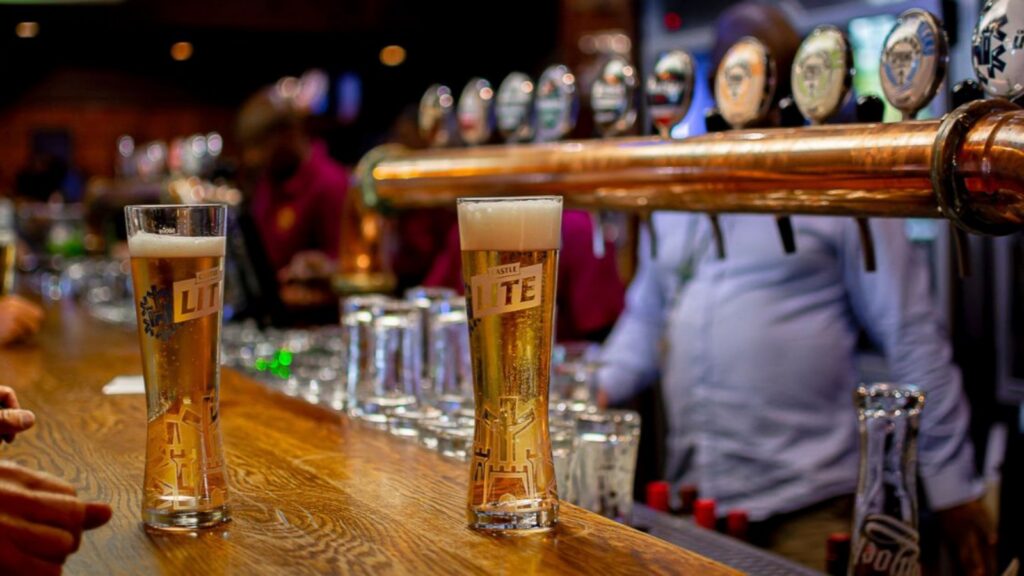
South Africans are purchasing less beer as rising living costs and inflationary pressures place financial strain on households across the country.
South African Breweries (SAB) recently reported that its overall volumes declined in the low single digits during the second quarter of 2026.
Despite this, the company’s premium and super-premium beer brands experienced volume growth in the high twenties, with estimated gains in market share.
Additionally, SAB’s Beyond Beer segment, which includes beverages such as Brutal Fruit and Flying Fish, also saw volume growth in the low twenties.
While the company did not disclose specific figures for these volume changes, it said cost constraints had weighed down its affordable beer sales even as its premium segments performed well.
“South Africa continues to operate in a constrained environment, with many households facing pressure from the rising cost of living and making increasingly considered purchasing decisions,” SAB said.
“While we recorded a low single-digit volume decline, we have seen particular pressure in the affordable segments, with affordability challenges contributing to the growth of illicit alcohol.”
AG Capital market strategist Casey Sprake said the performance divergence should not be viewed as a company-specific problem, but something indicative of a broader issue.
While increasing premium beer volumes shows consumers with purchasing power are thriving, a drop in affordable beer sales reveals the pressure on lower-income households.
As these households continue to struggle under rising costs of electricity, food, transport, and debt repayments, expenditure on non-essential items such as beer gets cut.
“A beer bought from a township shop or local tavern occupies an unusually revealing place in the consumer budget,” Sprake said. “It is neither a staple nor a large-ticket discretionary purchase.”
“Falling sales are more than a minor brewing statistic. They offer a useful measure of how much room remains in the South African household budget once the essentials are paid for.”
Further inflation risks ahead

South Africa’s consumer price inflation slowed to 4.3% in July, down from 5% the month before and lower than the expected 4.5%, which analysts had predicted.
While this was welcomed by South African consumers, inflationary risks still remain that could keep pressure on households in the coming months.
According to Sprake, South African consumer analysis often focuses on interest rate movements while ignoring other cost considerations.
“Rate cuts may ease debt repayments, but lower-income households must first contend with food, electricity and transportation costs,” Sprake said.
“Until those pressures recede, cheaper credit is unlikely to translate fully into higher discretionary spending.”
Sprake pointed to the Western Cape, which experienced its driest July in decades this year. This, she said, could lead to lower yields, higher irrigation costs, and tighter produce supply.
This would trickle down to consumer prices, with Sprake explaining that the smaller scope of fresh food to trade down compared to staples would add to the pressure already seen in SAB’s volumes.
While this would be offset by easing food and non-alcoholic beverage inflation, which slowed to 1.6% in July, she said this would not automatically undo the squeeze on household budgets.
At its last meeting in July, the South African Reserve Bank’s Monetary Policy Committee voted to hold the country’s repo rate at 7%.
With inflation still well above the Reserve Bank’s 3% target, Sprake said investors should not position themselves too aggressively for a smooth rate-cutting cycle in the months ahead.
“For South African equities, SAB’s weakness in affordable volume suggests against a broader lower-end consumer recovery trade,” Sprake said.
“The better opportunities are likely to be businesses serving premium consumers, offering clear value, or selling non-discretionary goods rather than relying on volume growth from stretched households.”





Comments