South Africa’s rand enters a new era


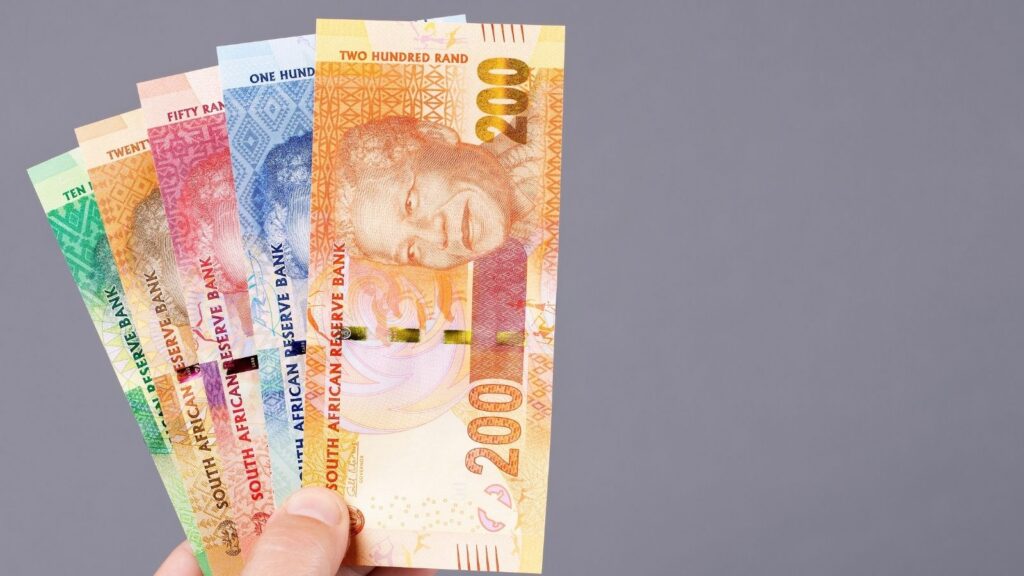
South Africa’s rand is set to benefit from the country’s improved economic fundamentals in the coming years, which could see a stronger currency emerge.
This is according to PSG Financial Services chief economist Johann Els, who urged local investors to change their thinking about the rand.
“South Africans have become conditioned to believe that the rand only weakens over time. That view is understandable. For much of the past 15 years, it has largely been true,” he said.
“But investment views should evolve as the facts change. I believe many investors are still analysing the rand through yesterday’s framework rather than tomorrow’s.”
Els emphasised that this does not mean the rand will enter a one-way appreciation cycle, and will continue to respond to global risk appetite, commodity prices, US monetary policy, and geopolitical events.
“Periods of weakness are inevitable. My argument is simply that the rand’s long-term equilibrium may be stronger than markets currently assume,” he said.
Els pointed out that while South Africa is still on the road to recovery and some reforms are progressing more slowly than others, markets reward improving fundamentals, not perfect fundamentals.
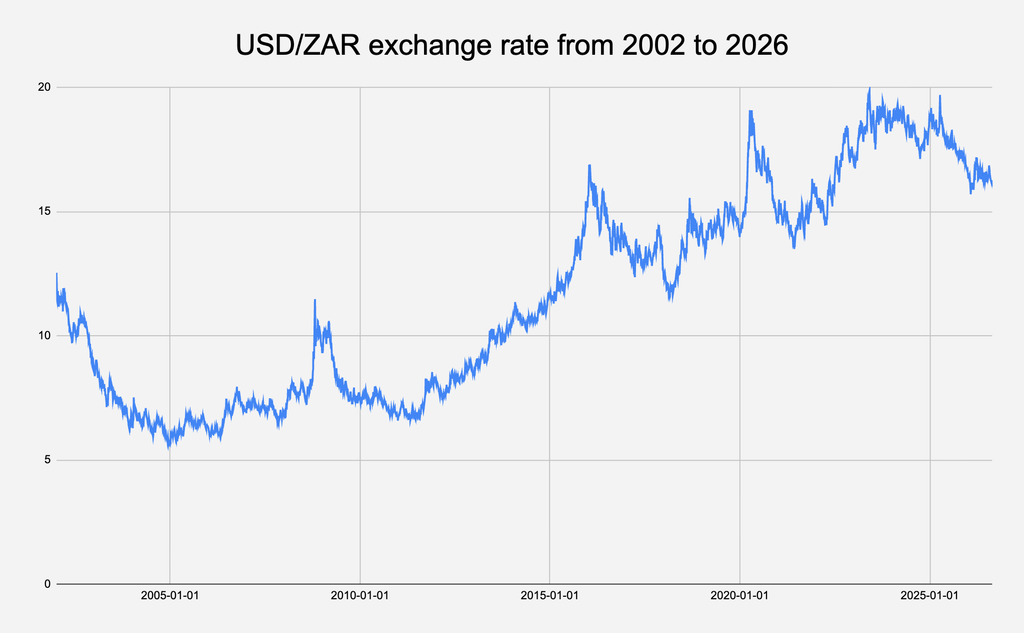
He compared the current status quo with that of the period between 2002 and 2008.
South Africa saw strong economic growth, improved fiscal discipline, declining state debt, and repeated sovereign rating upgrades. This saw the rand strengthen significantly over that six-year period.
While Els does not expect a repeat of that period, he said it shows that exchange rates respond when fundamentals improve. “They don’t simply move in one direction forever,” he said.
Now, South Africa is starting to see many of those same “ingredients” returning, with the country’s growth outlook improving and structural reforms gaining momentum.
The country has even seen credit rating upgrades from S&P and Fitch over the past year.
“Add one of the most sophisticated financial sectors in the emerging world and a resilient private sector, and South Africa starts from a much stronger base than is often acknowledged,” Els said.
Rand breaks R16/USD resistance level
Els’ comments come after the rand briefly broke through the R16/USD resistance level on Friday, 21 August.
Investec chief economist Annabel Bishop said the rand flirted with this key resistance level, but did not make a clean break.
She attributed this to the rand’s strengthening momentum being slowed by automatic financial market orders that had been built up around this level.
In turn, she attributed the rand’s strength mainly to a weaker US dollar, with the greenback having weakened since the end of July in the main.
This caused the rand to strengthen sharply from R16.84/USD to R16.00/USD, as the US ten-year treasury yield has strengthened from 4.85% to near 5.30%.
She explained that the rand’s reaction to the ongoing global economic shock of the war in Iran marks a departure from previous years.
“During previous, marked global economic and/or financial market shocks, South Africa would have seen substantial rand weakness instead, markedly higher bond yields, and foreign sell-off of equities too,” she said.
“But this time, there is a lot more stability. The rand has been a particular beneficiary of the improved investor confidence in South Africa.”
While dollar weakness has been the main driver of the rand’s strength, the South African currency has also benefited from the recent rise in gold and platinum group metal (PGM) prices.
PGMs are South Africa’s main commodity export, accounting for more than half the rand value of total commodity exports, and are, therefore, a key driver of export earnings and rand support.
However, Bishop noted that while the rand was not expected to strengthen to as much as R16/USD, further strength would require marked momentum to sustain it below this resistance level.






Comments