South Africa must stop BEE and expropriation without compensation


For the South African economy to grow, the state must end destructive policies such as Black Economic Empowerment (BEE) in its current form and expropriation without compensation.
These policies scare off both local and international investors, leaving South Africa without sufficient capital to invest in the economy.
This translates into sluggish economic growth and an inability to create enough jobs to tackle South Africa’s unemployment crisis.
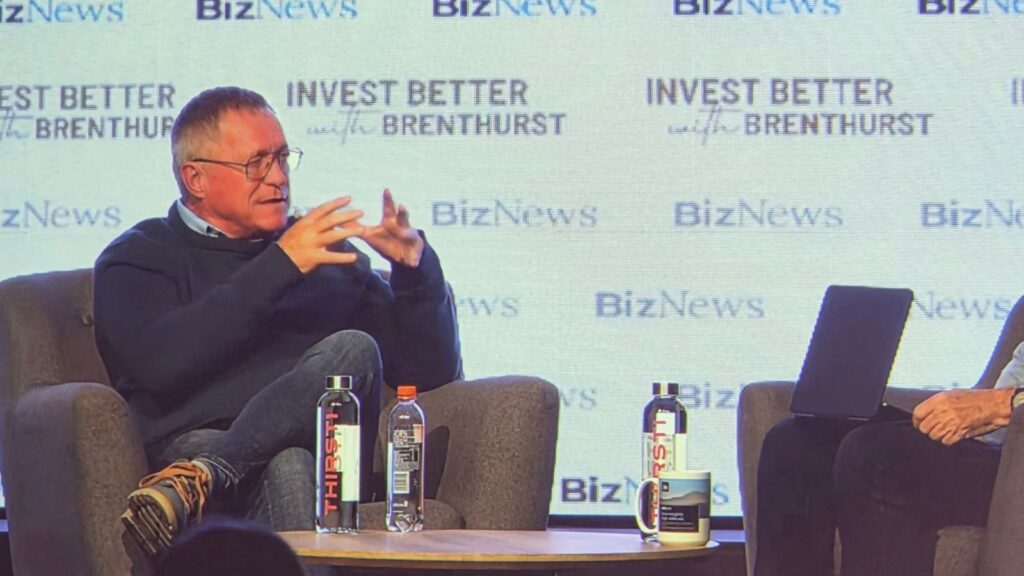
Efficient Group chief economist Dawie Roodt outlined the impact of destructive policies at the 9th BizNews Conference.
Roodt explained that South Africa’s economy could easily grow at above 3% per annum, and even reach 5%+ in the short term.
However, this requires ending destructive policies and creating an enabling environment for the private sector to invest and grow.
Roodt said this is easier than many think, and the impact will be quicker than most predict. He pointed to the implementation of a lower inflation target as an example.
“Last year, we had a change in policies. We reduced the inflation target to 3% and see what happened to the financial markets. They ran at the drop of a hat,” Roodt said.
“That changed how the world saw South Africa and local assets in a heartbeat. It can happen that quickly with the right policies in place.”
At the top of Roodt’s list is the scrapping of BEE and expropriation without compensation, as these are the most destructive policies the government has.
Roodt said that BEE, despite its intentions, is a failed policy that has been abused by well-connected political elites to enrich themselves.
Expropriation without compensation runs counter to private property rights, which is the basis for all economic exchange, Roodt said.
Without private property rights, South Africans cannot trade goods and services freely, and investors will be reluctant to allocate capital to the economy.
“We can easily grow this economy if we just get rid of some of these policies like BEE and expropriation without compensation,” Roodt said.
Foreign exchange controls
Roodt explained that, beyond ending BEE and expropriation, the government has to look at eliminating foreign exchange controls.
This would free up capital flows into the country and give investors greater certainty about repatriating funds from South Africa.
Roodt said this is a major barrier to investment and economic growth in South Africa, with these controls a legacy of past authoritarian governments.
These policies are outdated and create unnecessary complexity for people living in South Africa and foreigners wanting to invest in the country.
“I want to reduce your taxes. I want to get rid of foreign exchange controls because it’s your money. You can do with it whatever you want,” Roodt said.
“Technology has just run away from these guys. They are still stuck somewhere 100 years ago. Accept the reality that we are getting more power in our hands as individuals and stop trying to prevent us from doing stuff that’s good for us.”
Roodt explained that South Africa’s tax regime is also extremely complicated, which creates an administrative burden for SARS and significant loopholes.
Were he Finance Minister, Roodt said he would make the South African tax regime as simple as possible and remove any loopholes.
“I will fix this tax regime without necessarily lowering the tax bill, but I will make it the simplest. I will make the easiest with the least complicated tax regime in the world,” he said.
“You will still have personal income tax, but I would reduce it to only income tax. There would be no deductions, no rebates, nothing.”
Roodt said the same should apply to value-added tax (VAT). He argued that there should be no zero-rated items, as they do not address poverty and result in the state losing out on vital revenue.
This would enable SARS to significantly reduce its administrative burden and make the tax collection system more efficient.
Roodt said none of this can be done by an ANC-led government, as it fundamentally believes in state control of the economy and capital.
“This belief that everything belongs to the state on behalf of the poor and nothing belongs to individuals is completely out of touch with a modern economy,” Roodt said.
“The path to faster economic growth lies in moving towards individual freedom and private property rights. This will unleash the animal spirits in the private sector that drive growth.”




Comments