Why earning R1 million does not make you a millionaire in South Africa


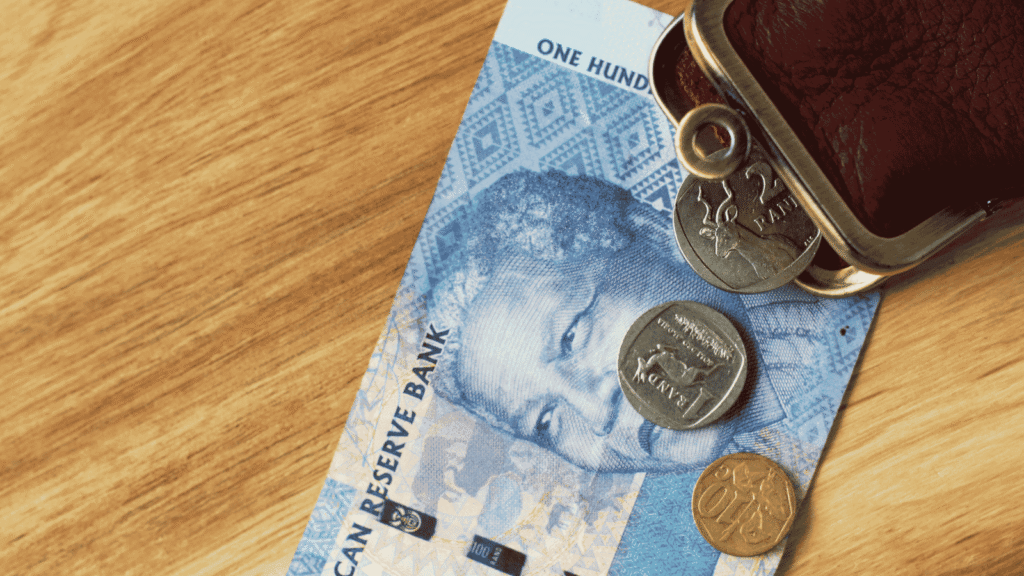
South Africa’s high personal income taxes, a lack of functioning government services, and a host of rates and levies mean that becoming a millionaire in the country requires a lot more than a seven-figure salary.
A R1-million salary is often seen as a benchmark of success and wealth in South Africa.
When you look at a breakdown of someone who earns R1 million per year, however, it is clear to see that this is not a one-way ticket to millionaire status.
The first big chunk of money that disappears from your R1-million annual paycheck is the personal income tax you pay to SARS.
In this case, your company will pay R288,293 directly to SARS and deduct it from your salary.
This is based on the tax bracket you fall into for a R1-million salary, along with the guaranteed tax rebate you receive.
- Personal Income Tax: R251,258 + 41% of taxable income above R857,900
- Tax Rebate: R17,820
Next up is the Unemployment Insurance Fund, which you also don’t have control over and comes directly out of your salary. This will be R2,125.
Your take-home pay is now R709,581 – almost 30% down – which is the amount that arrives in your bank account.
More taxes incoming
The taxes you pay do not stop there, however, as the South African government has implemented a range of charges which you must cover as part of daily life.
Each time you fill up your car with 95 petrol, you pay R7.72 in taxes and levies on each litre you buy.
If you use 100 litres of petrol per month – about two tanks – you are paying R772 to the government.
Buying the car itself also incurs a tax, as you pay 15% VAT to the government as part of the purchase price.
A R500,000 car, for example, consists of:
- VAT: R65,217
- Car Base Price: R434,783
Then there is an annual car licence fee you must pay. For a normal hatchback or sedan, this is around R800 per year.
If you drive on a toll road from Johannesburg to Durban, you pay some more. Tolls on this route total just over R347 each way.
Buying a house
Buying a house brings yet more taxes and levies onto South Africans.
When you buy a house from someone, you must pay a transfer duty to SARS. For a R3-million house, this is R107,356.
Monthly property taxes are then charged based on where you live.
A R3-million house in Johannesburg, for example, will cost you just over R2,146 per month in municipal property rates.
Buying furniture, electronics, curtains, carpets, books, clothes, and many types of food for your home also incurs 15% VAT.
Monthly services – such as a fibre internet connection, Netflix subscription, and cellphone contract – also attract 15% VAT.
For example, if you spend R10,000 per month on services and goods for your home, you are paying R1,304 in VAT.
And don’t forget to pay your TV licence – another R265 per year.
Government failure
The highest cost to individuals in South Africa, besides income tax, though, is the need to pay for private services due to government failures.
Private hospitals dominate the medical landscape in the country, as state hospitals struggle to provide health services and perform surgical procedures.
The result is people taking out medical aid, which easily costs over R3,000 per month, per person, for a comprehensive plan.
It’s the same for schooling. Private schools and former Model C schools – where you pay school fees each month – are in high demand in South Africa due to the poor performance of no-fee government schools.
This can easily cost you R5,000 per child per month at a private high school.
South Africa’s high crime rates have pushed people into gated neighbourhoods and housing estates, too, where security fees and estate levies are charged.
This can range from a few hundred rand per month to over R3,000 per month for higher-end developments.
Investments get taxed
Any money you manage to save at this point is still not safe from the government and SARS. The two big taxes that come for you are Dividends Tax and Capital Gains Tax.
If you buy shares in a company which pays a dividend, a dividend tax is applied. In South Africa, this is a 20% withholding tax. The tax is a flat 20%, regardless of your other income.
For example, if you receive R100,000 in dividends each year, you pay R20,000 to SARS.
Tax on capital gains is a bit more complicated. If you buy an asset and sell it for a profit, and that asset is subject to Capital Gains Tax, 40% of the profit (the capital gain) is added to your taxable income.
For example, if you buy shares for R100,000 and then sell them a few years later for R300,000, you make a capital gain of R200,000.
40% of this R200,000 is added onto your taxable income – and taxed at your marginal rate.
If you are in the top tax bracket of 45%, this works out to an effective rate of 18%. So you pay:
- R200,000 x 40% = R80,000 added to taxable income
- R80,000 x 45% = R36,000 in tax paid
It must be noted that an annual exclusion of R50,000 in capital gains is granted to individuals in South Africa. This amount is subtracted from your total capital gains for the year before the tax is calculated.
If you are thinking you can bypass Dividends Tax and Capital Gains Tax by simply leaving your money in the bank, you are wrong.
Any interest you earn on your money by leaving it in a bank account, savings account, or notice account is treated as interest income – and is taxed.
In South Africa, interest income is added to your total taxable income for the year and taxed at your marginal rate.
If you are in the top tax bracket of 45%, you pay 45% tax on your interest income.
For example, if you make R100,000 in interest income, you pay R45,000 in tax.
It must be noted that an annual exclusion of R23,800 on interest income is granted to individuals in South Africa. This amount is subtracted from your total interest income for the year before the tax is calculated.
The result
You are taxed when you earn money, you are taxed when you spend money, and you are taxed when you save money.
The results are many years of saving and investing for your net wealth to exceed R1 million, if you earn a R1-million salary.





Comments