Johann Rupert’s energy company on ending Eskom’s monopoly


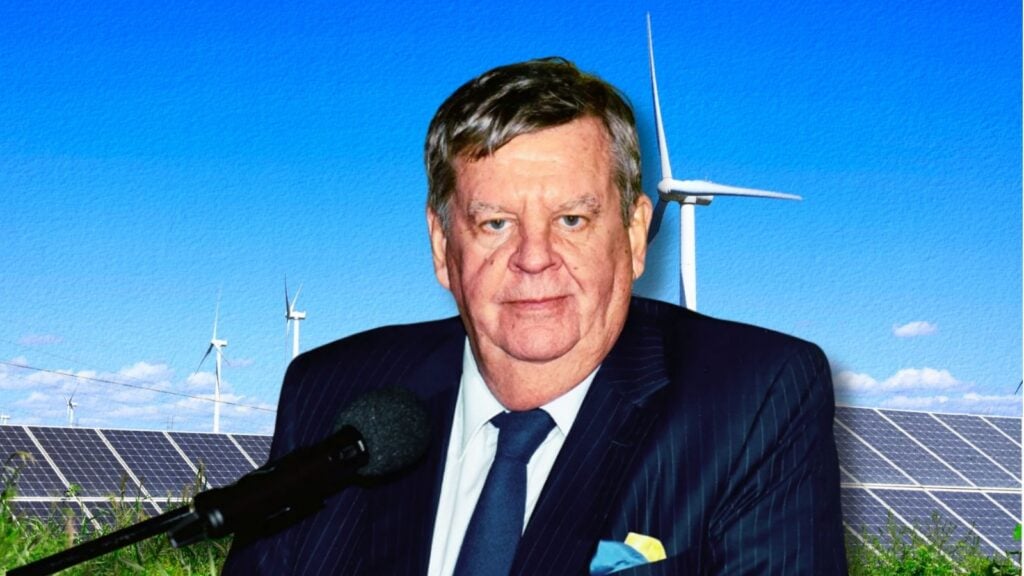
Johann Rupert’s Energy Exchange of Southern Africa (EXSA) is facilitating the creation of a fully liberalised electricity market in South Africa.
This would give consumers the power to choose their generator among various private producers and Eskom, ending the utility’s 103-year-old monopoly.
EXSA is a private energy exchange in South Africa, having received an electricity trading licence from the National Energy Regulator of South Africa (Nersa) in 2022.
The company has powerful backing, having been created by Johann Rupert’s Remgro after the government kick-started reforms to liberalise South Africa’s electricity market.
It aims to provide a platform through which private producers, particularly renewable energy generators, and consumers can trade electricity.
EXSA is far from the only player in this space, with Investec and Discovery both having their own trading platforms, alongside specialised companies such as Empower Trading and Envusa Energy.
Competition in the electricity market has been facilitated by the significant reforms the government has been implementing over the past few years.
The government is executing a plan that will see Eskom lose its monopoly and create an open, competitive electricity market.
Part of this is Eskom’s unbundling to create an independent state-owned company to manage the transmission grid and the competitive market.
Remgro entered this sector with a 51% stake in Enerweb via its subsidiary, Ubiquity Energy. This company provides the platform that runs the Southern African Power Pool.
This is a trading platform that enables electricity trading between Southern African Development Community countries. It gave Remgro insight into how to build a trading platform for South Africa.
As the government began liberalising the electricity sector, the price of Eskom-generated power skyrocketed. Along with unreliable supply, this pushed private players to find alternatives.
Remgro seized the opportunity and built EXSA to initially source private, renewable energy for its investee companies. Demand soon ensured it opened this up to companies outside of Remgro.
The company has grown significantly since getting a licence from Nersa in 2022, sealing multi-billion agreements with Mediclinic, Woolworths, Old Mutual, Siqalo Foods, and Seriti Green.
In 2023, RMB acquired a 25% shareholding in EXSA’s parent, Ubiquity Energy, from Remgro, giving it significant financial backing.
Much of the company’s power comes from Earth & Wire’s solar plant in Malmesbury and Seriti Green’s Ummbila Emoyeni wind farm in Mpumalanga.
Ending Eskom’s monopoly

EXSA recently explained what it means for South Africa to replace Eskom’s monopoly with a fully open electricity market, in which it will be a major participant.
“A fully liberalised market isn’t just about ending a monopoly, it is the dawn of a new era where energy is traded in real-time, and prices are discovered transparently,” it said.
In this situation, businesses and households will have the power to choose where they source their energy from.
This introduces competition to Eskom’s generation division for the first time and enables private players to offer significantly lower prices by using renewable technologies.
More importantly, it unlocks significant investment in new energy generation in South Africa and will see billions pumped into the overhaul of its transmission grid.
“In a fully liberalised landscape, the electricity sector is no longer a monolithic entity. Instead, it is a vibrant ecosystem of independent generators, licensed traders, and active consumers,” EXSA said.
“The National Transmission Company South Africa serves as the referee, managing the grid as a common highway, while the South African Wholesale Electricity Market provides the trading floor.”
EXSA said the creation of a liberal energy market has three important implications for South Africa’s economy –
- Real-time price discovery: Like the UK and Nordic models, a liberal market introduces day-ahead and intraday markets where prices fluctuate based on supply and demand. Businesses can adapt to price changes in real time.
- The rise of the aggregator: In a complex market, businesses need traders like EXSA to aggregate and pool energy from a network of producers and match them with suppliers.
- Grid resilience: Competition incentivises the roll-out of battery storage systems to supply renewable energy during peak demand, stabilising the national grid.
EXSA explained that the legal foundation for a liberal market has already been laid by the Electricity Regulation Amendment Act.
The transition initially began with one-to-one wheeling. A fully liberalised market enables many-to-many trading, effectively creating multiple ‘Eskoms’.
In the ideal case, EXSA said that a company with five offices or production facilities across South Africa can manage a single, consolidated energy bill, regardless of where the power is generated or consumed.
“This level of sophistication transforms energy from an uncontrollable overhead cost into a strategic, manageable asset,” EXSA said.
“It fosters an environment where investment in new generation capacity is driven by market signals rather than government procurement cycles.”
 Loading ...





Comments