Petrol price surprise for South Africa


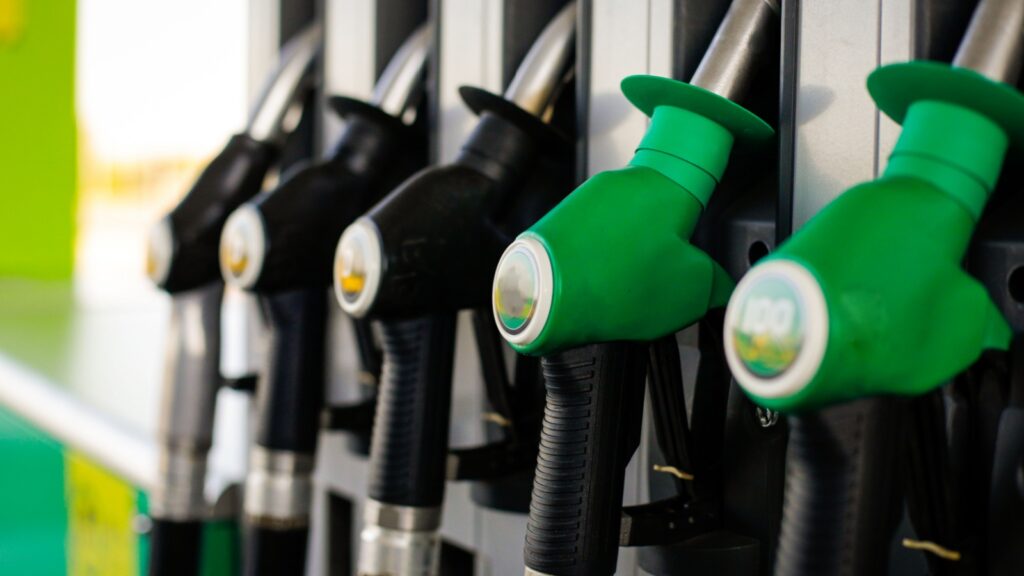
Petrol prices will come down by 52 cents per litre in August, offering some relief to motorists. Diesel prices, however, are rising by over R1 per litre.
This is a surprise for petrol users, with data from the Central Energy Fund indicating an under-recovery and thus a hike for August.
However, the Department of Mineral and Petroleum Resources revealed on 3 August that petrol prices will fall from 5 August.
This is because the department uses an average of the daily over- or under-recoveries in fuel prices, and not the oil price and exchange rate at the end of the month.
The basic fuel price is calculated daily based on the international price of oil and the rand-dollar exchange rate, then it is compared to what it was at the start of the month.
If it is below the price at the beginning of the month, there is an under recovery. If it is above, there is an over recovery. An over recovery means prices will come down.
The daily run rate adds up to an average over or under recovery for the month and translates into a price hike or cut for the next month.
For August, the calculations by the department revealed the following changes –
- Petrol 93 – decrease of 52 cents per litre
- Petrol 95 – decrease of 52 cents per litre
- Diesel 0.05% – increase of 138 cents per litre
- Diesel 0.005% – increase of 123 cents per litre
The large gap between the price of petrol and diesel is because of a global shortage of diesel amid reduced output from the Middle East and Russia’s ban on exports of the fuel.
However, the petrol price cuts announced by the department are significantly lower than what they could have been, thanks to sporadic conflict in the Middle East.
The department explained that the average Brent Crude oil price decreased from $86.53 per barrel to $82.37 during July.
This is despite moments of the price being above $100 per barrel during periods of intense conflict between the United States and Iran.
The department said this was offset by price declines in June and in the first half of July due to the ceasefire agreement between the two countries.
Over the period, the rand weakened slightly to R16.46 to the dollar due to rising geopolitical tension, but this was not enough to offset declining oil prices with regard to petrol.
Interest rate hikes coming

The changes are unlikely to significantly alter inflation in South Africa, as fuel prices remain elevated and price increases are becoming entrenched in the economy.
Stanlib chief economist Kevin Lings explained that price increases in other areas of the economy are beginning to drive the headline inflation number higher.
Once these price increases take effect, inflation becomes much harder to tame as prices do not fall as quickly as they rise.
For example, once a taxi fare rises, it is very unlikely that the increase will be reversed by the same amount a month later if fuel prices fall.
This means that the inflation is ‘stuck’ in the economy until the price increase rolls off in a year’s time, bringing overall inflation lower.
Lings noted that core inflation, which excludes fuel prices, rose to 4% in the latest inflation data release, indicating that prices beyond petrol and diesel are rising.
This was driven by transportation costs, which are skyrocketing. This is partly driven by fuel prices, but Lings said the real pressure came from passenger services.
“This refers to things like taxi fares, which rose 11.5% in June. That is way higher than anticipated. The cost of e-hailing went up 8.5%, and a similar rise occurred in bus fares,” Lings explained.
“All of those came in above expectations and contributed strongly to the overall inflation rate, which is much higher than the Reserve Bank’s target.”
Lings said this will increase pressure on the Reserve Bank to act on the elevated inflation rate and bolster its credibility in meeting its new target.
“The decision to hold rates in July increases the prospect that the Reserve Bank will have to increase rates at its next meeting in September,” Lings said.
“If I consider where the latest inflation data is, the potential for upside risk to the fuel price, and potential for second-round effects, then I will suggest the Reserve Bank will have to increase rates by 25 bps in September.”
Lings said this may be followed by another hike in November. The market, at the moment, is pricing in two further 25-basis-point hikes for 2026.
“There has been discussion that the Reserve Bank will have to hike rates by 50 bps in September to catch up. I think that is unlikely,” Lings said.
“The economy is very and interest rates are already relatively high. I think the Reserve Bank will continue to adopt a cautious approach, so I would factor in at least one rate hike before the end of the year.”



Comments