Warning signs for South Africans earning over R8,000 per month



South Africa is sliding into a household debt trap, which poses a risk to consumers and the long-term sustainability of the banking sector.
This is the warning from Professor Conrad Beyers, head of the Department of Actuarial Science at the University of Pretoria.
Beyers has previously served as the Absa Chair in Actuarial Science and editor of the South African Actuarial Journal.
He is a respected voice in the South African financial and banking sector and has worked with and advised most of the country’s top institutions.
Beyers warned that for many South Africans, debt is no longer a bridge to a better future. It has become a trap.
“We are sliding into a household debt crisis in which growing numbers of working people are borrowing simply to survive,” he said.
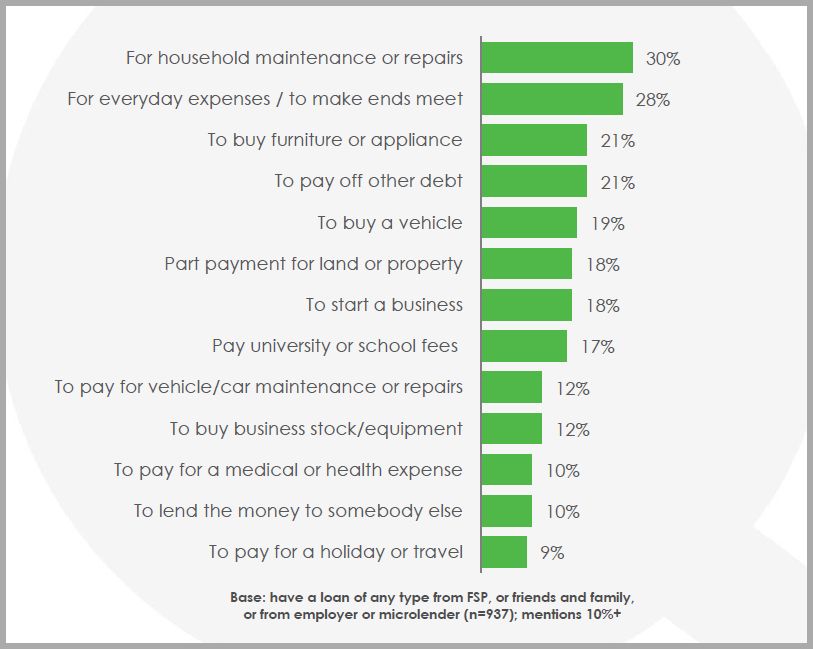
“Credit is increasingly being used not to buy homes or build businesses, but to pay for food, electricity and existing debt.”
Individuals then borrow again to service earlier debt they cannot repay, leaving them with interest and penalties and more dependent on credit. This creates a debt spiral.
He cited the Old Mutual Savings and Investment Monitor 2026, which examined the financial attitudes of South Africans aged 18 to 65 who earn over R8,000 per month.
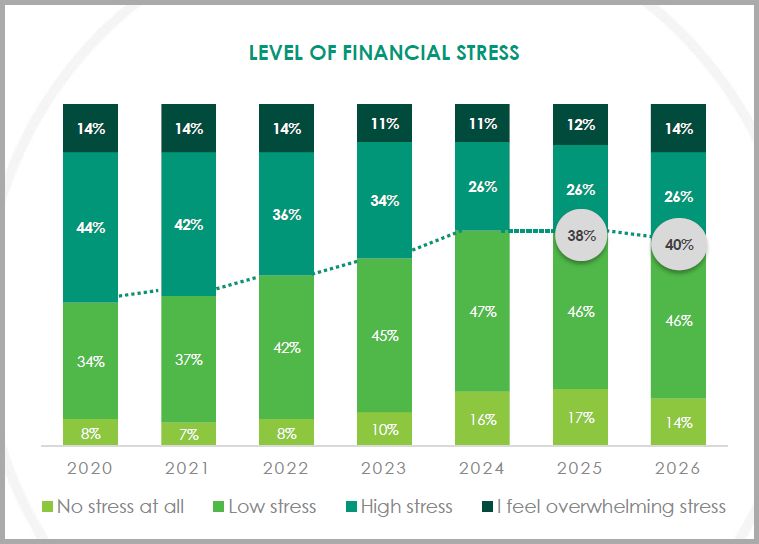
The report found that 40% of respondents experience considerable financial stress, rising to 47% among those earning below R30,000 per month.
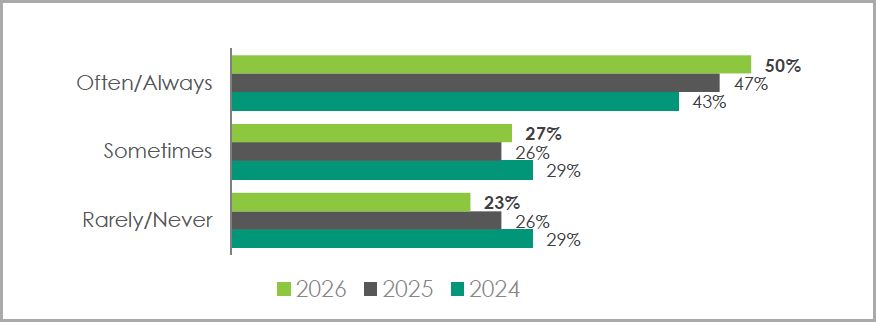
Half of respondents frequently worry about debt, compared with 43% in 2024. It also showed people increasingly turning to informal borrowing and gambling.
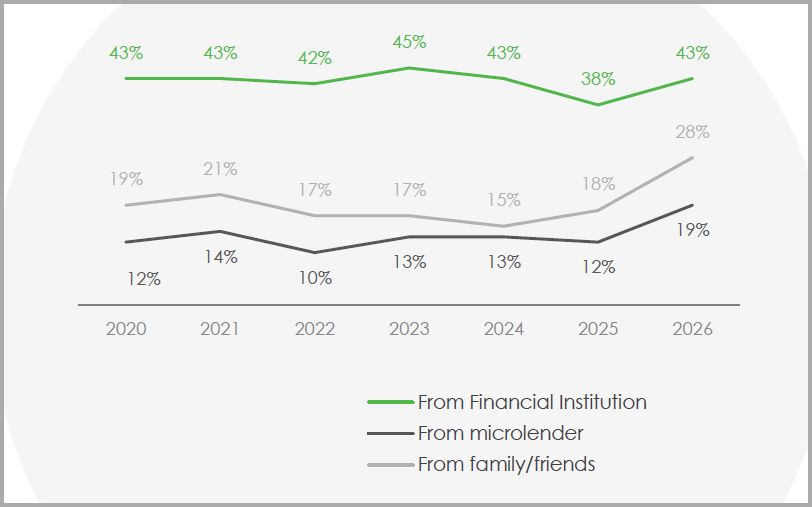
“The true position may be considerably worse. Debt owed to family, stokvels, and unregistered lenders remains invisible to credit bureaus,” he said.
Some households remain technically up to date only by taking new credit or postponing other payments.
Financial collapse is often recorded only at the end of the debt spiral, long after the household has become trapped.
South African banks should be concerned

Beyers argued that South African banks and their leadership should be concerned about the growing debt burden.
“Banks cannot remain healthy while the people and businesses supporting them become more indebted and less able to withstand small financial shocks,” he said.
Beyers said that the system in South Africa is beginning to resemble a snake consuming its own tail.
“Banks continue to earn interest and fees from financially exhausted households while gradually eroding the economic base that sustains them,” he said.
Much of this growing debt burden is linked to financial inclusion, which has become a buzzword in the industry.
“It is often presented as though poorer households are being helped simply because they receive access to more loans and financial products,” he said.
However, there is a version of financial inclusion that is exploitative, which is starting to appear in the country.
“The end result of this inclusion is often that an increasing part of a salary disappears into interest and repayments, without any growth in assets,” he said.
“The system is not helping to build that customer’s future. This should not be portrayed as helping customers.”
Beyers said that real financial inclusion should help people save, acquire assets, start businesses, and become financially stronger over time.
He warned that financial inclusion cannot be measured merely by the number of accounts opened or loans granted.
“Credit is vital when it finances homes, education and productive assets. The problem arises when debt finances basic consumption without creating future economic value.”
Short-term thinking can damage banks and consumers

Part of the problem lies in how banks define success. It is much easier to sell another credit product than to help create new wealth and economic activity.
“The first produces income for the bank almost immediately. The second takes time,” Beyers explained.
If banks’ internal performance measures reward what appears quickly on a financial scorecard, consumer credit will receive more attention than the harder work.
“South African banks are currently competing for consumer credit and short-term returns, even though the consumer market is under strain,” he said.
“The argument is not that banks should withdraw consumer credit. Credit remains essential.”
“The concern is that, presently, too much emphasis is placed on short-term lending and too little on finance that develops wealth, assets and sustainable outcomes.”
He urged banking boards and executives to urgently examine their targets, remuneration structures and performance measures.
Beyers said that banks should use the information they already hold to identify distress before customers default.
“A viable household that is beginning to fall behind should be offered early restructuring, fair consolidation, and lower-cost refinancing,” he said.
He added that banks should stop marketing new credit to customers who are already using debt to repay debt.
“They should compete on bank charges and the cost of consumer credit. Saving and reducing debt should be made as easy as increasing a credit limit,” he said.
Financial stress
Worry about debt
Personal loans
Application of personal loans
Debt repayment trends
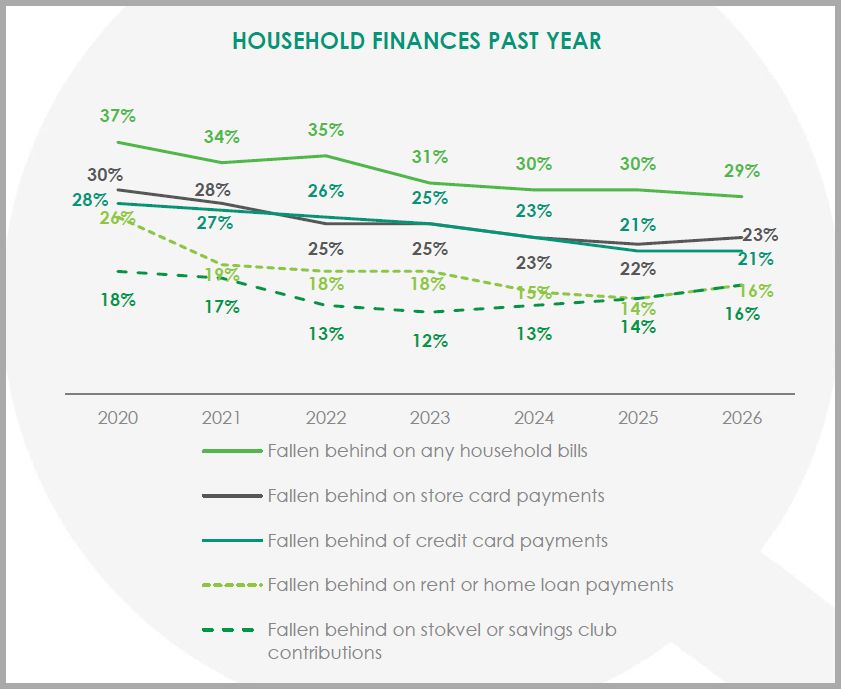
Household finances
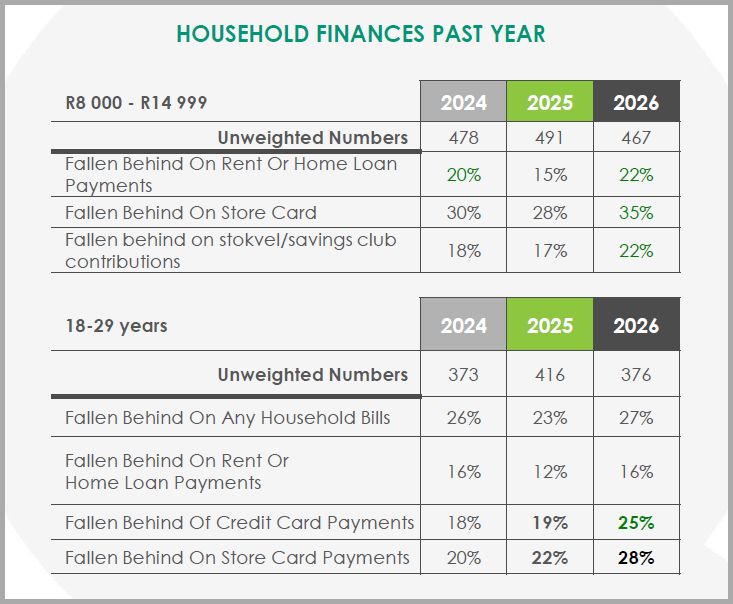
Debt management
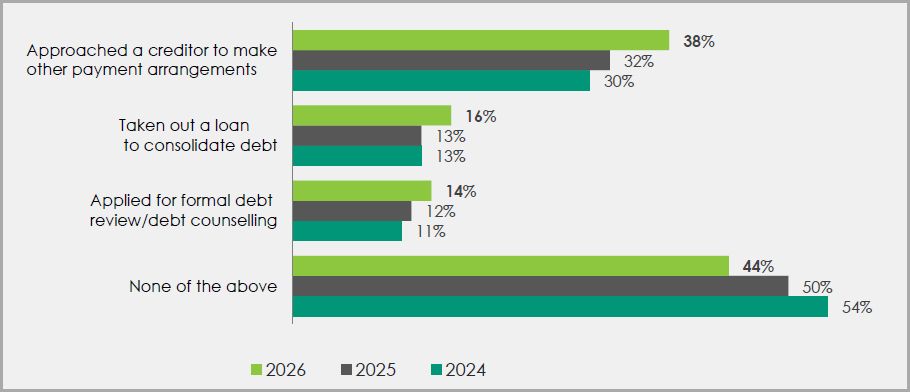






Comments