The Reserve Bank’s R4 billion gift to South Africa


The Reserve Bank’s decision to keep interest rates unchanged may have prevented removing R3 billion to R4 billion in residential transaction value from the market each month.
This is because high interest rates affect bond repayments and can also discourage buyers from entering the market at all.
By keeping interest rates unchanged rather than implementing another 25-basis-point hike, the Reserve Bank avoided discouraging buyers from entering into property transactions.
This is feedback from Blok CFO Nic Tromp, who described the impact of the Reserve Bank’s decision in a recent social media post.
Tromp explained that interest rates affect not only bond repayments but also whether property transactions occur at all.
“When the South African Reserve Bank began cutting rates in late 2024, home loan applications surged and transaction activity started recovering,” he said.
The Reserve Bank started cutting interest rates in September 2024 after more than a year of keeping interest rates unchanged.
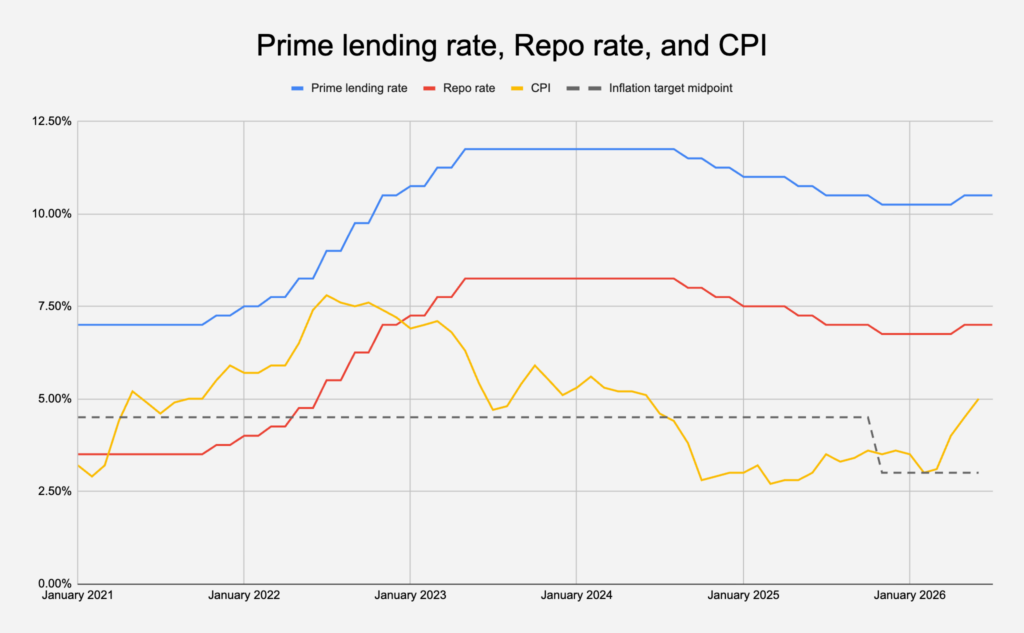
At that stage, interest rates were at 15-year highs of 8.25% for the repo rate and 11.75% for the prime lending rate.
Between September 2024 and November 2025, the Reserve Bank’s Monetary Policy Committee (MPC) slashed interest rates by a cumulative 150 basis points.
It hiked rates again in May 2026 on the back of inflationary pressures stemming from the Iran war, bringing the repo rate to 7% and the prime lending rate to 10.50%.
At its July meeting, the MPC voted to keep interest rates unchanged, surprising many economists who had predicted a more hawkish tone.
The decision to keep rates the same was based on the MPC’s updated assessment of the balance of risks in the economy.
The committee also took into account uncertainties arising from the Middle East conflict and the time lags in monetary policy outcomes.
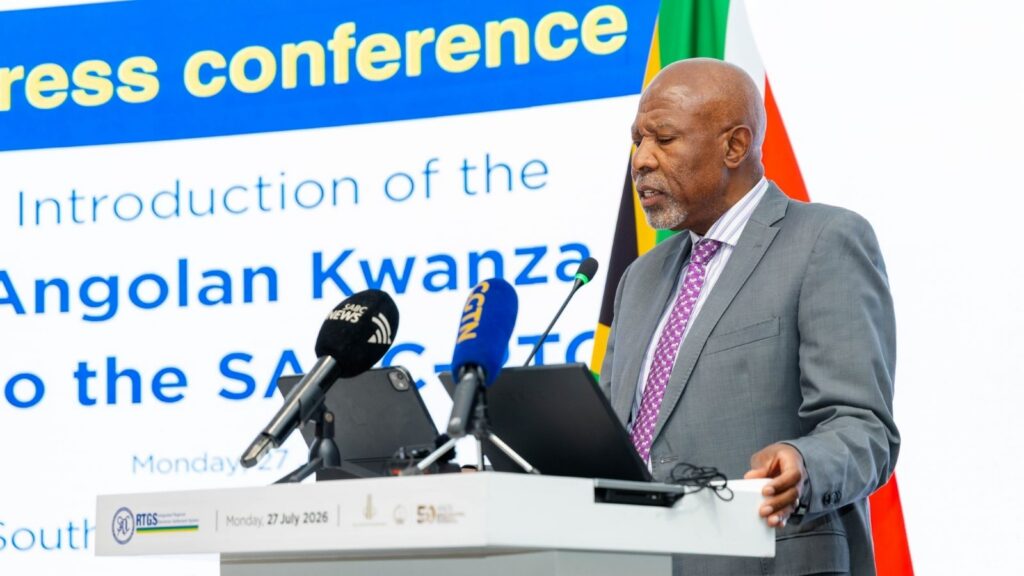
Reserve Bank Governor Lesetja Kganyago expressed some concern about South Africa’s economic growth prospects, saying the committee sees downside risks.
An unexpected gift
Tromp explained that by keeping interest rates unchanged rather than increasing them by 25 basis points, the MPC gave the property market an unexpected gift.
He said that, by keeping the prime lending rate at 10.50%, the MPC preserved R3 billion to R4 billion in residential transaction value in the market each month.
“Higher interest rates suppress affordability, confidence, and ultimately liquidity,” he explained.
“The biggest impact of interest rates isn’t on property prices. It’s on the number of buyers willing and able to transact.”
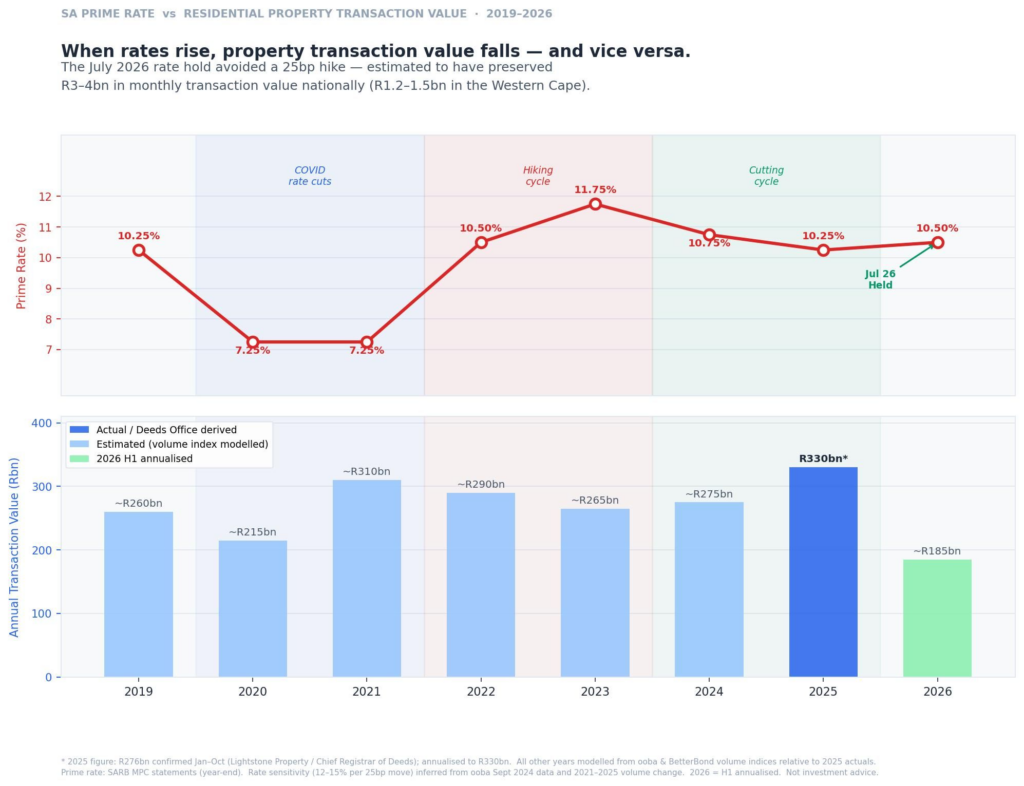
The effect of the MPC’s July decision is evident in historical market reactions to interest rate changes, which Tromp shared.
During the Covid-19 pandemic, the committee slashed rates to historic lows to support struggling households.
Over the same period, annual property transaction values rose to R310 billion in 2021, compared to R215 billion in 2020.
Similarly, in 2022, when the Reserve Bank had entered a hiking cycle and raised rates by a cumulative 300 basis points, annual property transaction values fell to R290 billion.
In 2023, when rates remained at their 15-year highs, the annual property transaction value fell further to R265 billion.
As the MPC entered a cutting cycle in late 2024 that continued into 2025, annual property transaction values rose to R275 billion and R330 billion, respectively.
For 2026, the year-to-date property transaction value is sitting at R185 billion. Following the MPC’s decision to keep rates unchanged, this value is now more likely to continue growing.
The Reserve Bank’s Quarterly Projection Model shows the policy rate remaining broadly stable through the remainder of 2026.
The model also shows cuts later in the forecast, as inflation is expected to fall to the Reserve Bank’s 3% target and rates adjust towards neutral levels.






Comments