Expropriation without compensation in South Africa can apply to farms, houses, and cars


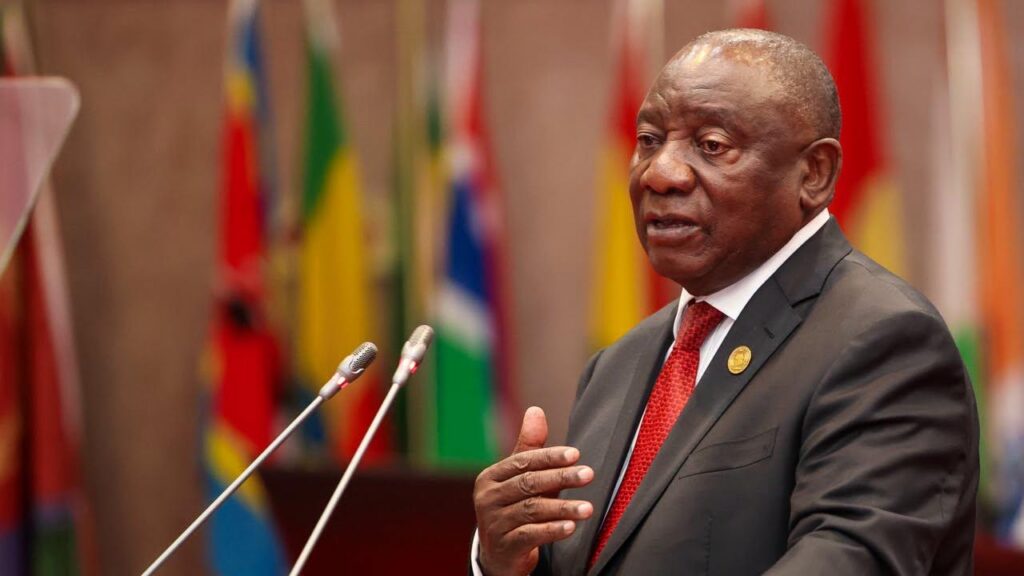
Legal expert Dr Llewelyn Curlewis warned that South Africa’s Expropriation Act may apply to all property, including farms, houses, cars, or businesses.
Curlewis is the Deputy Chair of the Legal Practice Council and a senior lecturer at the University of Pretoria’s law department.
He shared his views on South Africa’s Expropriation Act 13 of 2024 during a debate about the law on ‘In Gesprek met Lourensa Eckard’.
President Cyril Ramaphosa signed the Expropriation Bill into law in January 2025, repealing the Expropriation Act of 1975.
The government said that the new law would assist state organs, including local, provincial, and national authorities, in expropriating land in the public interest.
Proponents, including the government, argue that the Act was a necessary mechanism to align expropriation processes with Section 25 of the Constitution.
Critics, in turn, warned that the Act is enabling expropriation without compensation by allowing just and equitable compensation to be nil.
The Democratic Alliance, Freedom Front Plus and Agri SA argue that ‘nil compensation’ is a semantic workaround for Expropriation Without Compensation (EWC).
Critics contend that true expropriation inherently requires payment, and removing it allows for the confiscation of property.
Financial institutions, investors, and business forums have expressed concern about the macroeconomic signals the legislation sends.
Many business groups said that the new Expropriation Act erodes private property rights, which, in turn, chases investors away.
There are also concerns over how expropriations will be administered, as it empowers municipal and local government authorities to act as expropriating authorities.
South African municipalities face governance, capacity, and corruption challenges, raising fears of procedural abuse and mismanagement.
Concerns about the scope of the Expropriation Act

Dr Llewelyn Curlewis raised concerns that the new Expropriation Act can apply to any property, including land, houses, businesses, and even cars.
He said that the Act’s broad terminology creates legal ambiguity regarding what types of property can be expropriated.
“There is a lot of speculation around whether this could extend beyond just land to include other types of property, such as movable assets,” he said.
“In my personal legal opinion, it potentially could, because the Act does not explicitly state that it applies strictly to immovable property.”
“The Act’s text is clear. It speaks of public interest and public purpose, and then explicitly refers to property. That property could mean a car, a house, or a farm.”
Curlewis explained that a court needs to rule that the statutory interpretation of that wording is restricted and excludes movable assets.
“Until that happens, I have no doubt someone will eventually have the sharp eye to take that exact point to court to test it,” he said.
Another risk to South African property owners, he said, is that the Act links expropriation to ‘public interest’ and ‘public purpose’.
Furthermore, the Act permits these definitions to align with the objectives of almost any other legislation in South Africa.
Consequently, he cautions that any law could serve as a vehicle for expropriations across various contexts.
“When the Act speaks of ‘public interest’ and ‘public purpose’, it inherently leaves the concept open to broad interpretation,” he said.
“For example, the ‘public purpose’ referred to includes any objective that could assist in giving effect to the goals of any other legislation in the country.”
“It means any existing law could potentially be used as a vehicle to execute expropriation. That is the real crux of the issue.”
Expropriation without compensation already a problem
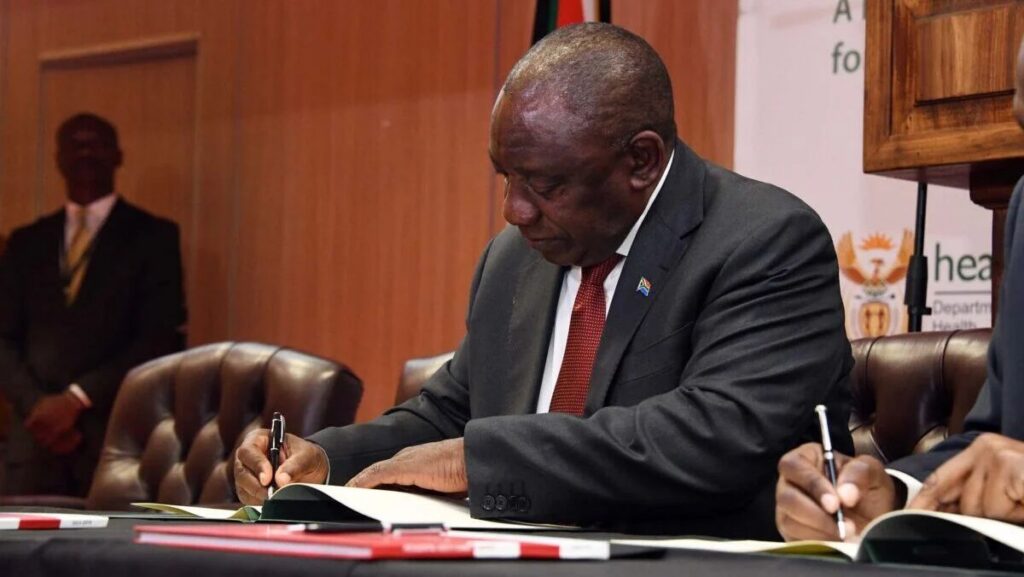
Although the focus of the new Expropriation Act is on zero compensation for farms, as seen in Zimbabwe, it is only a small part of what it will be used for.
President Cyril Ramaphosa has already said they can use the Expropriation Act to take abandoned buildings in cities’ central business districts without paying.
“Abandoned buildings, where the owners have run away, should be subjected to the law we have just passed, expropriation, even without compensation,” he said.
Expropriation without compensation is also already happening, with the Nelson Mandela Bay Metropolitan Municipality in the Eastern Cape leading the way.
The ANC-led coalition government in Nelson Mandela Bay Metro started the process to expropriate private land without compensation.
On 8 June 2026, a Special Sitting of Council convened and approved the initiation of a land expropriation process without compensation.
“Following unsuccessful attempts to reach an agreement with the landowner, Council resolved to proceed with the expropriation process,” it said.
“The expropriation process was to ensure the continued development of housing opportunities for residents.”
The ANC Nelson Mandela Region said that the matter was previously considered by the Mayoral Committee in May 2026 before being submitted to Council.






Comments