New South African SOE to manage R155 billion property portfolio


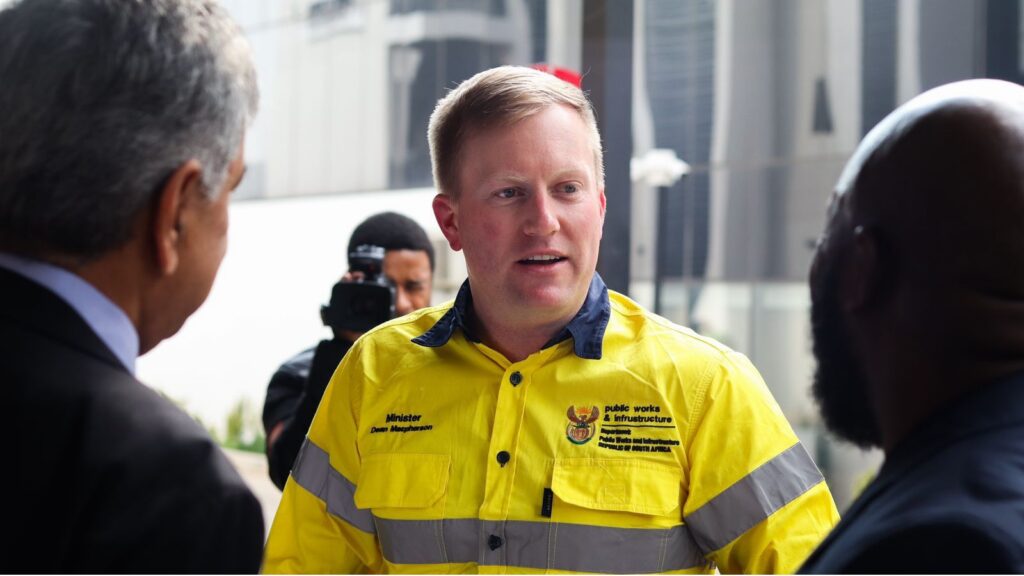
The Department of Public Works plans to launch the South African National Property Company within the next two years.
This company will manage the government’s R155 billion property portfolio as a commercial entity. It will look to generate revenue from rental agreements and land sales.
In effect, the company will operate as a commercial asset manager and monetise the government’s vast property portfolio.
Minister of Public Works Dean Macpherson explained that the government currently does not have the ability to make these commercial decisions.
Macpherson told Business Day TV that he hopes the company will enable more effective management of state assets.
He has also previously touted the company’s ability to become a highly profitable entity for the state and has even hinted at plans to list it on the JSE.
When the company is launched and the assets transferred, it will become South Africa’s second-largest landlord after Growthpoint, which has a R157.5 billion property portfolio.
President Cyril Ramaphosa announced at the beginning of 2026 that the government would create a state-owned enterprise (SOE) to manage its property portfolio.
The task then fell to Macpherson to implement this vision, with his department currently overseeing the R155 billion property portfolio.
“This will, in effect, be an investment vehicle and an asset manager that will make commercial decisions regarding the government’s property portfolio,” Macpherson said.
“These decisions cannot be made by a government department. We are working on this being completed in two years.”
The company will be run completely separately from the department as a commercial entity, with Macpherson wanting it to mimic South Africa’s large private landlords.
Macpherson said the company will oversee 88,000 buildings across South Africa and 5 million hectares of empty land owned by the government.
“Work has progressed well on the structural and policy framework. We are around 70% there in terms of the position we need to be to present the policy for adoption,” he said.
Telkom 2.0
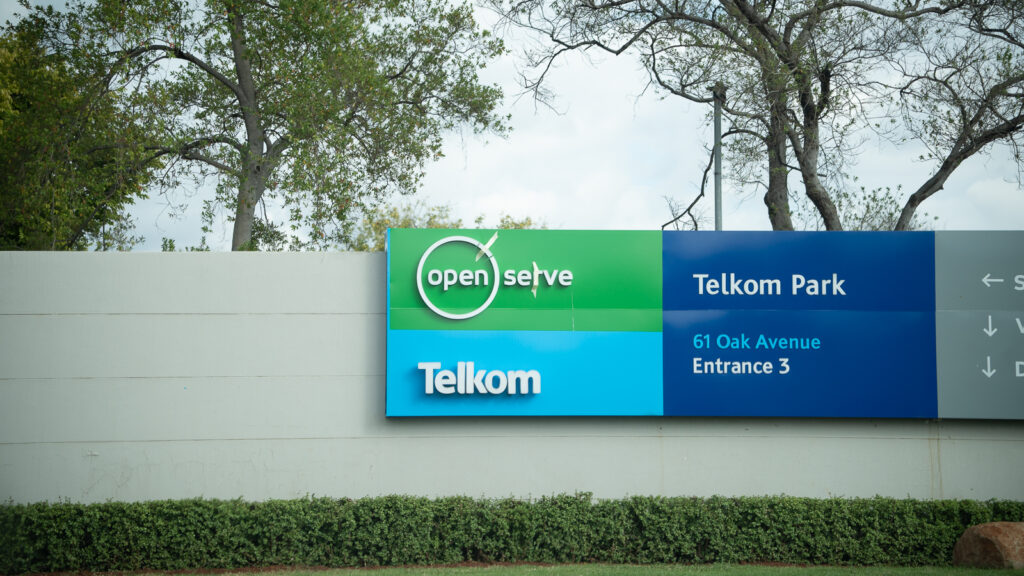
The long-term aim of creating a national property company is to copy the successes seen with the partial privatisation of Telkom in 2003.
The telecommunications company was historically owned completely by the state in the same way Eskom and Transnet are today.
Prior to 1991, the telecommunications sector was run directly by the government through the Department of Posts and Telecommunications.
In 1991, the department unbundled Telkom as a commercial state-owned company to pursue new technologies uninhibited by state bureaucracy.
The government soon realised that it could not manage the company efficiently, with the telecommunications sector in South Africa needing significant investment.
This forced it to turn to private capital as its balance sheet was not strong enough to fund the expansion and upgrading of infrastructure.
However, the state did not want to give up control of a valuable asset and one that gave it immense influence in the local economy.
As such, it settled on a partial privatisation through an initial public offering on the JSE. The government retains a 41% stake in the company.
Coupled with the state-owned Public Investment Corporation’s 10.25% stake in Telkom, the government effectively retains control of the company.
Since its partial privatisation, Telkom has been one of the few success stories among South African state-owned companies.
Valued at R28 billion on the JSE, Telkom has grown its profit to R3.55 billion in the most recent financial year on revenue of R44.5 billion.
Macpherson wants to mimic this success with the national property company when it launches in two years’ time.
The department is not waiting for the new company to begin enacting Macpherson’s plan of monetising government-owned properties.
In the current financial year, it plans to dispose of 801 residential properties and is conducting an audit of the state’s 6,238 properties owned on behalf of its officials.
“I cannot accept that we own 88,000 properties, and we never dispose of any of them. I have directed the department to get them onto the market,” Macpherson said.




Comments