South Africa’s government owns 6,238 homes for its officials


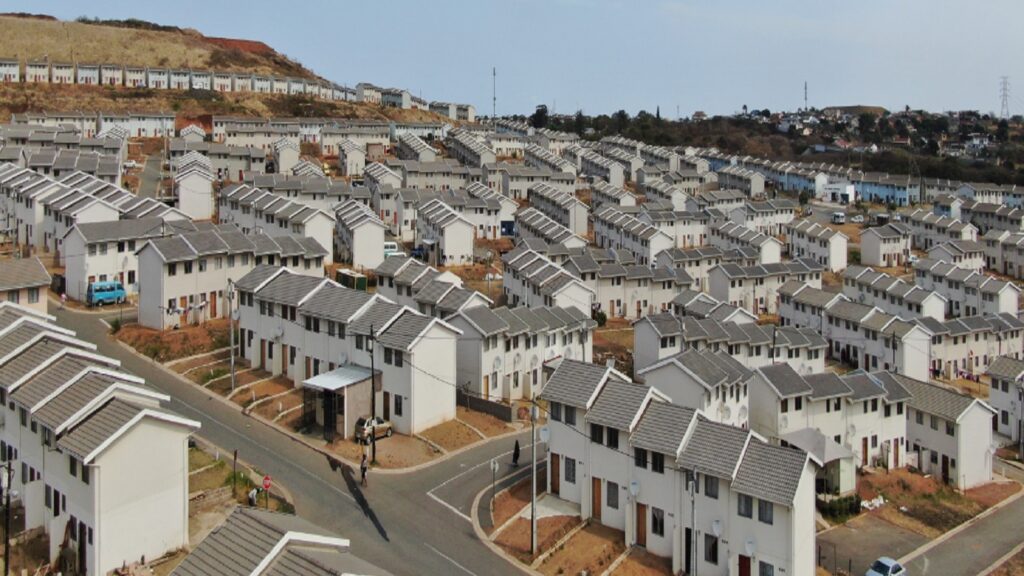
The South African government owns 6,238 residential properties across the country, many of which are currently occupied by government officials.
This was recently revealed by the Minister of Public Works and Infrastructure, Dean Macpherson, who requested an investigation into how these homes are currently being utilised.
The investigation will assess whether these homes are being used appropriately for legitimate governmental purposes, and forms part of a large overhaul of the government’s property portfolio.
Any state-owned homes which are deemed to be non-essential for state operations will reportedly be sold off on South Africa’s property market.
Macpherson said the state should not own so many residential properties for government officials who already receive housing allowances and other subsidies in their remuneration packages.
“Unless there is a clear and compelling operational reason for the state to retain a residential property, it should be sold,” Macpherson said.
“The default position cannot be that the state indefinitely carries the maintenance, rates and other costs of thousands of residential properties while the public fiscus remains under pressure.”
Macpherson explained that his department was responsible for the maintenance and utilities of all these properties, with just 108 of these homes costing R39.6 million a year.
3,626 of these residences are located in KwaZulu-Natal, with 566 in the Western Cape and 407 in Gauteng. The rest are scattered throughout South Africa’s six remaining provinces.
The Director-General for the Department of Public Works and Infrastructure, Sifiso Mdakane, will lead the 30-day investigation and submit a comprehensive report to Macpherson.
This will determine which properties should be kept and which should be sold off, following which a plan for the proper disposal of the latter will be developed.
“We need to establish who is occupying each property, the basis on which it was allocated and whether it still serves a legitimate public purpose,” Macpherson said.
“Where properties are underutilised, unnecessary or no longer required for government operations, they should be released from the state’s portfolio through a transparent and legally compliant disposal process.”
What sparked the investigation

According to Macpherson, the investigation into these state-owned residences came from a parliamentary question which he had been asked back in May 2026.
At the time, Macpherson said 1,348 non-essential state properties had been identified for potential disposal, with 801 being confirmed for processing.
In an interview with BusinessDayTV, Macpherson said there may, in fact, be legitimate operational reasons for many of these properties to be occupied by government officials.
“But my concern was obviously raised when more than half of that portfolio exists just in KwaZulu-Natal,” Macpherson explained.
“That can’t be for governmental purposes, because there’s no seat of government in KZN. So we want to deal with it responsibly.”
Macpherson said his department should not be expected to cover the electricity, water, rates, and other costs of these residential properties if there is no real government reason.
Where these properties do have legitimate operational purposes, he said the departments to which those officials belong should foot those bills instead of Public Works.
The South African government reportedly holds over 88,000 properties in its property portfolio, encompassing more than 5 million hectares of land.
“We are notionally the largest holder of fixed property assets in this country, yet we derive not a single rand in revenue from them,” Macpherson said.
“Compare that to other listed asset management businesses that are a tenth the size of us. The difference there is that they make money and we don’t.”
Macpherson said he aimed to transform the Department of Public Works and Infrastructure into a commercially driven asset management entity.
To achieve this, he explained that it was unacceptable for the government to spend over R6 billion a year on private leases while many of its buildings sit completely empty.
Earlier this year, President Cyril Ramaphosa announced the formation of the South African National Property Company (SANPC), a state-owned asset manager and investment company.
Macpherson said he expected this process to be completed within the next two years, allowing the SANPC to take on certain commercial decisions which his department can not.




Comments