722 police officers are paid R3.6 billion a year


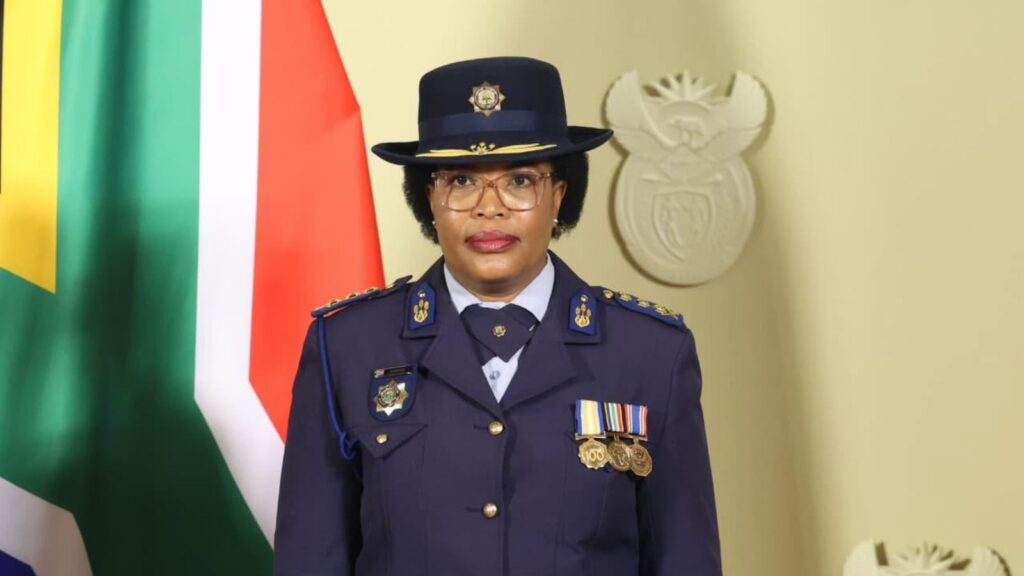
The government spends R3.6 billion a year to pay and maintain the 722 brigadiers and generals at the South African Police Service (SAPS).
This salary bill has not been coupled with improving performance at the police department and increasing the safety of citizens.
Violent protests are on the rise in South Africa, and the murder rate has reversed a decades-long decline since the elections in 1994.
The large salary bill for the highest-ranking officers at the police department also reflects a top-heavy structure, where individuals have been pushed through into higher salary brackets.
This comes at the expense of increasing the size of the force, with the number of South Africans per police officer skyrocketing over the past decade.
Chairperson of Parliament’s Portfolio Committee on Police Ian Cameron explained to BizNews that this calls into question what return citizens receive for the large wage bill at the police.
Every government policy has a trade-off and costs taxpayer money. The question is whether there is a return for that money being invested.
With regard to the police, the trade-off is crystal clear. The government spends taxpayer money on having a police force to protect citizens and ensure their safety.
“The questions are about what the value is or the return on investment is for money that is paid for these extravagant positions,” Cameron said.
Cameron has used his position as portfolio chairperson to gather information regarding the police’s wage bill and the composition of its workforce.
This is intended to start a debate regarding the value of the police force in its current state and, in particular, with the number of generals and brigadiers it has.
“In total, SAPS has 722 brigadiers and generals. Below that, we have a whole lot of colonels and so on down to ordinary officers,” Cameron said.
“The long and the short of it is that we spend, on those senior officers alone, R3.6 billion a year to pay them and maintain them. The question we need to ask is, ‘What are we getting in return?’”
Salaries are rising while performance falls
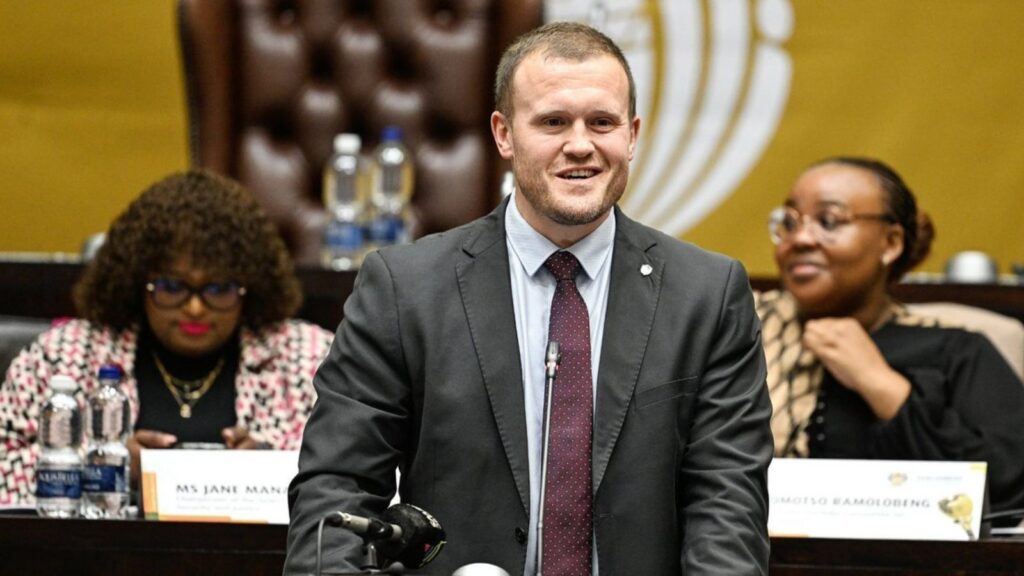
The performance of SAPS has declined dramatically over the past two decades amid minimal funding increases and a lack of personnel.
Frans Cronje Private Clients recently revealed that the number of protests in South Africa has risen by 500% from 2008 to 2025.
The blame for the protest action lies at the feet of the national government and its economic mismanagement during that period.
However, the share of those protests turning violent has risen from under 10% to over 30% in the same time period. Responsibility for this lies with the police.
The police have been increasingly unable to preempt violent protests and take sufficient action to stop them from expanding. This points to a decline in capacity.
Coupled with the rise in violent protests has been a reversal in the decline of South Africa’s murder rate since 1994.
In 2025, there were 44 murders per 100,000 people in South Africa. This compares to a low of 32 murders per 100,000 people a decade ago.
Cameron compared the decline in performance from the police with the rising bill South Africans have to pay for it to a car.
“It is like we are paying for a top-of-the-range 4X4 and we are receiving the service of a broken-down sedan that is being driven off-road,” Cameron said.
“It is physically impossible to do what we want to do with the police force as it currently is. As a whole, the police are not fit for purpose.”
Cameron said there are still pockets of excellence within the police, and the institution has many good, honest, hardworking officers.
“But, a more common story is that of the Western Cape Flying Squad, which at 40% vehicle strength. I received a complaint this morning of a police station in the Cape Flats not having any R5 rifles for several years,” Cameron said.
“One must wonder why we are paying the amount we currently are for the police. Then, we need to ask how many of these senior members there are because they deserve to.”
In early June this year, the Democratic Alliance conducted an audit of 1,025 police stations across the country to gauge their responsiveness.
The party phoned these stations and only received responses form 44%. This means that over half of the country’s police stations do not answer their phones.
571 stations did not answer, while 454 answered one or both listed numbers. The audit also found that several high-crime priority stations across the country could not be reached.




Comments