The business from South Africa’s Circle City that holds the keys to the economy


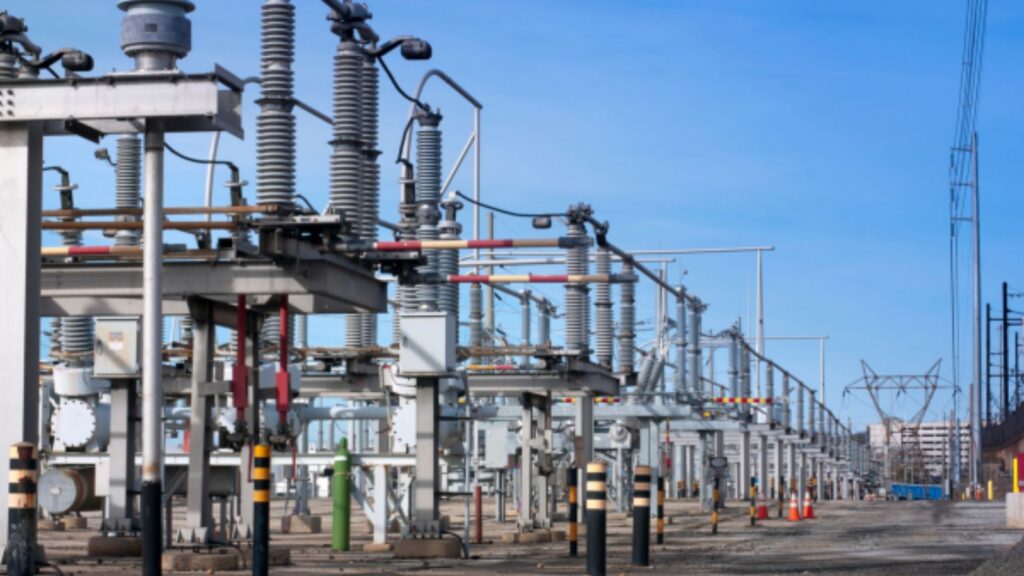
Calibre Consulting Engineering does much of the dirty work that underpins South Africa’s largest economic sectors, from mining and construction to agri-processing and heavy industry.
Based in Welkom, which is known as the ‘Circle City’ for its roundabouts, the company’s history reflects the evolution of the Free State economy.
Now it is taking the next step, leveraging access to the Chinese economy to tap into enhanced machinery and equipment to boost productivity.
Standard Bank Business and Commercial Banking CEO Bill Blackie pointed to this company as one of the primary examples of how African businesses are changing in the modern era.
These businesses are increasingly looking to play on the global stage and access global markets, whether to sell products or to access new technologies.
Calibre has evolved with the Free State economy, now able to participate globally and be amongst the best at what it does.
Historically, Welkom was at the centre of the Free State goldfields and experienced a boom throughout the 20th century. Calibre was created in this boom to service the demands of South Africa’s largest miners at the time.
The company, to this day, produces chutes and hoppers for mineral processing, as well as conveyor belts and structures to transfer bulk commodities or earth.
This is coupled with custom-built tanks and vessels that are used in liquid processing and chemical treatment as part of the refining of mined material.
As the Free State goldfields were exhausted, the company gradually diversified its offering to include precision engineering and machining.
It also produces many of the “basics” used in industry, such as heavy-duty columns, rafters, and trusses for building warehouses and workshops.
The business is not glamorous, but it is necessary to the functioning of the entire mining and manufacturing sectors.
As two of South Africa’s largest employers, these sectors play a vital role in the economy and are widely seen as part of the answer to the country’s unemployment crisis.
The other sector that is vital to the economy is the agriculture sector, which forms a large part of the modern Free State economy.
As South Africa’s major agricultural hub, the Free State economy not only caters to primary farming but also has huge agri-processing facilities.
Calibre plays in this space as well, utilising its skills to create bulk crop storage facilities, grain-handling machines, and milling facilities.
Its factory produces custom-made storage hoppers, grain bins, and sorting chutes to move large volumes of agricultural produce.
Tapping into China
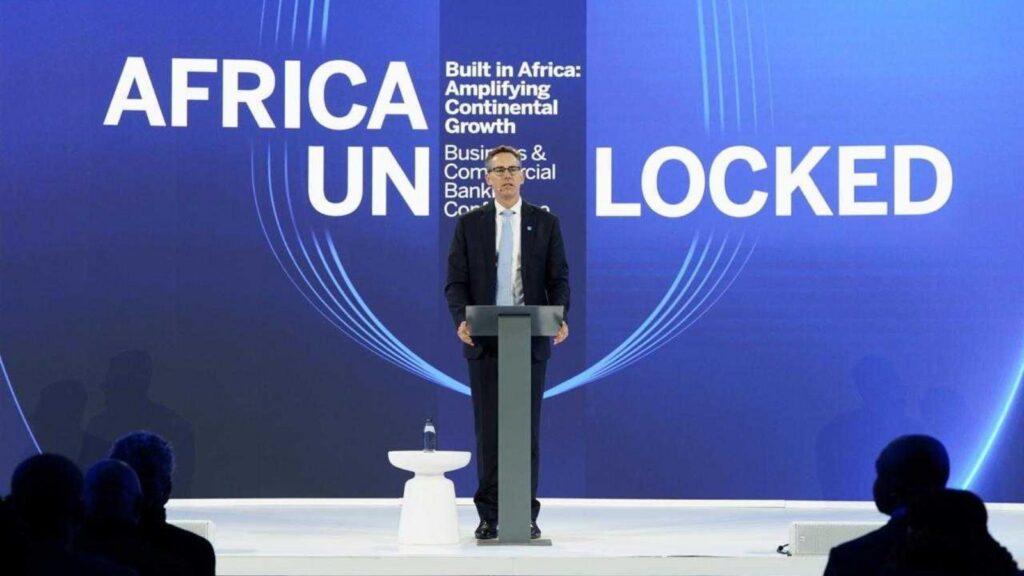
Speaking to delegates at Standard Bank’s annual Africa Unlocked conference, Blackie revealed that Calibre is leveraging access to the Chinese market to source equipment.
Blackie explained that the bank’s partnership with the Industrial and Commercial Bank of China (ICBC) has enabled it to give its clients direct access to the Chinese market.
The partnership between Standard Bank and ICBC kicked off 18 years ago and has deepened to the point where they jointly created a bank in Africa to clear transactions in renminbi.
For Standard Bank clients, this enables their businesses to open renminbi accounts and directly engage with Chinese suppliers.
Calibre is one of these clients, with Blackie praising the company for how it has evolved as the local economy has changed.
“African businesses are increasingly designing the tools to solve African problems in ways more innovative than we thought was possible,” Blackie said.
“It is often precisely because of the constraints that we have in these markets that we see that level of creativity. A good example of this would be Calibre Engineering.”
Blackie explained that the company is investing heavily to expand its operations and improve its productivity. To do this, it has to tap into Chinese expertise and get access to the latest technology.
“We are helping them source and import machinery from China as part of their growth and expansion strategy,” Blackie said.
“That investment has strengthened manufacturing capacity, increased production, improved efficiency, and enhanced its ability to execute larger projects.”
Blackie said this puts the business in a stronger position to contribute meaningfully to South African engineering, manufacturing, and mining.
“It is not only a capital investment. It is a business becoming more capital competitive. People are becoming more capable and more ambitious.”
“In that context, we see capital as an acceleration. Africa’s own financial architecture is deepening in ways that were not true five years ago.”
South Africa, home to the largest stock exchange on the continent, which is 15 times larger than its nearest competitor, is the main source of this capital.
 Loading ...




Comments