South African fast-food giant opening 250 stores a year


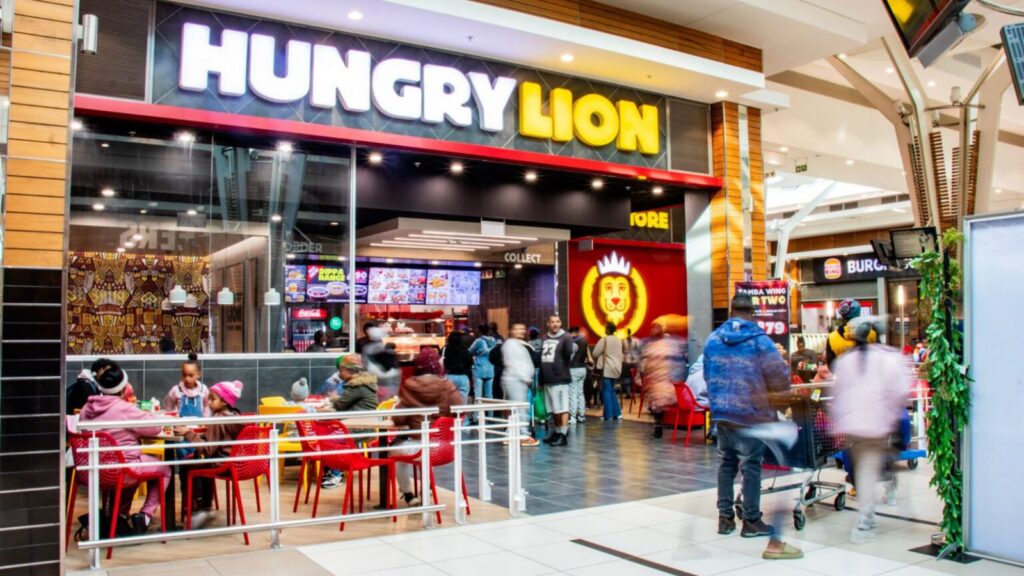
In 2024, Hungry Lion CEO Adrian Basson promised that his fast food empire would open 100 stores a year in Africa for the foreseeable future.
Basson was wrong. Hungry Lion would achieve a run-rate of 250 stores a year within the next two years and cross 750 stores in 2026.
The entrepreneur had not made his promise lightly, stating his aim to a room filled with the Standard Bank employees who were funding his ambition.
In the audience then was Standard Bank Business and Commercial Banking CEO Bill Blackie, who recalled the promise at this year’s Africa Unlocked Conference.
Blackie and his team host the conference every year to share the success stories of their clients on the continent and display what is coming next.
This year, Blackie made a point to raise examples of businesses that Standard Bank has backed across the continent and helped turn from small companies into regional champions.
“Our focus this year speaks to growth shaped in African enterprises with African capital and with African conviction,” Blackie said.
“That effort compounds across sectors, across borders, and across generations. The businesses in this room are evidence of that.”
Blackie emphasised that the bank is committed to South Africa and the broader continent through changing cycles to help build businesses.
Pointing to Hungry Lion as an example, Blackie emphasised that there is real evidence that African businesses can scale.
“Two years ago at this conference, Adrian Basson from Hungry Lion spoke about his ambition of opening 100 stores a year in Africa,” Blackie recalled.
“Today, that mission has turned into a new reality. Hungry Lion has opened more than 500 stores across nine countries, employing 10,000 people.”
Standard Bank has funded this journey, with it arguably being the only bank that can offer the balance sheet and African presence necessary for Hungry Lion.
“Hungry Lion now plans to open 250 stores this year. This will take it to 750 stores by the end of the year,” Blackie said.
“This is a clear example of what determined execution looks like when an African business is built for African consumers and decides to scale at pace on this continent.”
From 1 store to 750
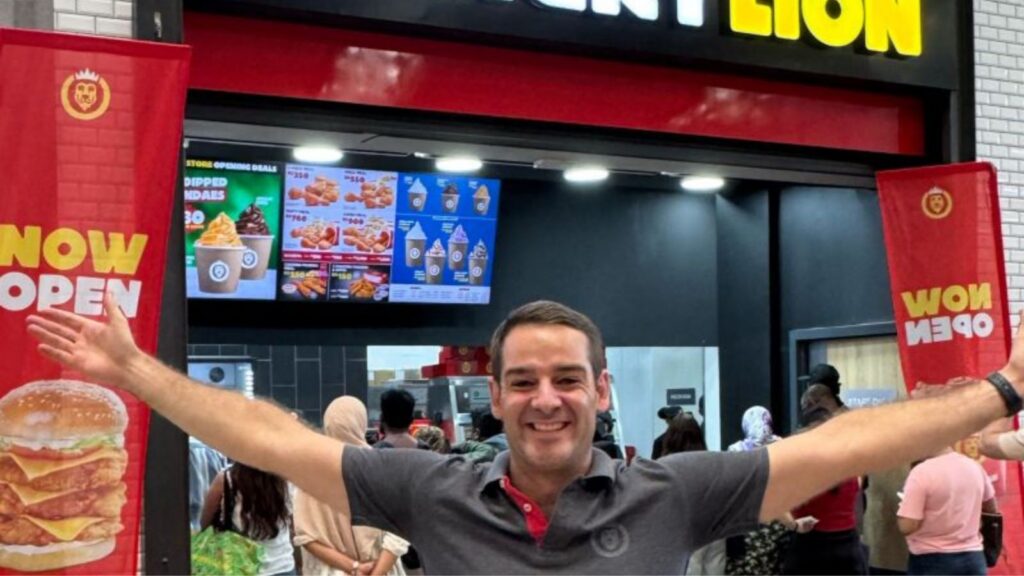
Hungry Lion is one of the few local brands that has managed to take on the likes of KFC directly and win, with its fried chicken empire nearly eclipsing that of the American giant.
Basson comes from a rich line of entrepreneurs, being Whitey Basson’s son. Whitey is retail royalty, having taken Shoprite from just seven stores to over 1,000 by the time he retired as CEO.
The entrepreneurial spirit runs in the blood, and the younger Basson quickly saw an opportunity in 1997 to take on the American fast-food giants in South Africa.
Opening the first Hungry Lion store in Stellenbosch, Basson’s joint was owned by Shoprite and became famous for its king-sized fried chicken.
Having the backing of Shoprite early on was instrumental for Basson as he could scale the business almost at the flick of a switch.
The king-sized fried chicken was an instant hit, and Basson’s team opened four more stores in the same year as the first.
Hungry Lion always had its eye on African expansion, opening a store in Zambia before it had a location in Gauteng.
Leveraging Shoprite’s scale in the 1990s and 2000s, Hungry Lion took southern Africa by storm. Using space attached to Shoprite’s retail stores, it soon had operations across South Africa, Namibia, Botswana, and Zambia.
However, this association with Shoprite proved to be too close, with Hungry Lion lacking a distinct brand that set it apart from the retailer.
As such, many customers thought the operations were one and the same, potentially limiting Hungry Lion’s expansion to areas with only a Shoprite.
In 2008, Basson began developing a unique identity and customer experience to move it away from a generic chicken joint.
Hungry Lion overhauled their stores, built their own supply chains, and began moving into standalone locations separate from Shoprite.
Shoprite, at the time, also realised that it could no longer add much value to the Hungry Lion business, with it acquiring a life of its own.
The retailer decided in June 2018 to dispose of its interest in Hungry Lion, unbundling it into an independent company under Basson’s leadership.
Hungry Lion’s growth has only accelerated since then, with it now operating over 500 stores in eight markets across Africa. On track to hit 750 stores at the end of 2026, it employs over 10,000 people.
 Loading ...



Comments