Business rescue on the rise as companies shut down in South Africa


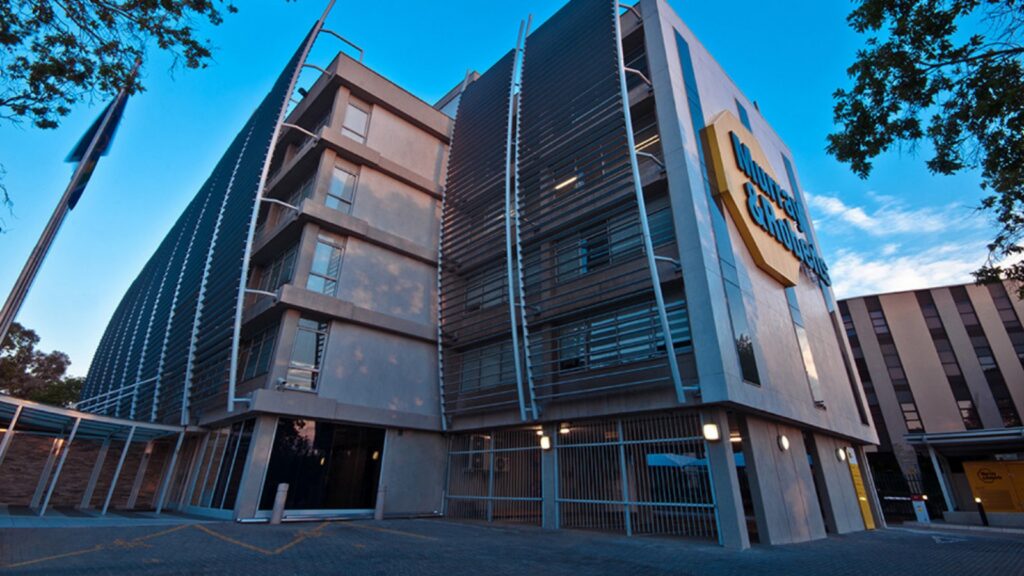
More and more South African companies are turning to business rescue strategies as a means to avoid having to close their doors.
As liquidations continue to rise across various sectors of South Africa’s economy, businesses are increasingly seeking restructuring over total closure.
A recent report from Statistics South Africa showed there had already been 1,116 liquidations during the first five months of 2026, with 225 in just the month of May alone.
This continued a trend of consistently increasing liquidation numbers over the past few years. 2,904 companies shuttered their operations in 2025, compared to just 2,147 in 2020.
Werksmans Attorneys Director and Head of Insolvency, Business Rescue, and Restructuring, Eric Levenstein, said this is a worrying statistic for corporate South Africa’s job market.
“However, business rescue is something that is gaining traction,” Levenstein said. “We’ve seen some really good examples of it working in the past.”
“It certainly is a buoyant area of restructuring in South Africa. It aligns South Africa with international mechanisms for restructuring and saving companies.”
Levenstein pointed to a few recent cases of successful business rescue processes which saved major South African companies, such as Edgars.
Under its parent company Edcon, the clothing retailer entered business rescue amid worsening financial woes, which were exacerbated by the Covid-19 pandemic in 2020.
After being sold to Retailability later that year, the company was successfully restructured and has now begun its new expansion strategy to open 50 new stores in the next two years.
Levenstein also pointed to South African Airways, which entered business rescue in December 2019 and exited just 17 months later.
Since then, the airline said it plans to expand its fleet and has reportedly returned to profitability, although the latter claim has come under much scrutiny.
“We’ve had these stories of Murray & Roberts and Group 5 exit from their business rescue processes with very good outcomes,” Levenstein explained.
“Not just for the employees, but also for those who have bought certain profit-making subsidiaries of these companies.”
How business rescue is changing in South Africa

Levenstein explained how business rescue practices in South Africa have evolved and gained traction in recent years, using Murray & Roberts Limited (MRL) as an example.
The construction and engineering company had entered voluntary business rescue in November 2024 due to ongoing financial difficulties.
While it has not officially exited business rescue yet, the company announced on 29 June that it had finalised a R1.27 billion sale with Differential Capital to support its turnaround.
According to Levenstein, MRL’s creditors unanimously voted in favour of the plan, while it is expected that most, if not all, of the jobs at the company will be saved by the sale.
“The sale process, the extraction of value or businesses or subsidiaries, is something very much part of a business rescue process,” Levenstein said.
“Ultimately, if it were a liquidation, all jobs would have been terminated, and these businesses would have come to an end.”
Levenstein said there had been a noticeable rise in distressed mergers and acquisitions (M&A) over the last few years, coinciding with heightened confidence in the business rescue process.
In a distressed M&A, companies facing insolvency or bankruptcy are acquired by other companies with the intent to turn their financial situation around.
While distressed companies are often sold at a discount to their intrinsic value, making them more attractive to prospective buyers, they are typically much higher-risk acquisitions.
For companies entering business rescue, Levenstein said the most important thing is to have some form of legal and financial understanding of how the processes work.
“It’s about getting in early, and getting in during a situation where the company is not insolvent but rather what they term ‘financially distressed’,” Levenstein said. “So when companies can’t pay their debts in the next six-month period.”
“That’s when they need to engage with a business rescue practitioner, get proper advice, and see whether there’s a sustainable plan that can be put to the creditors and stakeholders for approval and support.”
 Loading ...



Comments