Chinese car makers are double dipping in South Africa


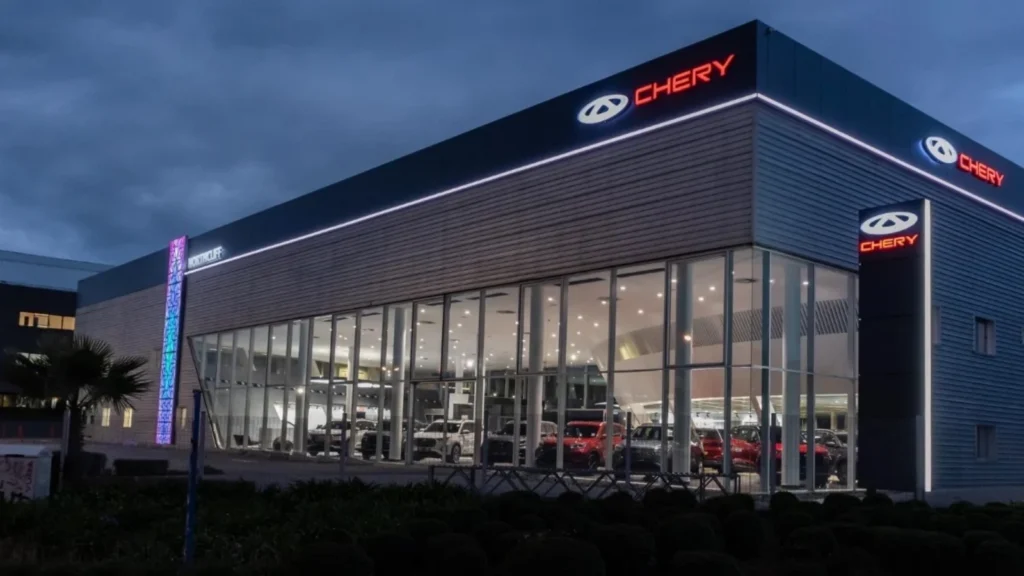
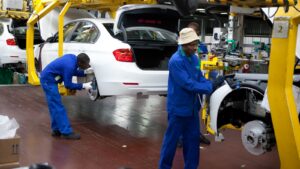
Chinese car manufacturer Chery has begun its local manufacturing operations in South Africa, potentially cashing in on two different subsidy programmes in the process.
The company officially opened its Rosslyn manufacturing plant for operations on 3 June 2026, which it acquired from Nissan through a deal finalised back in January.
While many have said Chery’s transition from importer to domestic manufacturer will be a boost to the local automotive sector, others have raised concerns about the economic implications.
In an interview with BizNews, XA Global Trade Advisors CEO Donald MacKay said Chery’s unique position had allowed it to effectively “double dip” with regard to subsidies.
“At the heart of manufacturing cars in South Africa is a subsidy programme,” MacKay said. “If you took away the subsidy, we would not make cars in South Africa.”
“Chery, just like all of the other producers, is going to take full advantage of that programme. Otherwise, they would never have done the deal to purchase the Nissan factory.”
South Africa’s Automotive Production and Development Programme (APDP) is estimated at over R40 billion per year, distributed among just seven manufacturers in the country.
This includes BMW, Ford, Isuzu, Mercedes-Benz, Toyota, Volkswagen, and now Chery, which took Nissan’s slot following the latter company’s exit from local manufacturing in South Africa.
South African taxpayers primarily foot the bill for the APDP through the large premiums paid on vehicles, alongside tax breaks and direct cash subsidies granted to these companies.
However, because Chinese car manufacturers are also subsidised by their own government, MacKay said Chery could gain an unfair advantage over other local producers by being double-subsidised.
“My guess is that Chery will roughly fill the shoes that Nissan left empty,” MacKay said. “They’ll come in, and they will largely replace.”
“But again, there’s a lot of detail. The calculation of the actual subsidy is quite complicated. It doesn’t just flow as a cash payment to your account.”
Double subsidies could threaten other manufacturers
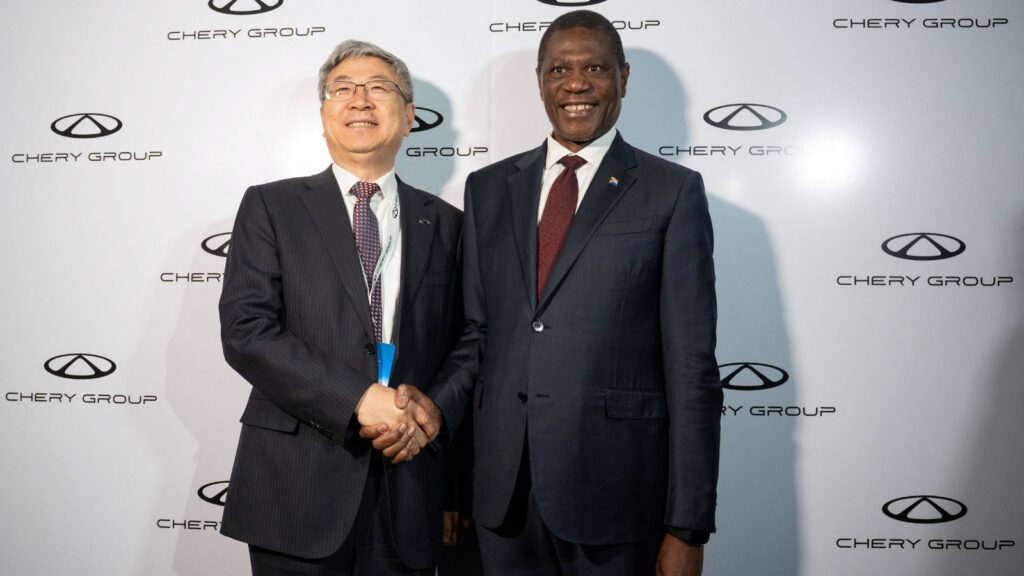
The possibility of Chery receiving two different governments’ subsidies could potentially spell disaster for some of South Africa’s other local automotive manufacturers.
Because Chinese car makers are subsidised by the Chinese government, this has allowed them to be imported and sold at much lower prices than many locally manufactured cars.
This has caused much disruption within the local automotive sector, with Chinese brands such as Chery displacing longstanding names like Nissan and BMW.
MacKay explained that if Chery wished to access the APDP funding as well, it would need to meet a certain local content requirement threshold.
“What Chery will probably be doing is procuring some goods from local component manufacturers, and some imported,” MacKay said.
“They could do the complete knockdown (CKD) model, where a substantial portion, around 38% of what you procure, is local, and the balance is imported. My guess is Chery will do something similar.”
Chery CEO Tony Liu said the plant would initially rely on CKD kits while it builds a local supply base, aiming for 40% local content by 2028 to access the APDP subsidy.
A double subsidy would not necessarily mean the price of Chery’s cars would come down further, as manufacturing in South Africa is still significantly more expensive than in China.
However, it would allow Chery to cover these higher manufacturing costs much more easily than other local manufacturers, potentially widening the profitability gap even further.
Additionally, MacKay warned that it could open the doors for other Chinese manufacturers to follow Chery’s example in entering the local production market to take advantage of the double subsidy.
This could cause more established companies, such as Nissan, to exit local manufacturing, with MacKay pointing to the struggling Mercedes-Benz plant in the Eastern Cape as especially vulnerable.
GWM, another Chinese car manufacturer, has been in talks with Mercedes-Benz to possibly co-manufacture vehicles at the latter’s plant in East London.
“If you’re not producing vehicles at a profitable rate, the government is going to have to lift subsidies to a point that will never get through National Treasury,” MacKay said. “Or you close up, or find someone else who can make it work.”
“I would far rather not have the plant close than to concern myself with who purchased it. But we must be honest and say this is not a normal commercial transaction as you would have with any other acquisition from abroad.”

Comments