Inside the ANC meeting in Polokwane that put South Africa on the road to collapse


In 2007, the ANC held its 52nd National Conference, where the party’s new leadership shredded an economic plan that could have accelerated South Africa’s already strong economic growth.
The decisions made at this conference set South Africa on a path of decline that it is only now starting to recover from.
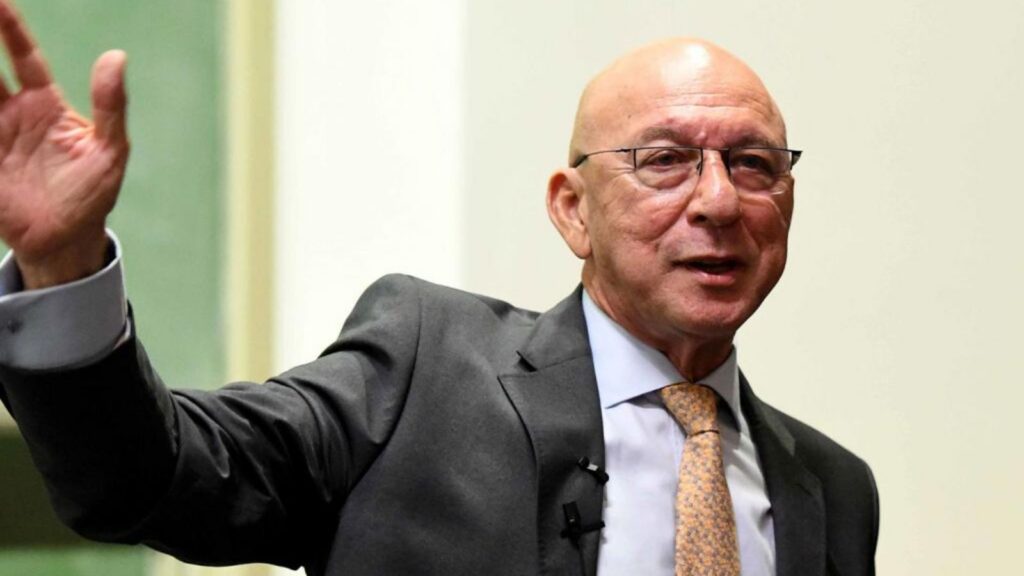
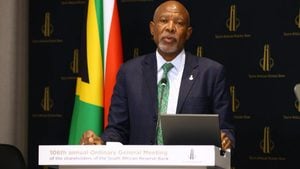
This is according to former Finance Minister Trevor Manuel, who recently gave a presentation at the National Democratic Revolution (NDR) Seminar in Johannesburg.
Manuel is considered one of the best finance ministers in South Africa’s history, having served in that role from 1996 to 2009 under Presidents Nelson Mandela, Thabo Mbeki, and Kgalema Motlanthe.
When Manuel took office in 1996, the state’s finances and South Africa’s economy were struggling, faced with high debt service costs, volatile inflation, and stagnant growth.
However, Manuel took these challenges in his stride and, during his tenure as Finance Minister, oversaw South Africa’s longest period of continuous economic growth.
By imposing strict deficit reduction, Manuel significantly reduced the state’s budget deficit and delivered the country’s first and only national budget surpluses in 2006 and 2007.
This was done under a macroeconomic strategy called the Growth, Employment, and Redistribution (GEAR) policy, which Manuel spearheaded.
He was also instrumental in formalising South Africa’s inflation-targeting framework, having worked with the Reserve Bank to develop a target to anchor price stability and improve predictability for investors.
Manuel was also a key player in establishing the South African Revenue Service as an autonomous administrative body, and the taxman became a world-class authority during his tenure.
He was also the person who introduced the Medium-Term Expenditure Framework, sometimes called the “mini budget”, in South Africa to improve the state’s transparency about its fiscal health.
Manuel’s efforts could clearly be seen in South Africa’s economic data over that period. By 2006, the country’s economy was expanding at its fastest pace in two decades, and South Africa had just recorded its first-ever budget surplus.
However, all of Manuel’s efforts started to unravel after the ANC’s fateful meeting in Polokwane in 2007.
The meeting that changed South Africa’s trajectory for the worse

At the NDR Seminar, Manuel explained that, having seen the success of the GEAR strategy, the Treasury decided to take things up a notch.
“One of the things we did was to say that this growth of 4.5% is reasonably good. It’s sustainable. But we need to do better,” he said.
“So, we assembled a number of economists from across the world to talk to us, to model with us, to show us what was possible.”
The results of these discussions were then combined into a new economic strategy, called the Accelerated and Shared Growth Initiative in South Africa (AsgiSA).
According to Manuel, this initiative had the potential to accelerate South Africa’s growth beyond 4.5% and create a way for these proceeds to be shared very differently than how they had been at that point.
The framework was launched in 2006 under Mbeki’s Presidency, with the goal of halving poverty and unemployment by 2014.
AsgiSA was aimed at addressing six specific binding constraints on South Africa’s economy: infrastructure capacity, skills shortages, currency volatility, spatial constraints, regulatory burdens, and state capacity.
If the strategy had gone to plan, it would have boosted South Africa’s economic growth to at least 6%.
However, it did not go to plan. Manuel explained that, at the ANC’s 52nd annual national conference, AsgiSA was “shredded”.
“AsgiSA was actually abandoned because of a set of circumstances that occurred in December of 2007 in a place called Polokwane,” he said.
“That AsgiSA was shredded. ‘We’re not going to go there. It’s not going to help us. We need to do something else’.”
“We shot ourselves in both our feet and destroyed the potential of the economy.”
This 2007 conference marked a pivotal moment for South Africa because it was also the meeting at which Jacob Zuma was elected ANC President.
The next year, in 2008, the Global Financial Crisis (GFC) happened, which Manuel said gave the country an excuse.
Now, the state could conveniently point to the GFC for South Africa’s problems, rather than blaming itself for taking apart the country’s capacity to build and develop.
“By 2008, the rule book had been shredded, and everything was going to be born there, novel,” Manuel said.
“You can go through that early period – there were ANC weekly documents after the NEC meetings, and the nature of the discussions was reported on online.”
“There was a lot of stuff going down, and you could keep track of developments – but after that moment, nada.”
Under Zuma’s Presidency, South Africa experienced a period of economic collapse, characterised by stagnant growth, State Capture, and the hollowing out of state institutions.
By 2016, South Africa’s economy was growing by a meagre 0.7%, and it has averaged around 1% growth over the past decade – a far cry from the more than 4% experienced during Manuel’s tenure.
Manuel pointed to the moment of AsgiSA’s abandonment as the beginning of a broader move away from cultivating an overarching, disciplined economic and social programme in South Africa.
He emphasised that this loss of strategy has hindered South Africa’s ability to achieve a truly capable and developmental state.


Comments