The former Springbok who built South Africa’s largest private security company


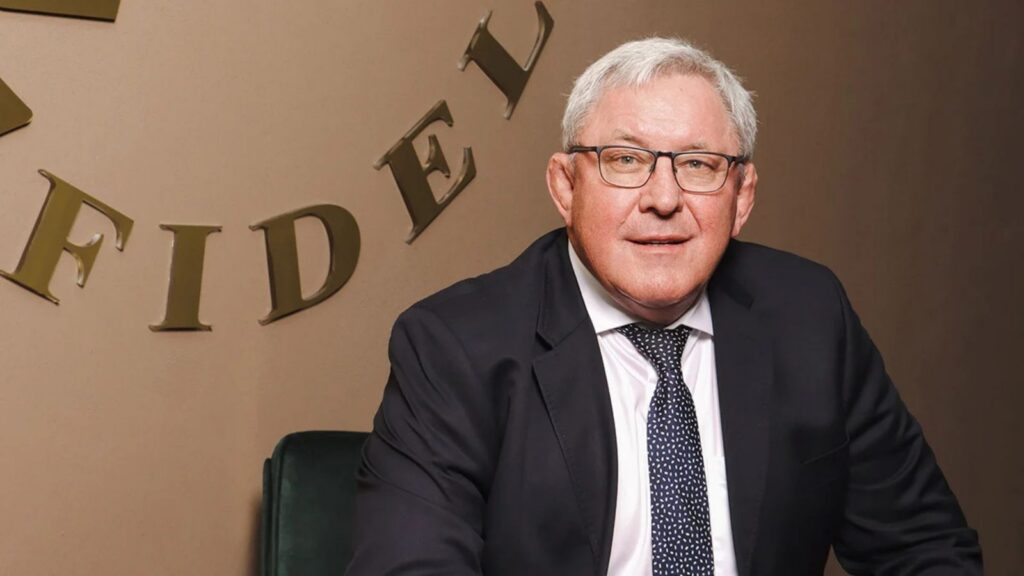
Former Springbok flanker Wahl Bartmann has turned a small family-run security business into the largest company of its kind in South Africa over the past three decades.
The company is now eyeing a listing on the JSE, with it tapping several banks to develop a plan to bring it to the exchange.
Fidelity has been clear that it will list when the economics are right and will not be rushed into a listing, with speculation pointing to some point in late 2026,
Listing on the JSE will be a big deal for the exchange, suffering from a spate of delistings, but it will also be a big moment for Bartmann.
Born in Florida, south of Johannesburg, Bartmann matriculated in 1981 and represented the South African Schools team that year.
Going on to study at the Rand Afrikaans University (now the University of Johannesburg), Bartmann earned a B.Juris law degree.
However, the corporate world only saw Bartmann after a celebrated career on the rugby field as a dominant flanker.
Bartmann made his debut for the Transvaal team at 19 before moving to Natal, where he captained the team 45 times and won the Currie Cup in 1990 and 1992.
He would feature for the Springboks eight times in the late 1980s and early 1990s, playing against the All Blacks and Australia after readmission.
All the while, Bartmann’s father, Mick, was working at the business he founded in 1963, Springbok Patrols. Wahl and his siblings worked part-time during school holidays.
Ultimately, Bartmann would never enter the corporate world or work at a law firm, joining the family business after his rugby career was finished.
Bartmann’s father had built Springbok Patrols into a well-known physical security company that operated across Johannesburg.
The business, when Bartmann joined, was booming, with South Africa experiencing a period of immense turmoil towards the end of apartheid.
With this turmoil came good business and major opportunities to expand. Bartmann would prove to be the man to grab these opportunities as they came.
From Springbok Patrols to Fidelity
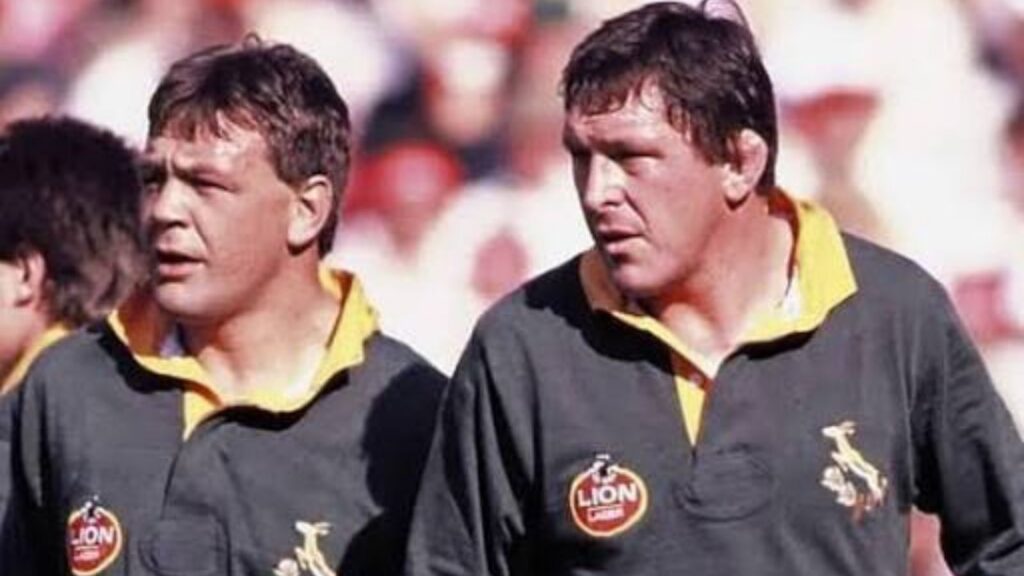
At a time of significant change, Bartmann took over from his father as managing director of Sprinbok Patrols in 1997.
Bartmann would be a pioneer of Black Economic Empowerment (BEE), sealing a deal early on to give his business leverage in future acquisitions.
Springbok Patrols completed one of the first major BEE deals in 1999 to create Khulani Springbok Patrols.
This made it one of the few BEE security companies in South Africa at the time, making it highly attractive to larger partners looking to gain accreditation.
Fidelity was such a company, having been launched in 1957 and specialising in cash-in-transit (CIT) and cash solutions services. In 1968, it introduced Fidelity Guarding Services.
The company operated under various guises as its ownership changed, with it often being housed within sprawling corporate conglomerates.
In 1991, it was finally unbundled from Safmarine and Rennies Holdings to become an independent company.
The merger between Fidelity and Khulani Springbok Patrols was a match made in heaven, with the two businesses complementing each other very well.
Apart from the BEE element, the companies had dominant operations in different parts of the market, with Fidelity specialising in cash solutions while Bartmann’s company was known for its physical guarding.
Bartmann led the merger of the two companies in 2006 to form Fidelity Security Group and took the top job in the same year.
The former Springbok proved to be an impressive dealmaker, with Fidelity going on a shopping spree in his first decade as CEO.
Fidelity pivoted from being a relatively normal security company into a corporate giant by buying out many of its biggest competitors.
2012 saw it snap up Bidvest Protea Coin’s cash management solutions business, making Fidelity the largest CIT player in the country.
Bartmann then went on the hunt for guarding businesses and took a particular liking to ADT South Africa, which was then owned by Tyco International.
Fidelity snapped up ADT South Africa for R2 billion in 2017, giving it over 365,000 residential and commercial clients at the drop of a hat.
South Africa’s private police commissioner
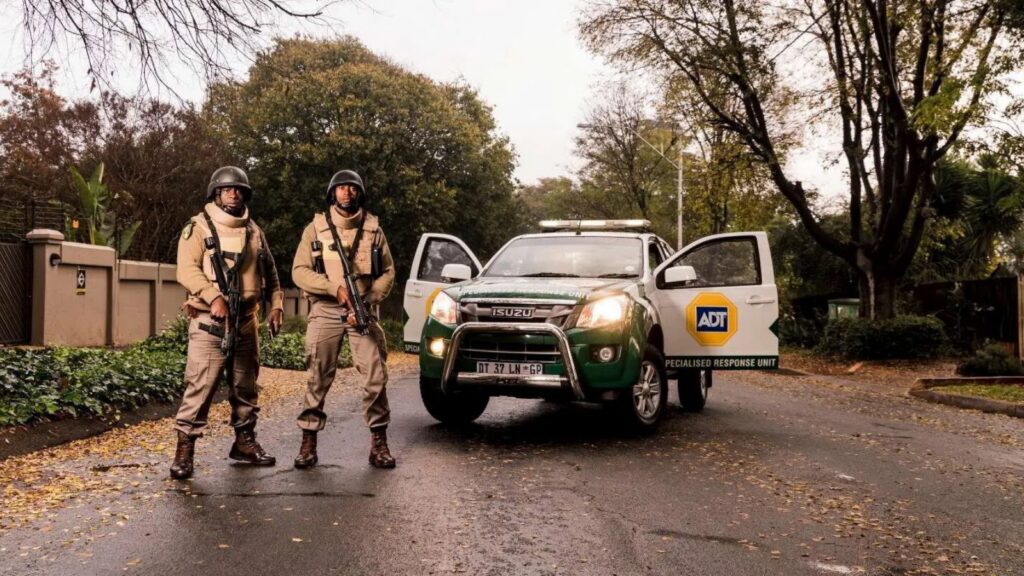
Fidelity’s immense scale has seen Bartmann effectively become the country’s unofficial police commissioner, with the company augmenting state services.
As police capacity has deteriorated over the past two decades, private security has gotten bigger and bigger. Today, private security guards outnumber the police four to one.
The capacity of Fidelity has been boosted by the acquisition of SSG Holdings in 2025, adding 9,000 guards to its ranks.
Now called Fidelity Services Group, the company has over 71,000 employees operating across 300 locations in Southern Africa.
The company has expanded beyond security, with it building out vehicle and fleet tracking capabilities and specialised firefighting services.
Fidelity’s important role in securing South Africa was made clear during the planned national shutdown on 30 June 2026.
The police reached out to Fidelity and other private security companies for assistance, with Bartmann and his team liaising with the authorities to combat unrest.
Bartmann admitted to being caught by surprise by the scale of the July Riots in 2021. Fidelity made sure no such repeat occurred on 30 June.
North-West University lecturer and researcher Cobus Steenkamp said that the scale of collaboration between the police and Fidelity was noteworthy.
“What does it say about the constitutional health of the state when the chief executive of a private security company effectively becomes the operational right hand of the National Commissioner of Police?” he asked.
“This is not an indictment of Fidelity. It is an indictment of a state that has become dependent upon it.”
South Africans have become increasingly distrustful of the police due to the collapse in capacity and inability to perform their function.
A recent survey undertaken by the Democratic Alliance of 1,025 police stations found that 56% were not operationally available at the time of the audit.
“Not understaffed. Not slow to respond. Unavailable. For millions of South Africans who cannot afford armed response services, this is not merely a statistic. It is a daily reality,” Steenkamp said.
He further pointed out that South Africa’s police-to-population ratio is approximately 1 officer per 427 citizens.
In contrast, there is one private security officer for every 142 civilians, but only in communities able to pay for protection.





Comments