The small town in the mountains that has been making South Africa’s most iconic shoes for 192 years


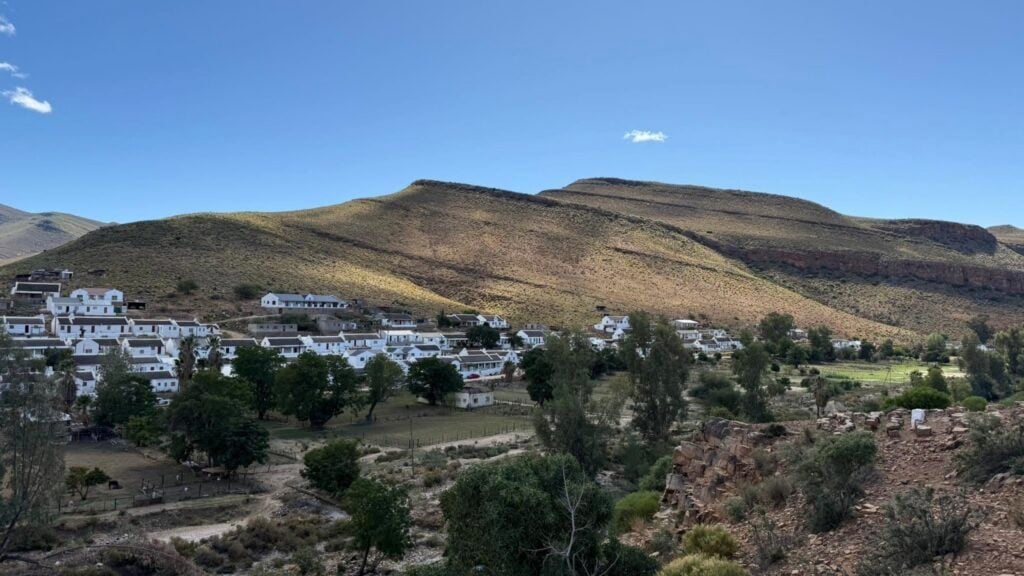
Nestled in the Western Cape’s Cederberg mountains, the tiny town of Wupperthal was founded nearly two centuries ago.
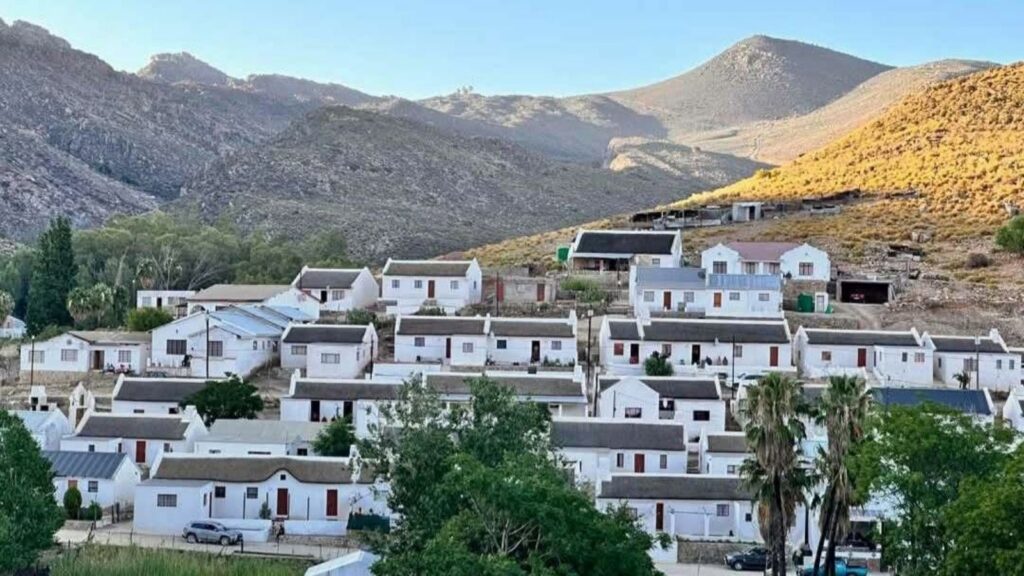
Today, the town is home to its iconic whitewashed, thatched-roof cottages, organic rooibos tea production, and a factory making handcrafted leather veldskoene.
Founded in 1830, Wupperthal is an isolated oasis located 72 km from its nearest neighbour, Clanwilliam, and around 250 km from Cape Town.
The town’s name was derived from the Wupper River in Germany, from where two Rhineland missionaries, Theobald von Wurmb and Johan Gottlieb Leipoldt, arrived in the Cape in 1829.
Von Wurmb and Leipoldt settled among the seven Khoikhoi families in the valley, and the town’s population grew rapidly after slavery was abolished in 1838.
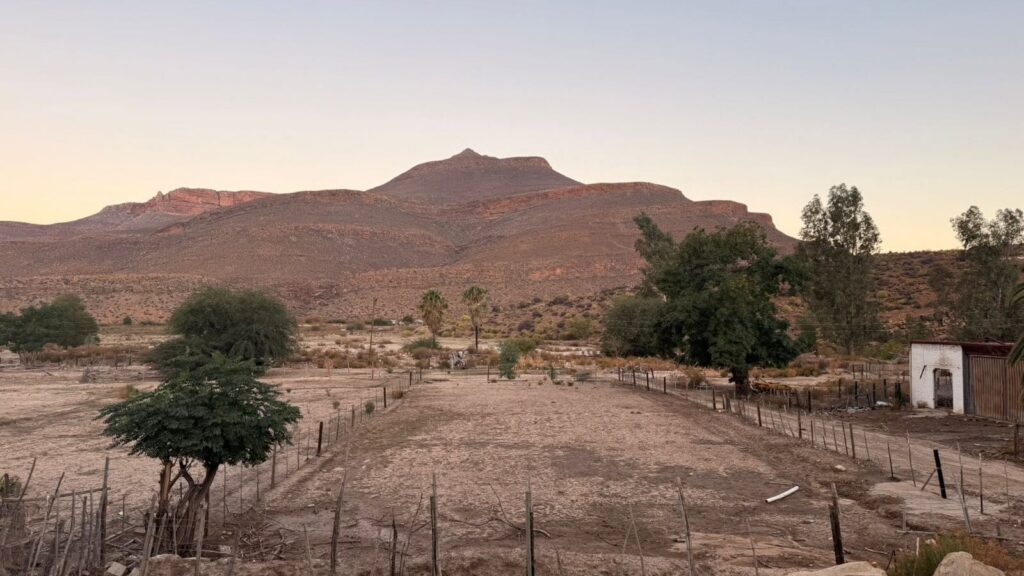
Its location in the Cederberg mountains means the town is in the heart of picturesque yet rugged wilderness, which includes the almost-extinct Clanwilliam cedar and the ultra-rare pure-white snow protea.
The Cederberg denotes a vast controlled area of stark and eroded rock formations, along with waterfalls, crystal streams, and clear pools. It boasts magnificent view sites, caverns, overhangs, peaks, and ravines.
This means the region attracts many hikers, backpackers, climbers, and campers, who all want to take on some of the mountain’s 254 km of unmarked but well-defined footpaths.
Despite this, the area’s rugged terrain means Wupperthal and the Cederberg mountains remain completely unspoilt by tourism, with the mountains covered almost exclusively by pristine fynbos.
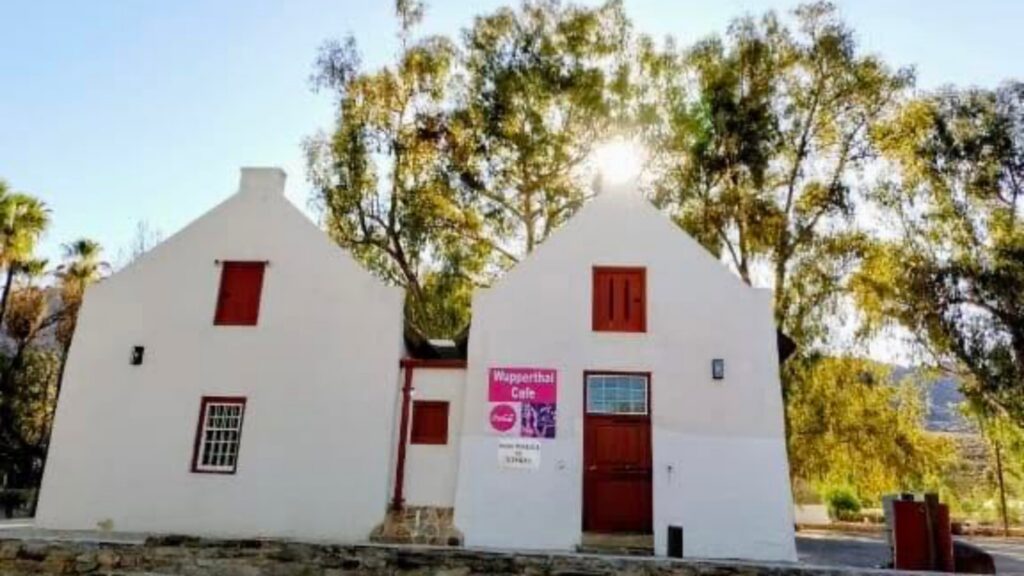
The town of Wupperthal itself remains tiny, consisting of an old church, a store, and terraces of thatched-roofed little cottages.
It also boasts a community library, including a multi-media centre, that was established to support the more than 100 students at Wupperthal’s local school.
In 2019, the town suffered a terrible fire, which destroyed 52 houses and numerous historic buildings. However, the town has been hard at work rebuilding what was lost.
Despite its miniature size, a great deal of productive activity takes place in Wupperthal, with its residents involved in sectors ranging from tea cultivation to shoe-making.
Veldskoene en Rooibos

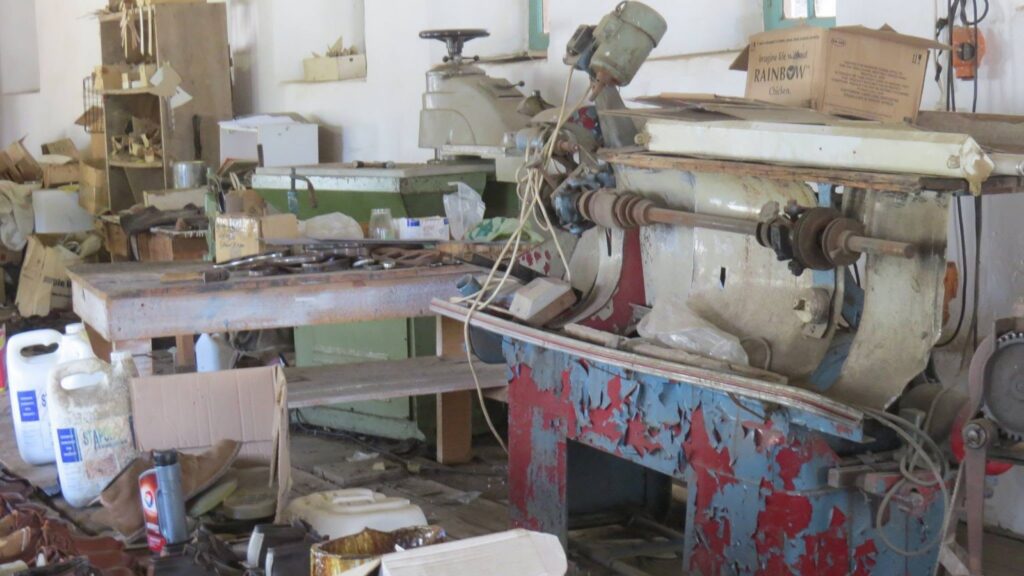
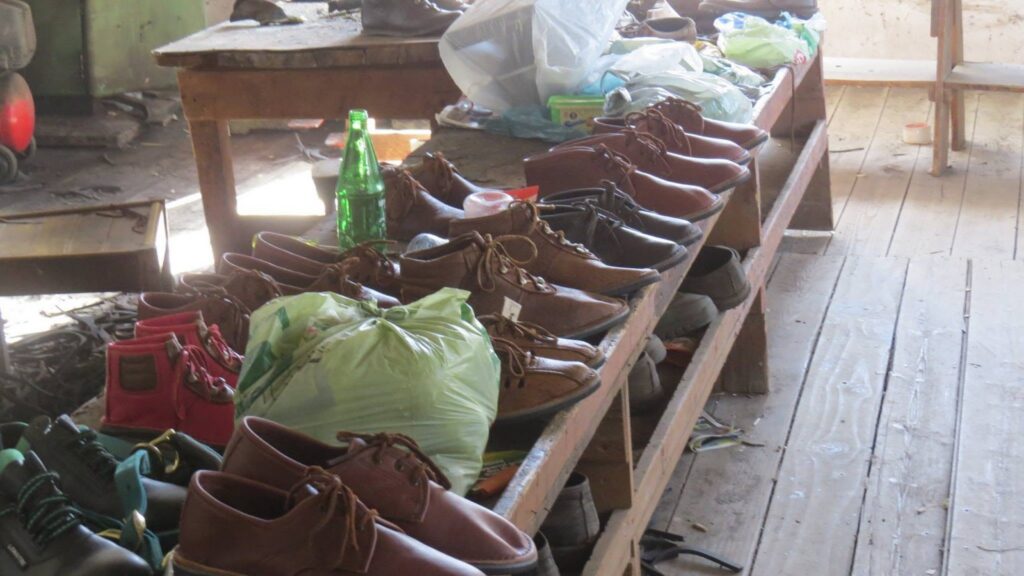
Nearly as old as the town itself, Wupperthal boasts a shoe factory that has been producing leather shoes, particularly velskoene, for nearly two centuries.
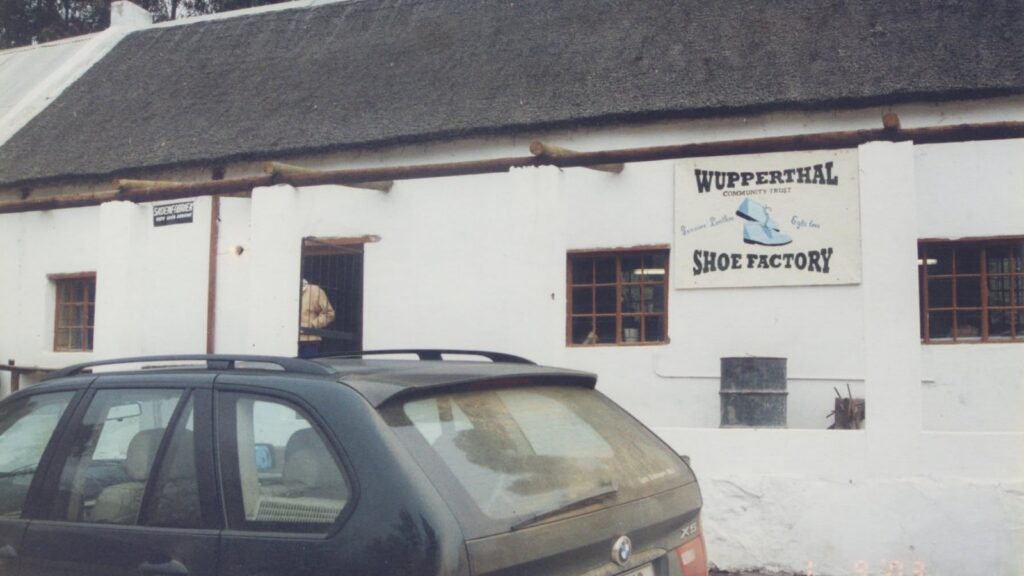
Founded by Johann Leipoldt himself in 1834, the Wupperthal Shoe Factory is located on the town’s main road and still produces shoes to this day.
When Von Wurmb and Leipoldt settled in the town, they soon realised that residents and travellers would need shoes that could weather the tough terrain of the Cederberg mountains.
Thus, Leipoldt opened the Wupperthal Shoe Factory in 1834. As the years progressed, the factor continued to grow and was eventually taken over by Reverend Willy Strassberger in the 1920s.
In the 1950s, Heini Strassberger decided to move the entire shoe-making operation to Clanwilliam, which had become a bustling business district in the region.
Thus, the new factory opened under the Strassbergers’ banner as Strassberger Shoes, and it continues to operate to this day.
In keeping with its historic legacy, 80% of the manufacturing process in the Clanwilliam factory is still done by hand.
However, this factory is not the oldest in South Africa. That designation still belongs to the Wupperthal factory, which continues to produce shoes to this day.
When the Strassbergers’ operations were moved to Clanwilliam, the Wupperthal factory continued to operate, though at a much smaller scale.
The factory produces shoes by hand, specialising in veldskoene, or ‘vellies’, traditional field and work shoes worn across South Africa.
Aside from this factory, Wupperthal residents are also heavily involved in the local Rooibos industry.
This is because the area surrounding Clanwilliam is the only place in the world where Rooibos is cultivated as an agricultural crop.
The crop is processed, packaged, and dispatched worldwide, with more than 2,000 metric tonnes of Rooibos being exported annually. In Wupperthal, farmers have made a decisive move to grow Rooibos exclusively organically.
According to the town’s website, growing Rooibos organically is not particularly difficult and yields a better price for farmers.
Wupperthal said 75 of its farmers and surrounding communities currently participate in a programme that is transitioning from wild harvesting to the sustainable cultivation of a product suitable for export to world markets.
Wupperthal








Comments