South Africa is in an electricity death spiral


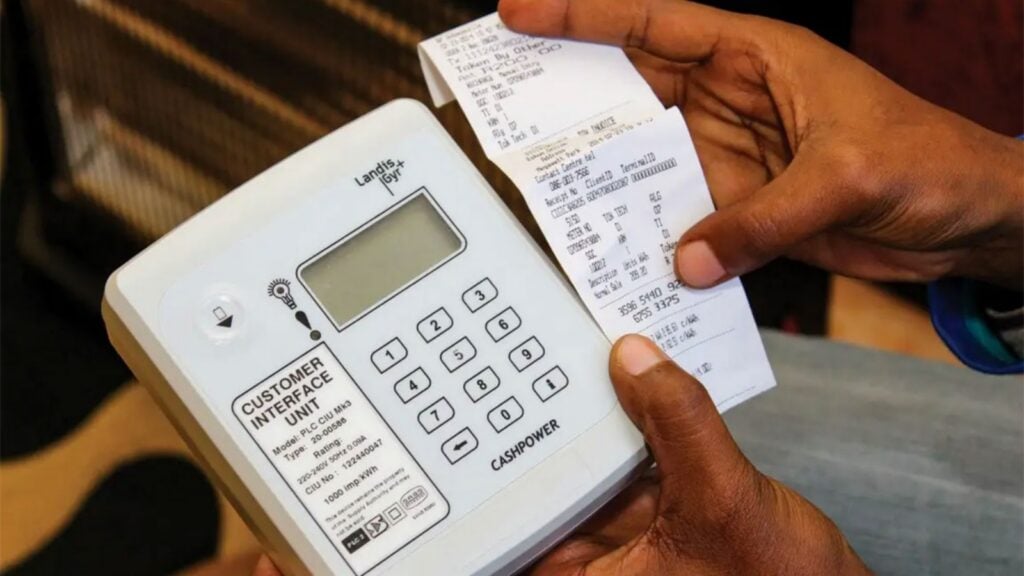
South Africa is trapped in a cycle of rising electricity prices feeding into declining energy demand and vice versa, with seemingly no end in sight.
In an interview with 702, energy expert Chris Yelland described this as a “classic utility death spiral” brought about by major cost overruns at Eskom’s Medupi and Kusile power stations.
“This forced the price of electricity up,” Yelland explained. “Late delivery and long delays caused capacity shortages of electricity, which meant prices went up some more.”
“As prices go up more, it causes demand destruction. You get to a stage where smelters are shutting down, and everybody is using less electricity and looking at alternative energy.”
This destruction of demand and increase in alternative energy usage creates a surplus of energy production by Eskom, which should theoretically lead to an electricity price reduction.
However, Yelland explained that the price methodology adopted by the National Energy Regulator of South Africa (NERSA) actually allows Eskom to put prices up to recover lost revenue.
And while Eskom’s official tariff increases for 2026/27 are set at 8.76% for direct customers and 9.01% for municipalities, Yelland said in practice it is actually much higher.
This is because Eskom applies numerous hidden charges to South African electricity bills, which have to be paid at a fixed rate regardless of how much power is actually consumed.
This includes generation capacity charges, network access charges, legacy charges, and other costs which Eskom’s customers may not even be aware of.
“We all can see the prices of electricity are going up as Eskom struggles to cover the loss of revenue as a result of demand destruction,” Yelland said.
“This is driving Eskom to the brink, and it doesn’t help putting up your prices anymore because it causes demand to go down and then they put up prices even more.”
Yelland has consistently campaigned that the country’s transition to a more open and competitive energy market would significantly bring electricity prices down.
However, he said that this is not likely to happen anytime soon as Eskom continues to delay its unbundling process and therefore the energy market reform which South Africa needs.
NERSA launches probe into tariff impact

Yelland’s comments come on the back of the release of a draft media inquiry report by NERSA into the impact of Eskom’s various charges on both households and large power users.
The inquiry was reportedly prompted after NERSA received numerous concerns that the effective electricity price increases had materially exceeded the approved tariff adjustments.
This was especially concerning in the case of major industrial players, as while some have negotiated pricing agreements (NPAs) with Eskom, these do not cater for everybody.
The report revealed that as energy tariffs had increased by over 1,100% since 2003, the industrial demand for electricity had declined by approximately 40% during the same period.
NERSA found the policy rationale behind Eskom’s Retail Tariff Plan (RTP) to be reasonable, but said the implementation of the RTP in practice had produced uneven outcomes.
Alongside this, NERSA pointed to a negative feedback loop in which declining demand heightened pressure on Eskom to recover fixed system costs from a shrinking customer pool.
This has been especially detrimental to businesses in energy-intensive industries such as mining, agriculture, and manufacturing, even forcing some to close down.
In an interview with 702, NERSA Executive Manager for Electricity Rhulani Mathebula explained that these NPAs were introduced to address capacity constraints at the time.
However, this also served to make electricity more unaffordable for many major industrial players, leading to South Africa losing its position as the cheapest producer of electricity in the world.
“Companies operating in China have an advantage over smelters that are in the country,” Mathebula said. “Government is using these NPAs through Eskom to try and manage that.”
“If you were to study what is happening in the Chinese market, you would realise that government is heavily involved in ensuring those smelters are sustained and more competitive globally.”
Mathebula also defended NERSA’s approach to pricing, and explained that it was based on a rate-of-return policy which looked at the power utility’s assets to determine tariffs.
This means that for every asset built or acquired by Eskom, such as a power station, additional income is then required to be able to fully cover the costs of said asset.
However, NERSA said in their inquiry report that it would look at potential reforms for its tariff policy that would balance affordability with long-term sustainability and economic efficiency.



Comments