Reserve Bank Governor’s R10.5 million payday


Reserve Bank Governor Lesetja Kganyago received a total pay package of R10.53 million for the 2025/26 fiscal year.
This is up only 2.65% from his total compensation package of R10.26 million in the 2025 fiscal year, marking a below-inflation increase.
This was revealed in the South African Reserve Bank’s (SARB) Annual Report for the year through March 2026.
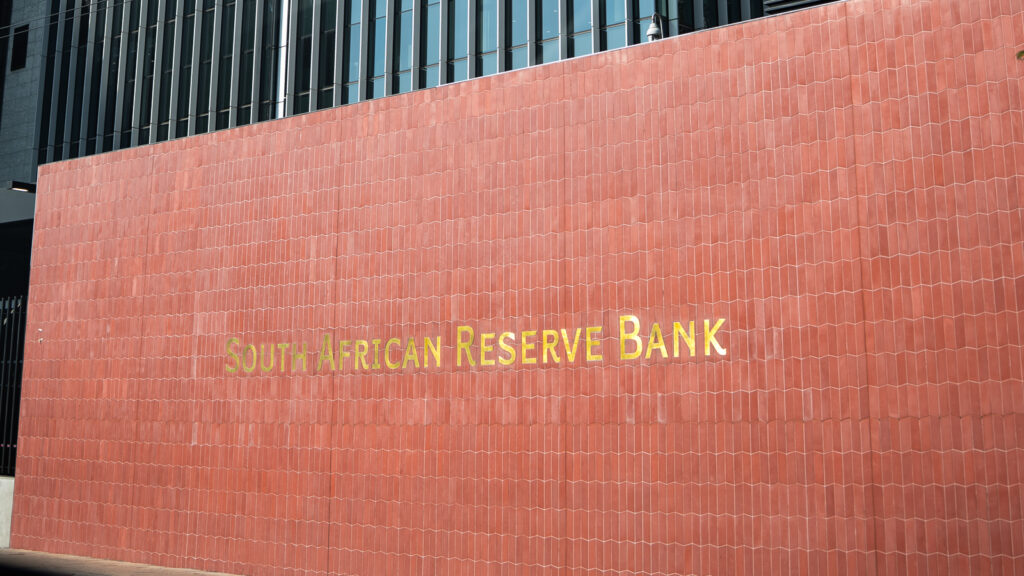
Unlike many other government-related entities, the Reserve Bank operates fully independently, with its independence enshrined in the Constitution.
The Constitution determines that the SARB must operate independently and without fear, favour or prejudice while fulfilling its primary objective.
The SARB’s mandate is to achieve and maintain price stability in the interest of balanced and sustainable economic growth.
Most South Africans will know the Reserve Bank for its Monetary Policy Committee (MPC), which meets once every two months to determine the country’s interest rates.
However, the Reserve Bank also houses many other critical institutions and functions, including the Prudential Authority, the Financial Surveillance Department, and the South African Mint.
Through these institutions, the SARB is also charged with regulating the local financial services sector, issuing and destroying banknotes and coins, managing the country’s gold and foreign reserves, and overseeing the national payments system.
Critically, the Reserve Bank also acts as the government’s “banker”, providing the state with core banking and financial services like holding its accounts, processing transactions, and issuing debt.
Another interesting facet of the Reserve Bank is that it has shareholders. As of 31 March 2026, the SARB had 855 shareholders.
Unlike a commercial or JSE-listed entity, Reserve Bank shareholders have no rights or involvement in its functions.
Instead, the role of central bank shareholders is limited to reviewing its financial statements, electing seven non-executive directors of the board, and appointing external auditors and approving their remuneration.
While the Reserve Bank operates completely independently from the government, the SARB Governor is appointed by the President, in consultation with the Finance Minister and the Reserve Bank’s board of directors.
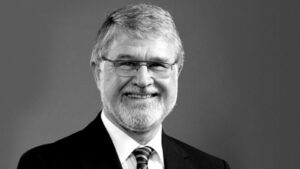
Lesetja Kganyago
Kganyago was appointed Reserve Bank Governor by the President in November 2014, and has since been reappointed for a second and third term, which he is currently serving.
In South Africa, the SARB Governor serves a renewable term of five years, with no strict statutory limit on the number of terms they may serve.
Thus, Kganyago has now worked in the SARB’s top job for more than a decade. Prior to joining the Reserve Bank, he served as the Director-General of the National Treasury.
From 2011 to 2014, Kganyago was the Reserve Bank’s Deputy-Governor, meaning he has been at the central bank for a decade and a half.
Kganyago also served as the Chairperson of the International Monetary and Financial Committee (IMFC), the primary advisory board to the IMF Board of Governors, from 18 January 2018 to 17 January 2021.
As SARB Governor, Kganyago is tasked with achieving and maintaining price stability in the interest of balanced and sustainable economic growth.
Therefore, to fulfil this mandate, the Governor chairs the MPC, acts as the SARB’s primary spokesperson, and chairs the Financial Stability Committee, among other functions.
Kganyago’s long history at the SARB has been marked by several career achievements, with the most recent being South Africa’s switch to a lower inflation target.
Before this switch was made official in November 2025, Kganyago had been a vocal proponent of lowering and narrowing the country’s inflation target.
This switch, Kganyago said, would prevent the severe erosion of South Africans’ purchasing power and align South Africa better with its global peers. In the long-term, a lower inflation target should also translate into lower interest rates.
For his work at the Reserve Bank, Kganyago was awarded a total compensation package of R10.53 million for the 2025/26 fiscal year.
This includes R10.31 million in remuneration and recurring fringe benefits, as well as R228,000 in other fringe benefits.
For reference, the SARB Deputy Governor, Fundi Tshazibana, received total remuneration of R7.40 million.
Codera Analytics economist and CEO Daan Steenkamp pointed out that Kganyago’s most recent pay package represents a 2.65% increase compared to the previous year.
Considering that South Africa’s CPI inflation averaged 3.1% in 2025/26, this marks a below-inflation increase for the Governor.
Steenkamp also shared interesting information about overall compensation at the SARB, noting that headline CPI inflation has averaged 5.3% since 2002, while SARB average wages have grown at 8.1% per year.
He shared that average wages at the Reserve Bank are just shy of R1.35 million, excluding medical and pension benefits, or almost R1.5 million including benefits.
“Unfortunately, SARB does not report detailed data for different roles in the organisation or by level of seniority over time, so one cannot tell the extent to which average wage changes reflect a compositional shift in the staff complement,” he said.
Comments