End of ATMs as you know them in South Africa


As the costs associated with running ATMs increase, and commercial banks respond by reducing their footprints, the Reserve Bank is seeking to roll out white-label ATMs to secure cash access across the country.
These white-label ATMs will be complemented by more strict regulations for traditional banks and non-bank ATM operators.
This was revealed in the Reserve Bank’s recent Position Paper on Cash in South Africa, titled ‘Towards a Cash Smart Society’.
In this paper, the Reserve Bank explained that there are high costs and operational burdens associated with ATMs.
ATMs fall under the Reserve Bank’s classification of ‘Tier 2’ in South Africa’s cash supply chain, which is responsible for roughly R21 billion of the annual costs of cash, which total R90 billion.
The central bank said this huge expense is largely driven by the operational demands of maintaining ATM networks’ functionality and reliability.
This includes constant cash replenishment, deposit-clearing services, balancing, and first-line maintenance.
Faced with these high and increasing costs, many commercial banks have started to shrink their ATM networks over the past few years.
This rationalisation of banks’ physical footprints also comes as South Africa’s payment system becomes increasingly digital.
The digitalisation of South Africa’s payment system has led to a decline in cash withdrawals and deposits, further motivating banks to shrink their physical footprints and invest more in digital channels, such as their banking applications.
At the same time, South Africa has seen an influx of fully digital banks launching in the country, putting further pressure on traditional banks to modernise their services.
All of this has led to South Africa’s so-called ‘Big Five’ banks – Absa, Standard Bank, FirstRand (FNB), Nedbank, and Capitec – reviewing their physical presence across the country, with many shutting down ATMs and branches.
For example, between 2022 and 2025, Absa closed down just under 200 ATMs, while Standard Bank closed over 230.
Cash deserts and white-label ATMs

The Reserve Bank explained that this rationalisation of banks’ physical footprints risks creating “cash deserts” in South Africa.
Cash deserts refer to places where access to cash is limited, costly, or geographically distant. The regions most at risk are South Africa’s rural, low-volume, and less-profitable areas.
In other words, the withdrawal of cash infrastructure could leave many South Africans who still rely on cash without easy and equitable access to physical currency.
The Reserve Bank said this could put cash-dependent communities at risk of having to travel long distances and pay higher fees for basic cash access.
Therefore, the Reserve Bank’s solution to secure the future of cash access is to use white-label ATMs as part of a new “utility-coordinated access layer”.
“White-label ATMs are recognised under the Cash Smart Strategy as an important access mechanism for sustaining cash availability, particularly as traditional bank-owned ATM infrastructure is rationalised,” the bank explained.
“White-label ATMs are envisaged as part of a utility-coordinated access layer that facilitates geographic rebalancing, improves reach in underserved areas, and reduces the time and travel costs borne by cash-reliant users.”
The Reserve Bank’s Payments Ecosystem Modernisation Programme executive director, Pradeep Maharaj, previously explained that these white-label ATMs will use banks’ existing ATM infrastructure.
“As far as ATMs are concerned, we are looking to roll out white-label ATMs, which means that all the infrastructure in the country will be taken over by the utility,” Maharaj said.
“This means that all ATMs will offer their services at the same price, in contrast to how it is currently, with only your bank offering you a better price.”
In other words, the central bank is proposing that all ATMs in the country, along with all cash centres in South Africa, be put into a cash-management utility set up by the Reserve Bank.
“All of this, we believe, should go into a utility and be shared infrastructure. This means we can rationalise infrastructure, spread the infrastructure to areas where cash is still in demand and thus minimise the movement of cash,” Maharaj said.
Non-bank ATM operators under the spotlight
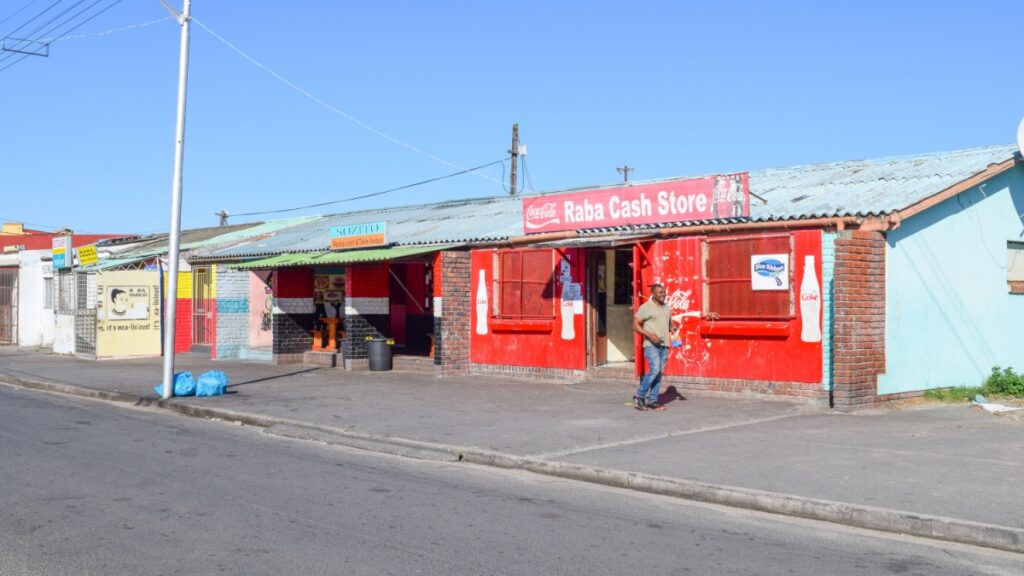
The Reserve Bank also plans to introduce a comprehensive regulatory framework to establish enforceable “rules of the road” and activity-based licensing for banks and non-bank ATM operators.
The framework will include minimum sector-wide standards, bringing non-bank operators under the same regulatory oversight as traditional banks.
This is because, as banks rationalise their footprints, non-bank ATM operators have stepped into the gaps left behind.
While this addresses the problem of cash access, the Reserve Bank said it comes with other risks, as these alternative providers are commercially fragile.
“Their sustainability depends on sufficient transaction volumes and manageable operating costs,” the bank explained.
“Should economic pressures, security risks, or declining demand render their business models unviable, communities may experience the emergence of ‘cash deserts’.”
“This would disproportionately affect rural areas, lower-income communities and cash-reliant users.”
In addition, these independent ATM operators are subject to very limited regulatory oversight, making them riskier for consumers than traditional banks.






Comments