Using cash costs South Africans R90 billion a year



The annual cost of cash in South Africa is substantial, sitting at around R90 billion, most of which is paid by consumers.
This also includes indirect costs borne by consumers, such as travel time, queuing, and exposure to crime
This was revealed in the South African Reserve Bank’s (SARB) recent Position Paper on Cash in South Africa.
In this paper, the Reserve Bank explained that its Cost of Cash Study, concluded in November 2025, revealed that the annual cost of cash amounts to approximately R90 billion.
This total encapsulates both direct and indirect costs, which are almost equally split: direct costs account for R43.5 billion (49%), while indirect costs total about R46.1 billion (51%).
Direct costs refer to things like withdrawal and deposit fees, while indirect costs reflect travel and queuing time, crime and cash losses, opportunity costs, and retailer pass-through costs.
While cash suppliers incur an aggregate cost of R27.1 billion, which is included in the R90 billion total, the Reserve Bank explained that all of these costs are ultimately borne by South African consumers.
The SARB outlined the cost structure for the supply of cash, explaining that it is distributed across three main tiers in the cash value chain:
- Tier 1, which represents essential industry services, incurs costs of R1.2 billion, driven primarily by storage, handling, security and logistics costs.
- Tier 2, which encompasses essential banking services, is responsible for R21 billion in costs, largely attributed to the management of ATM and branch networks, CIT operations and the processing of banknotes and coins.
- Tier 3, which comprises retailers and small, medium and micro enterprises (SMMEs), accounts for R4.3 billion in costs.
In the third tier, formal retailers incur significant expenses for cash-back services and routine operations, while SMMEs remain highly reliant on cash and face substantial costs through daily
business activities.
Across all three tiers, the costs of cash are ultimately passed on to the end users, i.e. consumers.
Cash is still king
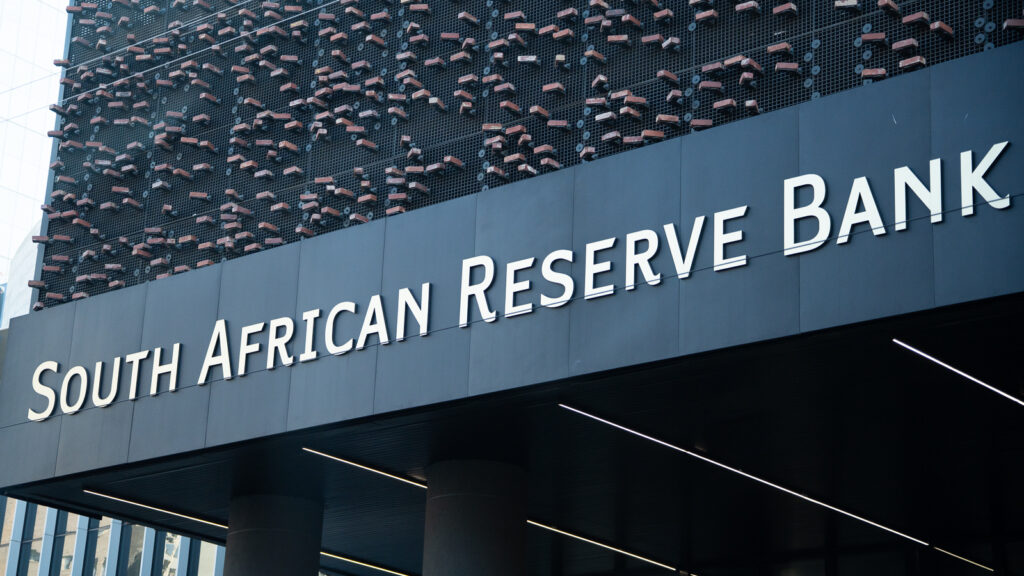
Despite the high costs associated with using cash, the Reserve Bank said it remains a foundational component of the local economy.
This is particularly true for many everyday transactions, informal markets, and cash-reliant households.
“It continues to provide immediacy, universal acceptance and operational resilience when digital systems are unavailable,” the Reserve Bank said.
“The SARB therefore recognises that cash and digital payments are not pure substitutes, but complementary instruments within a hybrid payments ecosystem.”
However, the Reserve Bank also recognised the risks and high costs associated with using cash.
Therefore, to balance the risks and benefits of cash, the Reserve Bank has introduced its Cash Smart Strategy.
As the SARB explained, this strategy treats cash as a critical public infrastructure that must be actively stewarded to remain resilient, inclusive, and efficient within a modernising payments system.
“It is not a reactive response to the digitalisation of payments, but a forward-looking framework that modernises the cash ecosystem while preserving its essential public-interest functions,” it said.
The three ‘pillars’ of the strategy can be summed up as: reducing the cost of cash, ensuring broad and equitable access to cash, and embedding secure and accountable stewardship of physical currency.
Webber Wentzel partner Lerato Lamola explained that the SARB intends for cash to be treated as a system-wide public good, governed through an integrated framework that balances efficiency, competition, resilience, and inclusion.
“Similar to developments in the digital payments space, the SARB intends to create a public utility within the cash ecosystem and to take a more active role within the ecosystem,” she explained.
“The intention is to create a cash utility that will expand access to wholesale cash and reduce the costs of cash.”
“It is further envisaged that the cash utility will create value by reducing the inventories carried throughout the supply chain by many participants.”






Comments