The top South African business leader and billionaire who gave most of his money away


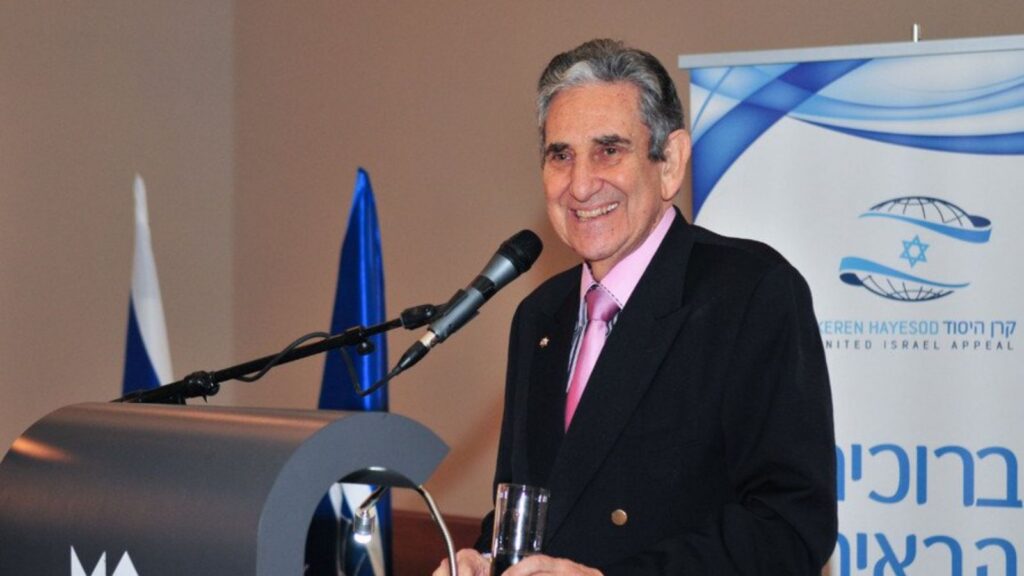
Eric Samson turned Macsteel from a small fencing business into one of Africa’s largest steelmakers, making him a dollar billionaire in the process.
However, Samson gave most of this wealth away, donating significantly across healthcare, education, and community upliftment in South Africa and Israel.
This makes him the only South African to have voluntarily given away his status as a dollar billionaire through philanthropy.
The Samson fortune was built over generations of work in South Africa’s historic steelmaking industry that rose alongside the mining sector.
Samson’s father, Dave, founded Pan Africa Staalhandel in 1950, which was a tiny company specialising in fencing and wiring.
Joining the business in 1958, Samson had a knack for business and ensured that Pan Africa would not remain small for long.
In his first few years at Pan Africa, Samson quickly realised that scale was key in the steel business and began eyeing opportunities to merge or acquire to add size.
S. Mechanik & Company was an established player in the steel industry in South Africa, having been founded in 1904 as a fencing supplier and a national trading company.
Samson began studying the opportunity to acquire this company and to more than double the size of Pan Africa. However, this was always unrealistic given the difference in size between the companies.
As such, a merger was proposed between Pan Africa and S. Machanik in 1965 to create one of the largest producers of steel products.
With the company’s rapid expansion, a new name was needed for ease of reference and to create a brand that could extend beyond fencing and wiring.
Macsteel was chosen to honour the Machanik name, while making the ambitions of the company clear.
The timing was fortuitous with South Africa’s economy undergoing a period of significant growth throughout the 1960s and early 1970s.
Heavy industry was at the core of this growth, with the government looking to boost self-sufficiency and earn hard foreign currency through exports.
The economy itself was industrialising, with rapid expansion in the electricity grid, road network, and other infrastructure, boosting demand for steel.
Macsteel goes global
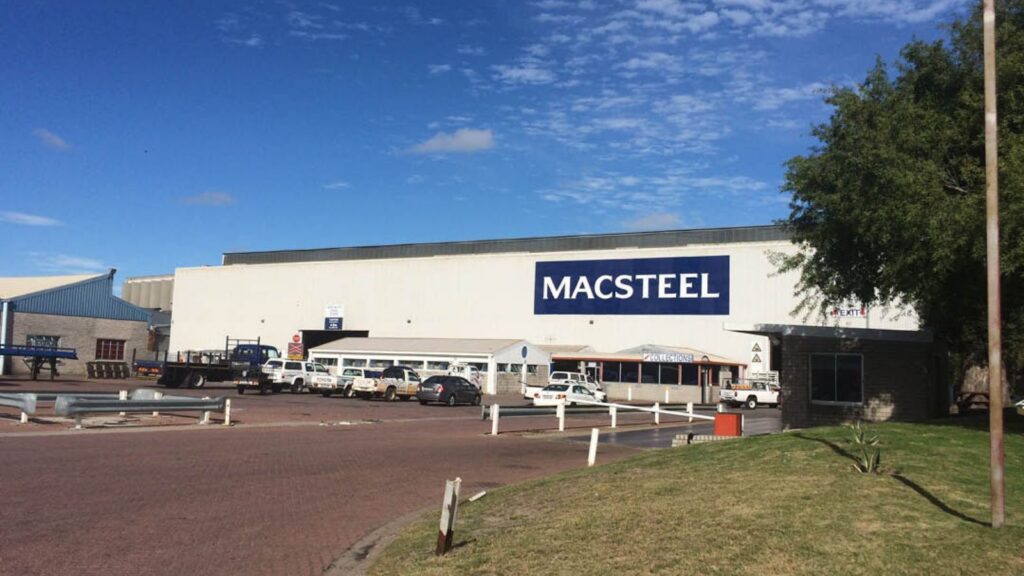
Macsteel would use the cash it generated during the South African boom to further enhance its scale and take its brand global.
While many companies were hesitant to invest in the local economy in the 1980s, Macsteel doubled down.
During this decade, the company would merge with six of its major competitors, significantly enhancing its scale and making it the dominant player in the local market.
However, more pivotal to the future of the business than these mergers was the acquisition of Lea Raphaely & Sons.
This gave Macsteel an international presence, with the international trading house putting the South African giant on the map.
Samson went into overdrive over the next few years to consolidate the company’s presence in South Africa and expand it internationally.
He would turn Macsteel into a global powerhouse, operating across three continents and more than 35 countries.
This made Samson immensely wealthy, with Bloomberg putting his net worth at $1.1 billion in 2015.
Despite this success, Samson was extremely media-shy and reclusive, granting only two interviews throughout his business career.
“We have simply ploughed our profits back into the business and funded our own expansion,” Samson told the Financial Mail in 2006. “We have never needed the glorification. We simply got on with our business.”
In the 2010s, Samson began selling off parts of Macsteel and its commercial property portfolio to fund his philanthropy and retire.
He sold much of the company’s real estate to Redefine in 2014 for $272 million and made $660 million selling Macsteel USA to Klockner.
Macsteel continues to operate, having modernised since Samson’s passing in 2021 and invested heavily in digital transformation and advanced engineering.
Today, the company still operates around 40 service centres, branches, and warehouses across South Africa.
Philanthropic giant
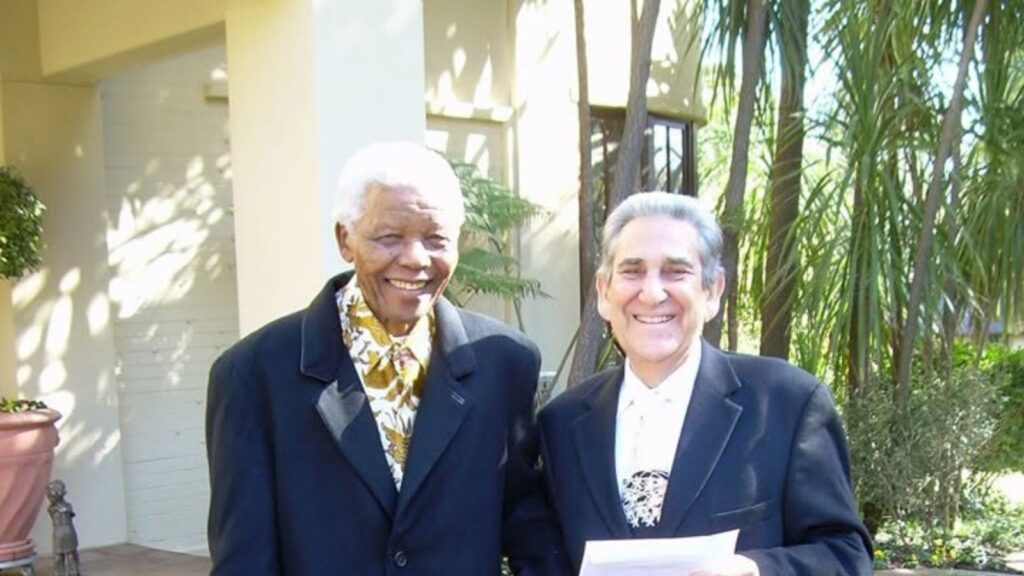
Unlike many businessmen, Samson is more widely known for his philanthropic efforts and close friendship with Nelson Mandela, as opposed to his entrepreneurial exploits.
While Samson split his time in retirement between Cape Town, Tel Aviv, and Los Angeles, his commitment to charity was unwavering.
Most famously, Samson played a key role in the Nelson Mandela Children’s Fund. He served on its board for two decades and donated R1 million to it every July to mark Mandela’s birthday.
When constructing the flagship Nelson Mandela Children’s Hospital, Samson’s generosity kicked into overdrive.
Delayed by tense board meetings at the fund, Samson eventually put the matter to bed. The fund’s CEO at the time recalled Samson saying, “I will put in R100 million. And that was that.”
Through the Eric and Sheila Samson Foundation, the billionaire quietly gave away hundreds of millions of rands across South Africa and Israel.
The donations to the children’s hospital and fund were coupled with similar efforts in Israel, where the foundation built the Samson Assuta Ashdod Hospital.
This was the first new public hospital built in the country in over 40 years and provides healthcare for around half a million people.
Samson also funded major medical research initiatives at The Cleveland Clinic in the United States.
Apart from healthcare, Samson donated significant sums to education, pumping money into King David and United Herzlia schools in South Africa.
Samson also donated to youth centres and sports initiatives across South Africa to give children spaces to learn and engage in physical activity.
As with many successful Jewish businessmen, Samson also donated heavily to the creation of the Cape Town Holocaust & Genocide Foundation.
Samson never made his donations public and did not require heavy pitching or convincing around ideas. He was known to ask privately where the deepest need was and wrote the checks without public fanfare.
Comments