Watchdog hits back at South African farmers


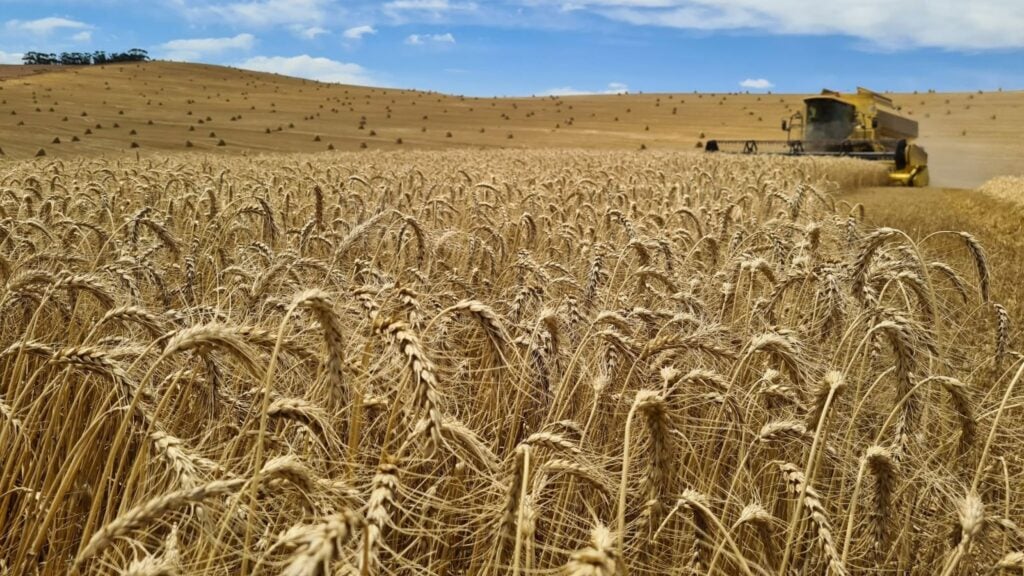
The International Trade Administration Commission (ITAC) has come out to defend its decision not to increase the reference price of wheat.
This comes after Grain SA and the South African Cereals and Oilseeds Trade Association (SACATO) requested that this price be increased from $279 up to $289 per tonne.
This, they said, would provide better protection for local wheat producers by making tariff adjustments on imported wheat more frequent.
Tariffs on imported wheat are typically imposed when the price of wheat falls below the dollar-based reference price (DBRP) of $279 per tonne for three weeks or longer.
After concluding a 19-month investigation, ITAC announced in a government gazette on 17 June 2026 that the DBRP would remain at $279 per tonne.
Grain SA criticised this decision, saying it risked accelerating the decline in local wheat production and increasing reliance on imports.
Following this, ITAC Chief Commissioner Ayabonga Cawe explained in an interview with 702 that the decision was made based on evidence presented to it by Grain SA itself.
“The current prices they would have at a farm-gate level, and the protective cover provided by this price floor, were adequate to cover their production costs and some margin,” Cawe said.
“If one looks at the five-year data that the industry itself has given us, there would have been a compelling case on our part to recommend the retention of the duty at current levels.”
Cawe explained that the purpose of having the DBRP in place was to isolate local wheat prices from global price fluctuations and prevent artificial price devaluations.
It is also intended to serve as a way to keep local wheat prices tied to some semblance of coverage of production costs for wheat producers, sometimes even full coverage.
According to Cawe, the five-year data provided to ITAC by Grain SA, SACATO, and the broader grain industry only covered through the end of 2025.
As such, it did not account for current market conditions which had arisen since the initial application was made, and which ITAC subsequently took into consideration.
“The current price conditions for hard red wheat necessitate a trigger to zero because prices are so favourable on the back of drought conditions,” Cawe explained.
“And even with supply shocks arising from the challenges we see at the Strait of Hormuz, much similar to what we saw following the military actions in Ukraine in 2022.”
What ITAC missed in its decision

Grain SA released a statement in response to ITAC’s ruling, covering what it said are five critical factors that the Commission had failed to consider when making its decision.
The first of these is ITAC’s focus on high yields with regard to grain harvests in recent years, which the commission used as a justification to keep the DBRP at its current level.
According to Grain SA, however, this ignored the reduction in hectares planted by South African wheat farmers, which it argued is a more vivid indication of growing pressure.
“Wheat hectares are declining because producers are questioning the profitability and long-term viability of wheat production,” Grain SA said.
The group also argued that the current DBRP did not provide adequate protection for local producers as ITAC said it did, as it did not reflect the farm-level reality of rising input costs.
Substantial increases in the prices of both fuel and fertiliser following the outbreak of the Iran war have significantly driven up agricultural production costs across South Africa.
In a direct response to Cawe’s comments about farm-gate level prices increasing faster than production costs, Grain SA said its own analysis showed the opposite had occurred.
“Wheat prices have not kept pace with input cost pressure, especially fertiliser, fuel, and crop protection costs,” Grain SA explained.
Fourthly, Grain SA argued that local producer prices had consistently traded below import parity after marketing and storage costs had been accounted for.
This directly contradicted ITAC’s assertion that South African wheat producers had maintained a 16% price advantage over imported wheat.
Finally, Grain SA said that ITAC had made its decision based solely on production metrics, but had failed to factor in the quality-to-price disparity.
“South African producers are expected to produce high-quality wheat for millers and bakers, but the market and policy environment do not adequately reward the cost and risk of producing the quality,” Grain SA said.
Grain SA said they had requested a full report from ITAC, breaking down the complete and exact reasoning behind the gazetted announcement.
While they said they had so far not received a direct communication from ITAC itself, the group affirmed that it would explore all avenues in order to appeal and overturn the ruling.





Comments