South Africa’s richest city is running out of money


The financial crisis facing the City of Johannesburg continues to deepen, with critical service delivery now grinding to a halt in the face of growing liquidity concerns.
Nowhere is this more apparent than in the recent suspension of diesel supply to the entire vehicle fleet belonging to the Johannesburg Roads Agency (JRA).
This means that the entity solely responsible for maintaining Johannesburg’s roads, including filling potholes and repairing traffic lights, is effectively grounded until further notice.
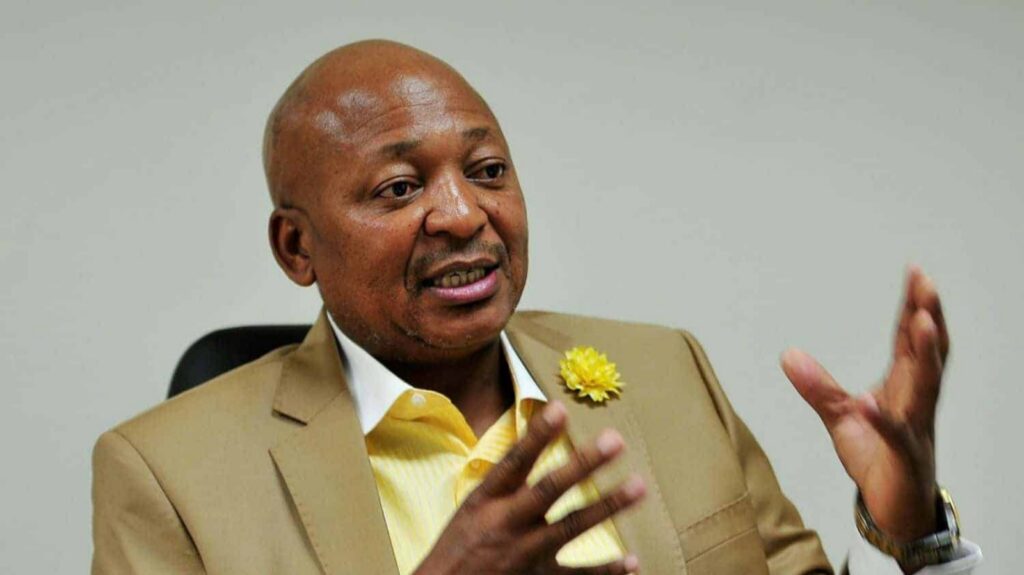
Johannesburg’s MMC for Transport, Kenny Kunene, said the fuel suspension came into effect on 15 June 2026, with no set date for when the suspension will be lifted.
While Kunene claimed he had engaged in discussions with the city’s leadership and finance department, Johannesburg officials have so far remained silent on the extent of the crisis.
The Centre for Risk Analysis (CRA) said the city’s inability to fund its own vehicles with fuel revealed a far more serious failure of administration than just poor service delivery.
“Road safety and economic costs rise the longer signals and potholes go unrepaired, with insurers and motorists bearing the immediate burden,” the CRA said.
“The inability to finance basic infrastructure maintenance damages the city’s negotiating position with creditors and intergovernmental partners, including Eskom.”
According to the CRA, this reflects incredibly poorly on Johannesburg’s fiscal credibility at a time when it is already under much scrutiny over its municipal debt.
Just last month, Eskom threatened to interrupt power supply to the City of Johannesburg over a R5.2 billion debt owed to it by the city’s energy agency, City Power.
The JRA itself has reported a total maintenance backlog of over R115 billion, far exceeding the entity’s annual budget of R1.8 billion.
Meanwhile, the city’s approval of a R97.1 billion budget for the 2026/27 financial year was deemed unfunded by opposition parties, including ActionSA and the Democratic Alliance.
According to figures from the National Treasury, Johannesburg owes its creditors approximately R25.2 billion but has only about R3.9 billion in cash reserves.
JRA fuel crisis could spread across entities
While the JRA’s fuel suspension serves as only the latest example of Johannesburg’s crumbling finances, concerns are growing that this could spread even further across the city’s entities.
The CRA said it expected this would not be the last major service interruption as the city desperately tries to turn its financial situation around.
The DA, on the other hand, claimed that the fuel suspension had already reached other city entities, such as Johannesburg Water, Pikitup, and Metrobus.
While this has not been confirmed nor denied by the city, the CRA said it would reflect a serious worsening of Johannesburg’s financial crisis if true.
DA Johannesburg Caucus leader Belinda Kayser-Echeozonjoku questioned how the city had approved its substantial budget mere days before the suspension came into effect.
“Residents were told by the Mayor in his State of the City Address that the city was ready to deliver services,” Kayser-Echeozonjoku said.
“Yet we now find ourselves in a situation where basic operational requirements such as fuel appear to be unaffordable.”
The DA also criticised the city’s insistence on continuing to honour its R10.3 billion wage agreement with the South African Municipal Workers Union (SAMWU) despite warnings from Finance Minister Enoch Godongwana that the deal is unaffordable.
Kayser-Echeozonjoku alleged that Johannesburg’s City Manager and CFO had been pressured by SAMWU to pay the agreement before the municipal elections in November.
The Auditor-General recently revealed in its Local Government Audit Outcomes Report for 2024/25 that Johannesburg had overspent its budget for that year by R2.38 billion.
This was attributed mainly to higher-than-planned employee costs, as well as financing costs from short-term borrowing and debt impairments not provided for in the original budget.
The city recently came under fire for paying over R21 billion to its 26,000 municipal employees, with much of this going towards entity executives.
JRA CEO Zweli Nyathi is set to receive an annual salary of approximately R3.1 million, even after his remuneration package was cut by 12% in the city’s latest budget.

Comments