John Steenhuisen’s crisis laying waste to small towns across South Africa


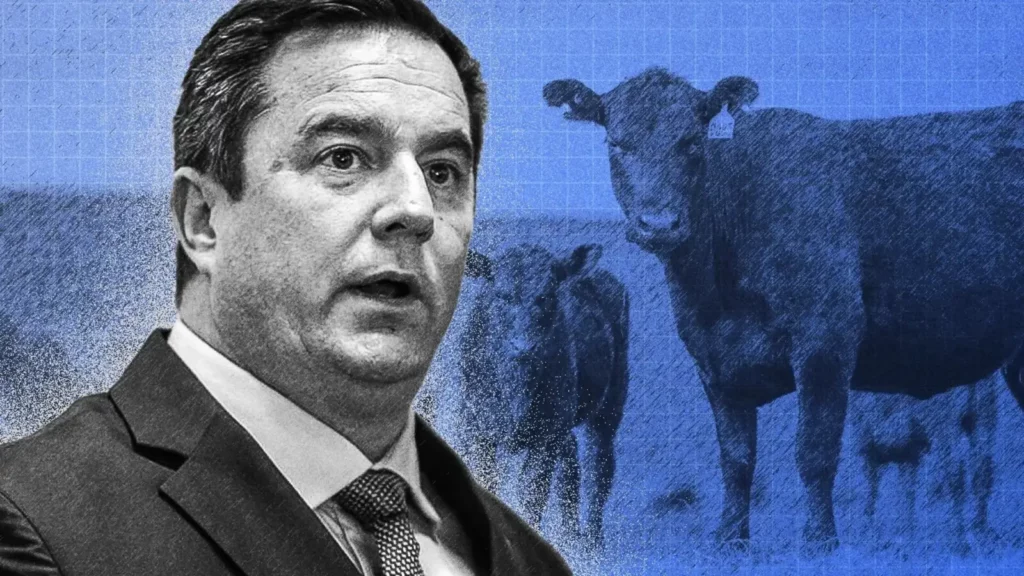
The outbreak of foot-and-mouth disease (FMD) across South Africa’s livestock industry has brought dire consequences for many of the country’s local communities.
The current outbreak of FMD started in April 2025 and was declared a national disaster by President Cyril Ramaphosa in February 2026.
Herd losses as a result of the outbreak led to higher meat prices across the country, as pointed out in AgriTrends’ Autumn 2026 report.
For communal farmers in small rural towns across the country, the outbreak has had other major effects, as Meat Naturally Africa CEO Sarah Frazee discussed in an interview with 702.
“We are currently still in national disaster protocols,” Frazee said. “We are not allowed to have auctions anywhere in KwaZulu-Natal (KZN) or the Eastern Cape.”
“No animal that hasn’t been vaccinated is allowed to move through the system, or through the entire red meat value chain.”
Communal farmers reportedly account for up to 50% of South Africa’s national herd, which currently numbers around 14 million cattle.
Frazee explained that many of these farmers will lose out on potential income by not being able to sell sufficiently fattened livestock before the beginning of winter.
Meat Naturally Africa was forced to cancel 27 communal farmer auctions in KZN and the Eastern Cape, scheduled to take place between November 2025 and March 2026.
The organisation was only able to raise R1.6 million for communal farmers through 6 direct sales of vet-checked cattle, compared to the R20 million normally made from the cancelled auctions.
While the rollout of a vaccine to quell the outbreak has seen steady progress, Frazee said not enough had been done to prevent the outbreak in the first place.
“They’ve vaccinated 600,000 animals since February in KZN alone,” Frazee said. “I don’t think the other provinces have been as fortunate.”
“They are prioritising giving the vaccine in KZN, but it’s not reaching some of the communal areas. That’s where we exclusively work, so this is a big problem for us.”
Delaying the vaccine process

Various parties have called on Agriculture Minister John Steenhuisen and his department to expedite the FMD vaccine rollout.
The Department of Agriculture (DoA) initiated the mass vaccination programme on 27 February 2026, aiming to vaccinate at least 80% of the national herd by December.
The publication of the DoA’s section 10 vaccination scheme has been delayed multiple times in relation to a court case brought before the Gauteng High Court in February 2026.
A coalition consisting of Sakeliga, SAAI, and Free State Agriculture applied for urgent relief regarding the DoA’s alleged unlawful prohibition on private sector vaccine procurement and administration.
The High Court did not grant the request, and decided to postpone the matter and gave the DoA a deadline of 17 April to publish the finalised scheme.
This deadline was not met, and the department attempted to postpone the matter even further to 2 June, but the High Court rejected this and set a final deadline of 5 May for the scheme’s release.
In an interview with eNCA, Steenhuisen denied delays in the vaccination rollout and said more legal proceedings would only slow down the process.
“We need everybody working together to achieve this particular result,” Steenhuisen said. “I don’t think court cases and running interference are going to yield the results that we want in the short term.”
Steenhuisen originally promised to deliver a finalised vaccination scheme in January 2026, but has since missed multiple deadlines regarding its completion.
DA Shadow MEC for Agriculture Heinrich Müller also requested that the Eastern Cape MEC for Agriculture publish a full provincial vaccination rollout plan.
“Communal and small-scale farmers cannot be left behind,” Müller said. “These farmers often face the greatest exposure to movement-related risks, communal grazing pressures, and access to private veterinary support.”
“FMD is not only an animal health issue. It is a direct threat to rural livelihoods, food security, agricultural confidence, and the provincial economy.”





Comments