Big changes to how petrol prices are calculated on the cards


The energy shock from the conflict in the Middle East is likely to be the catalyst for major reform of how South Africa’s petrol and diesel prices at the pump are calculated.
Reform may even occur to make the prices more elastic and responsive to global events, instead of the monthly changes South Africans are used to.
Old Mutual Wealth chief investment strategist Izak Odendaal explained that South Africa has struggled with a classic “mark-to-market” problem with fuel prices amid geopolitical shocks.
South Africa’s fuel prices only adjust monthly, while global oil prices and the rand-dollar exchange rate change in real time.
This means that a gap often opens up between the regulated fuel price and the ‘real’ market price. Typically, these gaps are small and not problematic.
However, with the recent shock to global oil supply, the gap has become significant, with petrol stations selling fuel for less than they purchased it for.
The same will happen when the situation normalises, and oil prices fall. There will be a period where consumers pay more for petrol and diesel at the pump than the market price.
A major issue is that when the price movement is significant and occurs only monthly, motorists rush to fill their tanks before the hike takes effect.
This empties out storage facilities at petrol stations as motorists demand more fuel while sellers have no incentive to fill up or face logistical bottlenecks due to the sudden rise in demand.
Once the regulated price eventually adjusts, stability returns and shortages end.
Such a problem with how South Africa’s petrol and diesel prices are adjusted has been accompanied by increased scrutiny of the various taxes levied on fuel sales.
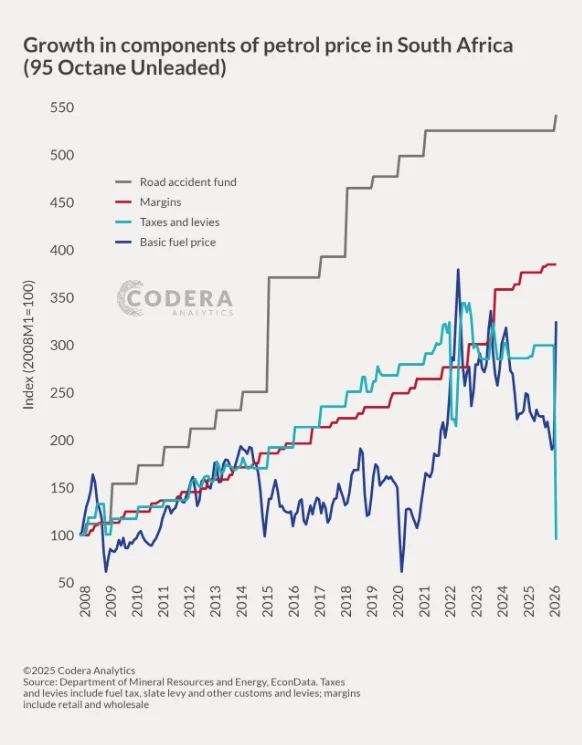
These levies, called ‘administered elements’, have been the fastest-growing component of fuel prices at the pump over the past 18 years.
These administered elements now make up more of the final price paid at the pump than the global oil price, as they have more than tripled in the past two decades.
The Road Accident Fund Levy is the single fastest-growing component of the fuel price, surging by over 500% since 2008. The General Fuel Levy has jumped by over 250% in the same period.
The following graph, courtesy of Codera Analytics, shows the various components of the final fuel price in South Africa and how fast they have grown since 2008.
Reform is coming
The shock from the conflict in the Middle East and increased scrutiny of what is driving higher prices have seen renewed calls for reform in how petrol and diesel prices are calculated.
Such reform has been touted for nearly two years by President Ramaphosa and Minister of Mineral and Petroleum Resources Gwede Mantashe.
Ramaphosa first announced a review of the fuel price formula in July 2024, saying that it was vital to identify areas where administered prices can be reduced to alleviate cost-of-living pressures.
Almost two years ago, Mantashe said petrol and diesel should cost R14 per litre in South Africa, with the price driven up by administered elements rather than commodity prices.
Such reform may finally be realised amid the recent shocks to the system, managing director and economist at ESG Analytics Sifiso Skenjana said.
Skenjana explained to 702 that the relief offered and extended by the government is necessary, with the R3 cut in the General Fuel Levy for April and May reducing the full scale of the price increases and helping limit the impact on inflation.
However, it also risks consumers becoming used to such relief and expecting it in the future, creating a challenge for the government as it is a vital source of revenue.
“If the issues pertaining to Iran, the US, and Israel stay around longer than expected, consumers will get used to that relief, and then it becomes difficult to take it away,” Skenjana said.
He pointed to the Social Relief of Distress grant instituted as a temporary lifeline during the pandemic, which has since become a permanent measure.
“If the relief is not transitory and is anchored, we will need to look for alternatives, and it has historically been brought up in terms of the fuel levy being such a large component of the final price,” Skenjana said.
“At some points, it has been close to 40% of the final price. The issue has been there for a while and has been put to the Treasury to reconsider. I think it will pressure the reform that needs to happen around the reform of the fuel price.”





Comments