R638 million vanished without a trace


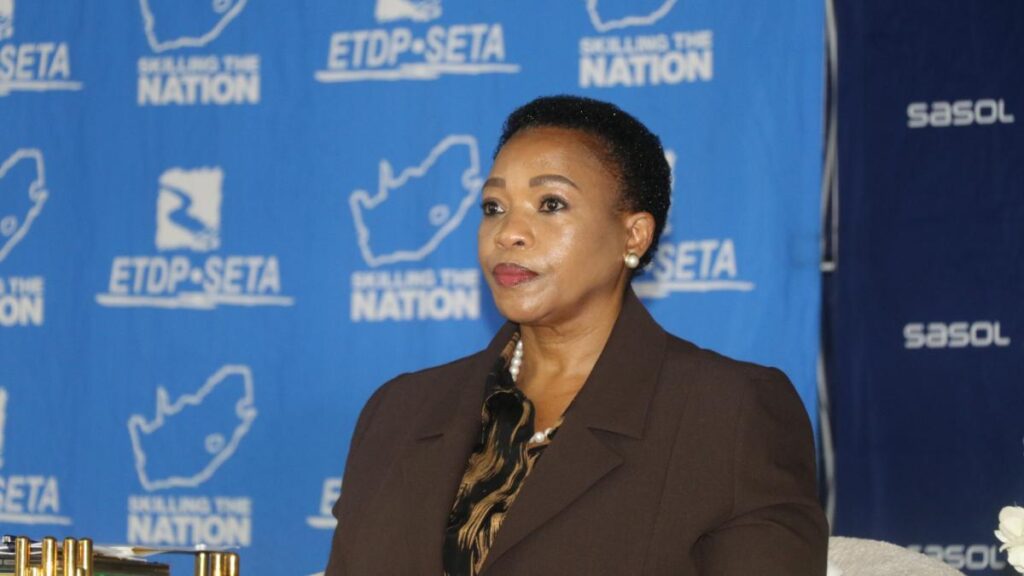
R638 million in discretionary grants at the Education, Training, and Development Practices Sector Education and Training Authority (ETDP SETA) vanished.
On Sunday, 22 March 2026, City Press reported that the Auditor-General of South Africa (AGSA) flagged unaccounted for funds at the ETDP SETA.
“I was unable to obtain sufficient appropriate audit evidence for discretionary grants expenditure, stated at R637 646 000,” the AGSA said.
These funds were intended to support critical skills development programmes, including bursaries, internships, and work-integrated learning opportunities.
The audit revealed that the SETA did not maintain accurate and complete records to support the transactions recorded for the massive grant allocation.
City Press reported that its record-keeping was so poor that it could not confirm the validity of the discretionary grants expenditure.
Karabo Khakhau, the DA’s deputy spokesperson on Higher Education and Training, slated the situation.
The party has written to the Chairperson of the Portfolio Committee on Higher Education and Training.
They urgently called for the entity’s leadership to appear before the committee to answer for this shocking failure of governance.
Khakhau said that instead of using these funds to help young people, they have effectively vanished without proper oversight or accountability.
“This is an administrative failure and a direct betrayal of young people who rely on SETAs to access training and employment pathways,” she said.
“At a time when South Africa faces a deepening youth unemployment crisis, such gross mismanagement undermines both economic growth and public trust.”
Governance failures at the SETA

The Auditor-General exposed systemic governance failures at the Education, Training, and Development Practices Sector Education and Training Authority.
These failures include poor record-keeping, material misstatements in financial reporting, and a complete breakdown of internal controls.
Despite significant expenditure, key performance targets were not met, with some programmes utilising as little as 22% of their allocated budgets.
“This raises serious questions about whether funds were not only mismanaged but potentially misappropriated,” said Khakhau.
Equally concerning is the apparent absence of consequence management at the Sector Education and Training Authority.
“The report indicates that no consistent disciplinary action has been taken against officials responsible for irregular or wasteful expenditure,” she said.
“This entrenches a culture of impunity within an institution tasked with empowering the next generation.”
She added that the entire SETA system looks to be a massive scheme for misappropriation where billions disappear.
SETA under siege

There has been widespread criticism about the Sector Education and Training Authorities due to widespread corruption and mismanagement.
The Organisation Undoing Tax Abuse (OUTA) has been one of the most vocal critics of the SETA system.
The organisation has frequently described it as a cesspool of corruption and a monument to mismanagement.
OUTA argues that many SETAs have been hijacked by bureaucrats and politically connected networks.
They highlighted that of the 21 SETAs, only 9 received clean audits in the last cycle, while several received qualified opinions for years on end.
It has reached such concerning levels that President Cyril Ramaphosa called for a fundamental overhaul of the system.
Ramaphosa stated bluntly that the SETA system has not served South Africa well at all and must be replaced.
He is pushing for a model that integrates academic learning with practical workplace experience, citing the dual system used in countries like Germany and Switzerland.
As part of the reform, the government plans to reduce the number of SETAs. The goal is to improve governance and reduce the administrative rot.
The President noted that too much time has been spent on stabilizing governance rather than actual training.
He has directed the Department of Higher Education to remodel the landscape to ensure it is more responsive to the private sector.






Comments