Dawie Roodt’s VAT hike warning for South Africa


The only option available to the South African government to raise taxes is a value-added tax (VAT) increase, with the state’s other major sources of revenue being highly concentrated and fragile.
This does not make a VAT increase politically popular. However, as the government’s finances come under increasing pressure, it may have to pull this lever to raise additional revenue.
SARS’ efforts to squeeze more from a stagnant economy have yielded results in recent years, but are unlikely to stave off the need for additional revenue in the coming years.
The only way for the state to sustainably grow its tax revenue without rate increases is to ensure the economy grows much faster.
However, this is unlikely in the coming years, as South Africa’s economic growth is forecast to remain below the 3% threshold, above which it becomes meaningful in terms of additional tax revenue and employment.
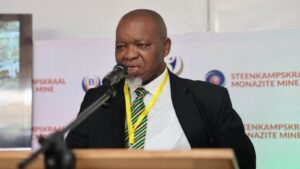
This leaves a VAT hike on the cards in South Africa, Efficient Group chief economist Dawie Roodt told attendees at the recent BizNews Conference.
Roodt explained that South Africa’s tax base is exceptionally narrow, with a tiny proportion of individuals and companies contributing the majority of the government’s revenue.
“The second most important source of tax revenue for the government is VAT, which makes up 30% of all revenue. This is the only tax that South Africa can potentially increase to give the state more money,” Roodt said.
“This is because personal income tax, the most important source of revenue, and corporate income tax are already over the Laffer Curve.”
The Laffer Curve is an economic concept illustrating that there is an optimal tax rate that maximises government revenue without stifling economic activity.
It shows that when tax rates are too high, reducing them can actually increase tax revenue by boosting economic growth, work incentives, and reducing tax avoidance. The opposite occurs when tax rates are raised beyond the optimal point.
“If you increase personal and corporate taxes, you are going to get less revenue. People are going to aggressively organise their tax affairs or emigrate or stop working,” Roodt said.
A more aggressive SARS

Alongside a potential future VAT hike, Roodt warned taxpayers to expect SARS to become increasingly aggressive in its pursuit of additional revenue for the government.
SARS has worked hard in recent years to close South Africa’s tax gap, which is estimated to be R800 billion, and generate more revenue through enhanced compliance.
The revenue service was hollowed out during the era of state capture, resulting in compliance declining significantly. Since the appointment of Edward Kieswetter as commissioner in 2019, this capacity has largely been rebuilt.
However, this renewed capacity has come with more pressure from the government to collect additional revenue from the existing tax base.
Roodt warned that this is likely to see SARS become more aggressive in dealing with taxpayers in the coming years.
“The President has celebrated that SARS has become a world-class institution once again,” Roodt said earlier this year.
“Unfortunately, the reason why SARS is doing so well is that there is huge pressure on the organisation from the Finance Minister.”
“There is huge pressure on SARS to squeeze as much money as possible out of the economy, because the economy is not growing fast enough to provide sufficient funds to the National Treasury.”
Roodt explained that this is because South Africa’s economy has been stagnant for the past decade, resulting in little additional revenue coming into government coffers in a sustainable way.
“The Finance Minister depends on the economy to fund the state. With no economic growth, this becomes increasingly difficult,” Roodt said.
“State revenue will come under increasing pressure. It is already under pressure from decades of mismanagement and excessive spending.”
“This means that SARS will become more aggressive in trying to collect additional tax revenue to help the government bolster its finances.”
“People do not like SARS already as it is. People are aggressively trying to minimise their tax liabilities because of the heavy burden on those who do pay taxes in South Africa.”

Comments