SARS has no mercy for one group of taxpayers


SARS has intensified trust oversight, making it clear that all resident trusts must register for income tax and submit annual returns from inception, regardless of income, assets, or activity.
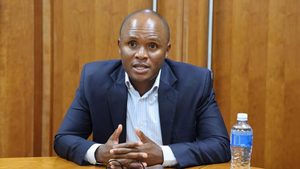
Tax Consulting SA’s Senior Manager of Trust and Deceased Estate Tax Compliance, Sidney Fletcher, explained that the South African Revenue Service (SARS) has made one thing unmistakably clear.
Every resident trust must register for income tax and submit annual returns – without exception. “Dormant? Unfunded? Inactive? Waiting for a bequest? It makes no difference,” Fletcher said.
Many trustees are uncertain about the legal requirements for registering for tax due to a misconceived rule of thumb that where there is no income, no assets, or no activity, there is no need to register for tax.
“That is simply incorrect. Tax experts confirm that SARS is tightening its compliance net around trusts, and mandatory tax registration is central to this strategy.”
Fletcher said that the SARS website is unequivocal that all trusts must register with SARS for Income Tax, whether they are resident or non-resident, active or passive, and regardless of transactions or income.
Paragraph 2(b) of Public Notice 6217 dated 23 May 2025, states that every trust that was a resident during the 2025 year of assessment must submit an income tax return, without reference to:
- whether the trust earned any gross income;
- whether it held assets or liabilities;
- whether it carried on any economic activity (active, passive, or dormant); or
- any minimum monetary thresholds.
“This differs from paragraph 2(a), which deals with companies and other juristic persons and where the obligation to submit a return is linked to income, assets, gains, or losses,” Fletcher explained.
“For resident trusts, the requirement is framed in absolute terms. There is also no exclusion in paragraph 3 for trusts similar to those available to certain natural persons or deceased estates.”
In terms of section 25 of the Tax Administration Act, read with section 66(1) of the Income Tax Act, once a trust exists and is tax-resident, it is required to submit a return by virtue of the Commissioner’s notice.
“Full stop. Dormancy does not suspend the obligation,” Fletcher warned.
No exceptions

Simply put, if a resident trust exists, it must be registered and filed. In practical terms, Fletcher explained that this means:
The trust must be registered for income tax to submit a return; and
Registration is required even for a dormant, unfunded trust, despite the practical issues this can create, including banking requirements, although registration itself can be done without bank details.
“This approach is not entirely new. The current position can be traced back to Public Notice 547 issued on 9 June 2017, which similarly required all resident trusts to submit returns, irrespective of activity.”
“Public Notice 6217 can therefore be seen as a continuation and reinforcement of that compliance stance, rather than a sudden departure.”
Overall, Fletcher said this reflects a deliberate move by the Commissioner to bring all resident trusts into the filing and compliance net administered by SARS.
In recent years, the revenue service has intensified its oversight of trusts as part of broader anti-avoidance measures.
On 9 February 2026, SARS announced that, to increase trust compliance levels, it had issued final demands to trusts that did not submit annual tax returns for the 2024 and 2025 years of assessment.
Fletcher explained that this move has long been expected and warned that these final demands should not be taken lightly.
“It is reiterated that all trusts, whether economically active or passive, are required to submit annual income tax returns in accordance with the requirements set out in the public notice,” SARS stated.
“This obligation is an operation of law and is applicable to every registered resident trust (without exception) and certain qualifying non-resident trusts.” Here, the phrase “without exception” is key.
Not having a bank account does not absolve trustees

In some cases, a trust has no bank account, is not trading, and is only expected to receive assets at a future date under a last will and testament
Some trustees may assume that, as a result, tax registration – and by extension tax compliance – can be deferred. “That assumption is often incorrect,” Fletcher said.
Even a trust regarded as “dormant” may already have triggered a submission requirement through mechanisms such as deemed donations, attribution of income, or loan account arrangements.
All of this presupposes that the trust is identifiable and registered with SARS. “In practice, loan accounts are frequently established long before a trust becomes operational.”
“Where loans are advanced by connected persons at low or no interest, section 7C of the Income Tax Act may give rise to an annual deemed donation.”
Where this happens, the donations tax is payable by the end of the month following the trust or lending entity’s year-end.
“These consequences arise regardless of whether the trust is trading, holds a bank account, or has received assets. In addition, the attribution rules may apply, further reinforcing the need for early and accurate tax registration.”
Fletcher said it is precisely this interaction between registration, deemed donations, attribution and loan funding that continues to cause uncertainty in trust administration.
For this reason, these issues will be examined in greater depth at an upcoming in-person workshop hosted by CPD Consortium in Johannesburg on 5 March 2026.
There will be a practical focus on how section 7C and related provisions operate in real-world trust structures and why early tax registration is often imperative rather than optional.
Ultimately, SARS emphasises that the responsibility for obtaining, maintaining, and updating accurate trust information rests exclusively with the trustees.
Fletcher explained that this approach will help the revenue service ensure the tax register is up to date for trusts in South Africa.
“The core misunderstanding about whether resident trusts should register for tax is assuming that economic activity triggers tax registration. For trusts, it does not.”
“The obligation arises from existence plus tax residency, not from income. SARS wants trusts visible from inception.”
Fletcher urged trustees to ensure that visibility is in place. “Those who delay registration are not exercising caution; they are exposing themselves to risk.”




Comments