Devastating impact of burning down a Denny Mushrooms factory


Around four years after a devastating fire ravaged buildings at Libstar’s Denny Mushrooms facility, the company is implementing a portfolio simplification strategy to ensure its long-term growth prospects.
This strategy has included a move away from fresh produce offerings toward value-added and convenience products.
Founded in 2005, Libstar initially operated as a decentralised holding company and was known as a private-label and brand aggregator.
However, as the years progressed, so did the company’s strategy, and its portfolio grew significantly through mergers and acquisitions.
A shift took place in 2018, when the company transitioned to a more organic strategy, focused on manufacturing some of the brands in its portfolio.
Between 2018 and 2021, Libstar built out its capability and re-invested to become an efficient, low-cost manufacturing company.
However, in September 2022, the company suffered a severe blow when a massive fire broke out at its Denny Mushrooms Shongweni facility in KwaZulu-Natal.
A case of malicious damage to property was opened for investigation, with farm workers suspected of deliberately starting the fire.
Following this fire, the plant never resumed operations and, a few months later, Libstar announced its decision to permanently close the facility.
At the time, the company explained that the facility had been operating at a sustained loss due to structural production challenges, including rising input costs, resource constraints and biosecurity pressures.
Over 300 permanent employees were impacted by this closure, while hundreds of casual workers also lost their jobs.
This closure also marked the start of another strategic shift in Libstar’s operations, with the company now focused on simplifying its portfolio and pivoting to investments in high-value-added, higher-growth food categories.
Today, Libstar’s aim is to have a portfolio of world-class businesses focused on value-added food products, delivered to industry-leading customers and through market-leading brands.
This pivot has involved exiting some of its fresh food operations, including closing Libstar’s Phesantekraal farm in the Western Cape in end-2025.
Strategic pivot

Libstar CEO Charl de Villiers told Daily Investor that the fire at the Denny Mushrooms Shongweni facility was one of several operational challenges experienced by the company’s fresh mushroom business over a number of years.
“As part of a deliberate, multi-year strategy, we have been simplifying our portfolio to focus on food categories with stronger long-term growth prospects,” he explained.
He specified that Libstar’s decision to dispose of its fresh mushroom operations, effective 1 December 2025, formed part of this broader strategic realignment and was not driven by any single event, like the fire.
This disposal saw Libstar sell its active farm in Gauteng, as well as its non-operational Shongwenu property in KwaZulu-Natal, leading to a loss of between R45 million and R55 million.
Libstar also closed its Phesantekraal facility in the Western Cape around the same time to limit further losses.
“The closure of the Phesantekraal farm in the Western Cape was similarly aligned to this portfolio optimisation programme. The property remains earmarked for divestment in due course,” De Villiers said.
He further specified that Libstar continues to produce and market value-added Denny-branded products, including sauces, soups and stocks.
“Our group remains focused on strengthening our portfolio, improving operational efficiency, and delivering sustainable long-term value,” he said.
Other measures the company has taken to simplify its portfolio include exiting non-food businesses, with only Contactim, a manufacturer of cleaning and plastic products, remaining.
Libstar is also in the process of exiting its 60% shareholding in Umatie, a producer of fresh and frozen baby food.
“These portfolio and operating model simplifications will be substantially complete by year-end, fulfilling the objectives set out in mid-2023 to create a significantly simplified group structure,” the company said in its latest interim results.
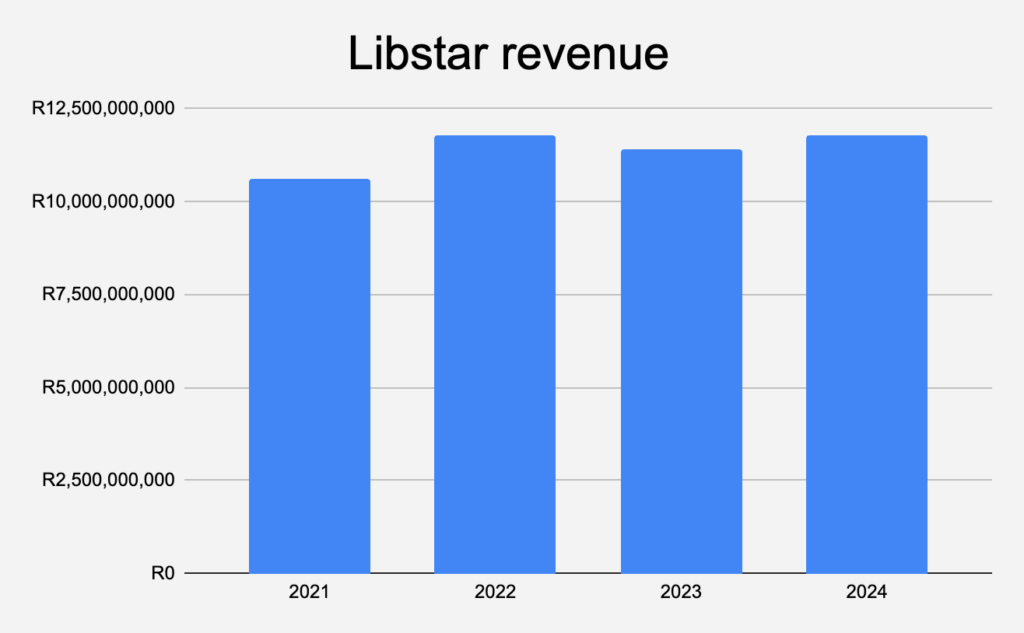
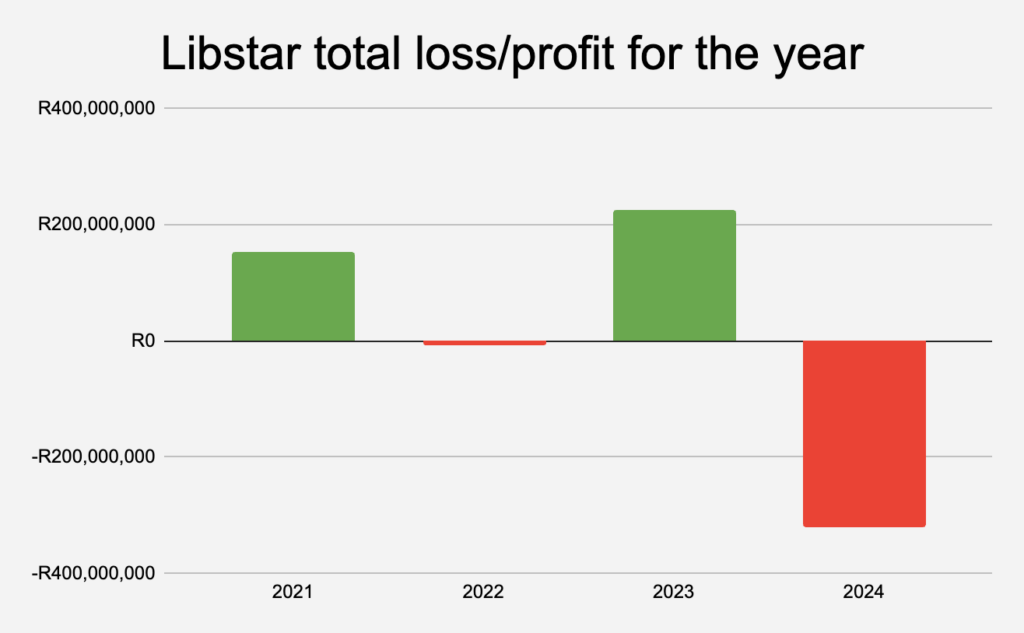
These strategic shifts have taken their toll on Libstar’s finances, as shown in the charts below.






Comments