South Africa is running out of options


South Africa’s lack of export complexity is making the country’s goods less competitive than those of many of its global peers.
This means South Africa’s export base is narrowing, exacerbating the impact of United States tariffs and other trade restrictions on the country’s exports.
This is also symptomatic of South Africa’s overall economic decline, with the country needing drastic reform, rather than incremental progress, to break out of its low-growth trap.
This is feedback from Anchor Capital economist Casey Sprake, who recently outlined the drastic decline in South Africa’s economic fortunes.
Sprake explained that, while the country’s small, open economy makes it highly vulnerable to external shocks, its real difficulties are homegrown.
“Over the past two decades, growth has collapsed from above 4% in the mid-2000s to near stagnation,” Sprake said.
“Productivity fell sharply as state-owned enterprises (SOEs) absorbed vast resources while delivering little economic return.”
“This was the hallmark of the ‘state-capture decade’ after 2010, when governance failures and resource misallocation crowded out private investment.”
One signal of this decline is South Africa’s export complexity, which Sprake explained is an indicator of how diverse, knowledge-intensive, and sophisticated an economy’s export basket is.
In the case of South Africa, this indicator has weakened markedly over the past few decades. According to the Observatory of Economic Complexity, South Africa ranked 34th in 2000 and has since fallen to 59th place.
Sprake explained that this decline in export complexity reflects a narrowing export base, with South Africa increasingly relying on raw materials and basic commodities.
This comes at the expense of higher-value, more sophisticated products, and points to a deeper erosion of the country’s competitiveness and productive capacity.
To address this lack of export complexity and enhance its competitiveness, South Africa could focus its efforts on increasing beneficiation, which the government has championed for years.
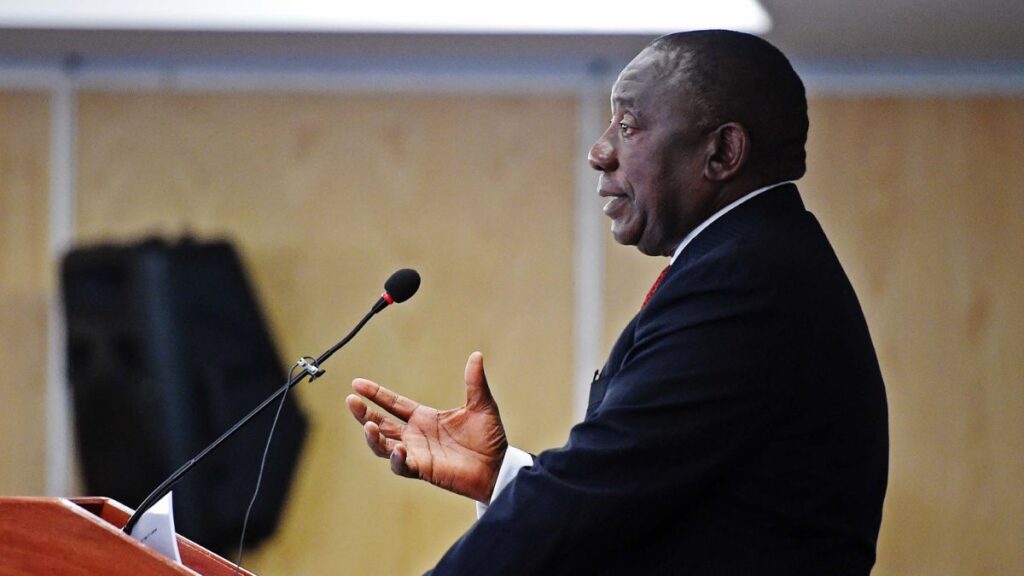
President Cyril Ramaphosa told delegates at the 2025 World Economic Forum in Davos that there is a need to promote beneficiation and local value addition of resources at source.
This, he said, would result in an additive rather than an extractive relationship.
However, experts have pointed out that South Africa’s many other economic constraints make this far easier said than done.
South Africa under pressure
One of the many factors weighing on local companies that makes increased beneficiation challenging is the country’s high electricity prices.
While electricity supply was a more pressing issue in the past few years, attention has now turned to the exorbitant price of electricity in the country.
Minerals Council of South Africa economist André Lourens told Daily Investor earlier this year that Eskom’s high electricity prices significantly affect the local mining industry’s competitiveness and profitability and, therefore, its sustainability.
South Africa’s electricity prices have consistently increased above the inflation rate since 2008.
According to calculations from Momentum Investments, electricity prices have risen by over 600% since January 2008, compared to a headline inflation rate of 139% over the same period.
Lourens explained that these significant price increases would see mining companies reduce their consumption of Eskom electricity, switch towards cheaper renewables and improve the efficiency of their equipment.
Some companies may also assess whether operations still make sense in this high electricity cost environment.
“And as government champions beneficiation, they must know that this is highly unlikely given high and ever-increasing electricity tariffs,” Lourens said.
In addition, even if greater beneficiation can be achieved, South Africa’s severe logistical challenges make it difficult to even bring these products to the global market.
Sprake said South Africa’s ports and rail networks have suffered years of underinvestment and mismanagement, raising costs for exporters and reducing efficiency.
She explained that while some progress has been made in implementing reforms, these gains remain fragile and uneven.
The decline of the country’s logistics infrastructure has not only made it difficult for companies to export their products but also eroded confidence in South Africa’s economy, discouraging investment.
Sprake said the combined effect has been a damaging feedback loop. “Structurally, energy shortages and infrastructure bottlenecks have placed binding constraints on the economy,” she said.
“Cyclically, rising borrowing costs have raised the hurdle for new investment. Politically, governance failures and the legacy of state capture have undermined confidence further.”
“Weak investment has driven down productivity growth, which in turn slowed overall GDP growth, further discouraging investment.”
Now, she said, South Africa needs to embrace bold reforms and decisive action, rather than incremental progress, or risk stagnation becoming entrenched. This includes –
- Raising investment by cutting red tape and lowering the cost of doing business.
- Restructuring SOEs, especially in energy, logistics, and transport, to restore productivity.
- Rebuilding competitiveness by diversifying exports and improving infrastructure.
- Anchoring macroeconomic policy with credible, well-coordinated fiscal and monetary frameworks.
“The choice ahead is between persisting with incremental progress that leaves the economy adrift, or embracing bold reforms that can restore confidence, attract investment, and put growth back on a sustainable trajectory,” she said.



Comments