South Africa’s hottest property market – and it’s not the Western Cape


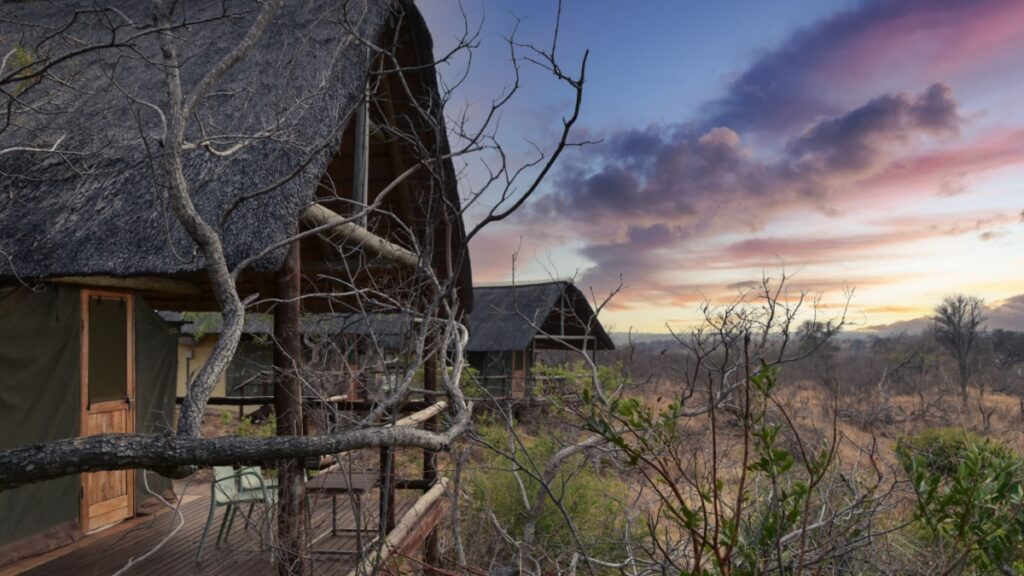
Limpopo currently has the highest property inflation rate and rental growth in South Africa, beating major provinces like Gauteng and the Western Cape.
PayProps Rental Index for the second quarter of 2025 revealed that Limpopo is South Africa’s “hottest rental market”, with rents growing 12.5% year-on-year. This marked the third consecutive quarter of double-digit growth.
In comparison, South Africa’s economic hub, Gauteng, only had a 2.4% annual rental growth. The Western Cape, which is widely considered to have the best property market in the country, grew rents by 7.3%.
The average rent in Limpopo was R9,145, an increase of more than R1,000 compared to the second quarter of 2024. This is only slightly below the national average of R9,218.
That increase bumped Limpopo from the sixth most expensive province for tenants a year ago to fifth place, overtaking Mpumalanga.
PayProp predicts that Limpopo could climb further up the table later in 2025. Its average rent is now just R94 behind fourth-placed Gauteng, and R127 behind third-placed KwaZulu-Natal.
Limpopo’s property market boom is not limited to rentals. According to Seeff Property Group, provinces across the north of the country are experiencing strong sales due to their strong and growing agriculture, mining and tourism sectors.
That extra demand has pushed sale prices in Limpopo up by 7.5% over the past year. In Polokwane, the capital, the average price has gone from R580,000 a decade ago to around R1.5 million in 2025.
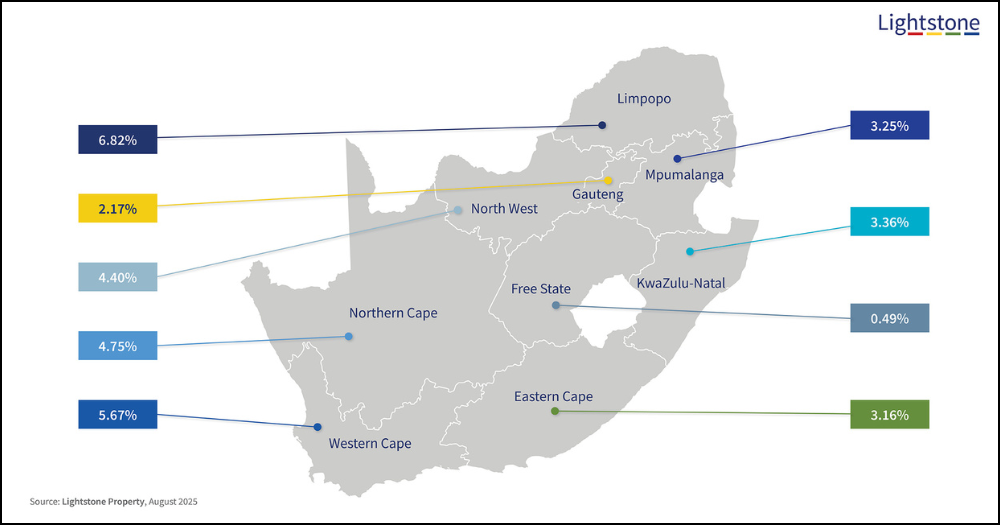
Lightstone also recently noted that Limpopo is “the hottest province currently”. Its property inflation rate is the highest in the country, at 6.82%. This is followed by the Western Cape, at 5.67%, and the Northern Cape, at 4.75%.
Safari living fuels property boom
According to Lightstone, Limpopo’s high property inflation rate has been fuelled by transactions in towns like Hoedspruit and Maruleng, where there has been strong demand for holiday homes, safari properties, and semi-rural living.
Given that the Kruger is located in the province, it has a unique value proposition and can benefit from safari tourism.
Global Growth Insights has estimated that luxury safari tourism alone will reach $1.56 billion (R27.35 billion) in 2025 and rise to $2.89 billion (R50.25 billion) by 2033.
A report by Grand View Research valued South Africa’s safari tourism market at an estimated $11.7 billion (R203.14 billion) in 2023.
This market is projected to almost double in value, reaching an estimated $23.1 billion (R401.09 billion), by 2030, reflecting a compound annual growth rate of 9.8%.
Recent market analysis projects that luxury and niche tourism growth could increase South Africa’s tourism sector’s contribution to GDP to 10.8% by 2034, creating over 720,000 new jobs in the process.
Developers have also been tapping into this trend by building wildlife estates, which are seeing increasing demand from both locals and foreigners.
“While Limpopo is at the low end when it comes to volume and value, and mid-low in terms of population, GDP and GPI, its unique bushveld product pushes property inflation higher than the in-demand Western Cape,” Lightstone explained.
However, the province’s property market still faces some challenges. Lightstone explained that approximately 15% of Limpopo’s population lives in properties registered at the Deeds Office.
This reflects a significant, informal, and tribal-land-based housing market that is underserved and under-registered.
“This ‘property drought’ limits supply in the formal segment, contributing to inflation as demand outpaces legal and serviced housing availability,” Lightstone said.





Comments