Rand rally brings good news for interest rate cuts in South Africa


The rand is on a roll, as a weaker dollar and investor interest in South Africa have buoyed the local currency.
This strength not only spells good news for upcoming interest rate cuts in South Africa but is also set to continue as the United States Federal Reserve is set to cut rates twice more in 2025.
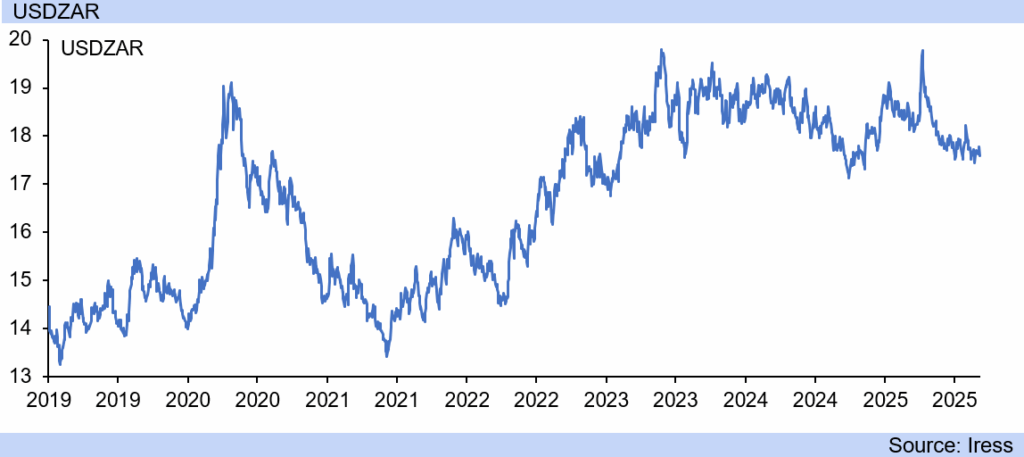
Investec chief economist Annabel Bishop pointed out that the rand reached R17.52/USD on Friday, 5 September.
This is largely due to a weaker US dollar, as the greenback took a hit following the release of weaker-than-expected US employment data.
This sign of weakness in the United States economy has fueled expectations for another interest rate cut this year.
The Fed is expected to step in to boost the economy through interest rate cuts rather than keep rates high to temper inflation.
Historically, the US has preferred to cut interest rates in response to an expected economic slowdown rather than weather the storm of subdued growth.
Therefore, market expectations for a 25 basis point cut in US interest rates for September have risen to above 100%.
In response, the US dollar weakened, with Bishop explaining that interest rate cuts in the United States tend to cause some outflows.
In turn, risk assets like emerging market bonds and stocks benefit, and so the US dollar’s weakness is continuing to strengthen the rand.
While the rand did not have enough momentum to break through the R17.50/USD resistance level, Bishop believes things are looking up for the local currency.
This is because, in addition to the interest rate cut priced in for the United States for September, markets are expecting a second cut in October.
Bishop said even a third 25 basis point cut is seen as increasingly likely in December, which has been weakening the US dollar further.
For South Africa, this could translate into not only a stronger rand but also another interest rate cut later this year.
The graph below, courtesy of Investec, shows the rand’s performance against the US dollar between 2019 and 2025.
Interest rate cuts incoming
South Africa’s Monetary Policy Committee (MPC) will also meet in September, the day after the Fed’s meeting, to decide the fate of the country’s interest rates.
Bishop expects the Reserve Bank’s MPC to cut South Africa’s repo rate by 25 basis points again, either in September or November.
The FRA (Forward Rate Agreement) curve has fully priced in a 25 basis point cut for the remainder of this year, but not a second cut.
This means the United States is set to cut its interest rates significantly more than South Africa this year, which spells good news for the rand.
This is because lower interest rates in the United States would make South African bonds, with higher rates, more attractive to investors. In turn, money flooding into local bonds would strengthen the rand.
Bishop explained that South African bonds have some momentum of their own as well, and the rand has benefited from the drop in the credit default swap spreads for South Africa this year.
She said South Africa has seen its credibility default swap spreads drop from 193 at the start of the year to 170 currently, and emerging markets have generally seen a lowering in this risk measure.
She further pointed out that foreigners remain net buyers of South African bonds, purchasing R13.8 billion net of sales this month so far, and R25.3 billion last month.
In addition, bond yields have moderated in South Africa, as inflation expectations have fallen and further interest rate cuts have been factored in.
“The US and SA are both still in interest rate cut cycles, but the US is set to cut its interest rates significantly more than the Reserve Bank in South Africa this year, and so the rand has gained, and this may allow for some further rand strength,” Bishop said.






Comments