Telkom back on the menu for South African investors after R4 billion turnaround


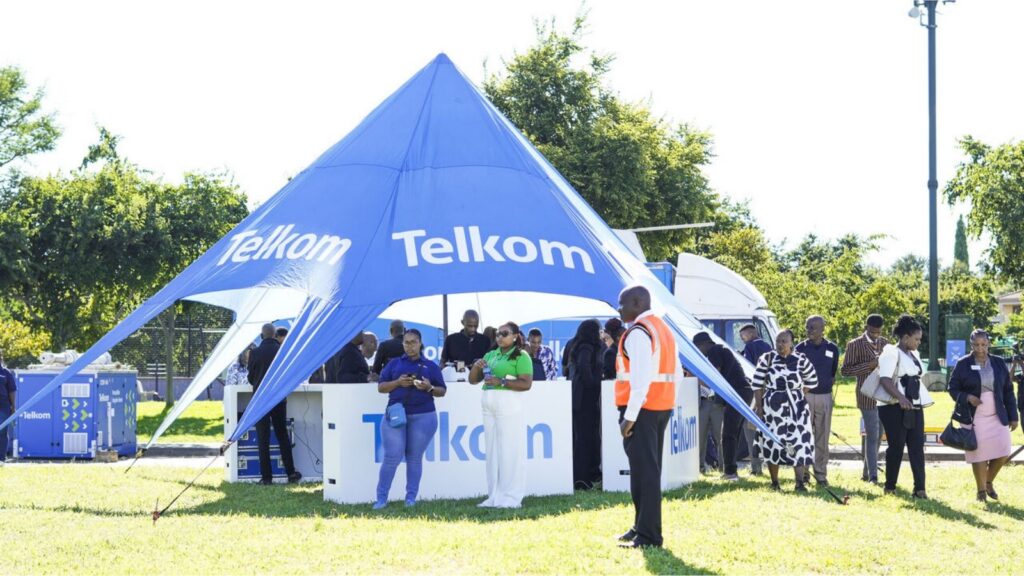
After the implementation of its multi-year turnaround strategy, Telkom’s stock appears increasingly attractive for investors again.
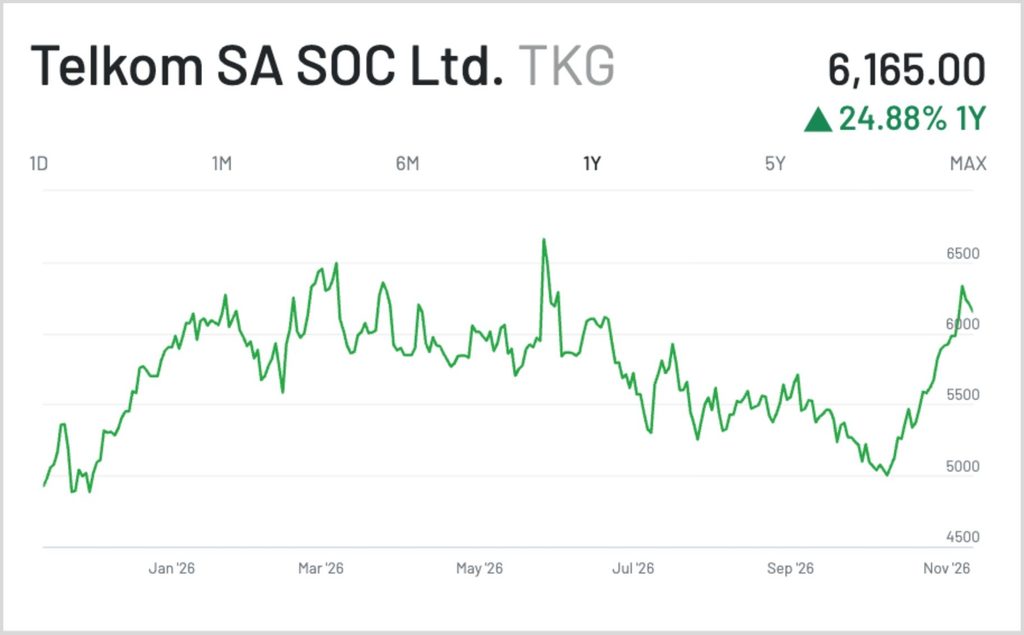
Now operating profitably and with its share price up 24% over the past year, Telkom can serve as a good defensive stock in a volatile environment.
This is the view of L7 Prime co-founder Shaun Dendere, who chose Telkom as his stock pick in an interview with BusinessDayTV.
In the past three financial years, Telkom has shown a substantial recovery from the lows it experienced in prior years.
This turnaround was Telkom’s second in the past decade, with the telecommunications giant struggling both financially and operationally for years.
This was mainly due to Telkom’s historic crown jewel, its fixed-line copper voice and ADSL, having eroded rapidly as technology improved and these assets became outdated.
While South Africa’s telecoms players were pivoting to a more data-centric world, Telkom held on to its legacy assets and voice offerings.
However, the erosion of its historic cash cow started to bite Telkom in the early 2010s, and its business required a major overhaul between 2013 and 2019.
One major part of this turnaround was cutting jobs, with Telkom reducing its headcount from 21,200 in 2023 to 12,500 in 2017.
These retrenchments brought employee costs as a share of revenue down from 29% in 2013 to 24%.
Telkom also rebranded its loss-making 8.ta business as Telkom Mobile during this period and launched its disruptive data-centric FreeMe bundles in 2016.
This scaled its subscriber base to 10 million by 2019, which was considered a major milestone for the telecoms giant.
In addition, to diversify into enterprise services, Telkom separated its wholesale network into two business segments in 2015: Openserve and BCX.
While these efforts served Telkom well for a few years, it ended up right back where it started in 2022.
This was primarily due to the company’s ballooning debt, which had peaked at R14.3 billion in the 2023 financial year.
That same year, Telkom had to write down R13.2 billion in impaired legacy assets, resulting in a net loss of R9.97 billion.
Second turnaround and analyst opinion
To address these issues, Telkom accelerated the shut-off of its legacy copper networks while expanding Openserve’s fibre footprint.
It also deployed new spectrum acquired in 2022 and built out its mobile base stations to curb third-party roaming fees.
One of the biggest moves was selling its masts and towers subsidiary, Swiftnet, in 2025, raising R4.4 billion, which was used to pay down its debt. Telkom also sold more than 100 properties.
These interventions got the job done: the company returned to profitability, de-risked its balance sheet, and reinstated dividends in FY25.
These turnaround efforts also came at a cost. Telkom spent R4 billion on severance and organisational streamlining across both phases alone.
On top of this, it had R13.2 billion in accounting write-offs and paid R6 billion a year in sustained infrastructure capex to rebuild its network for a data-driven market.
However, Telkom is now in a far healthier position than it was prior to these efforts, with its 2026 financial year showing clear evidence of its recovery – and investors are taking note.
Dendere said he chose Telkom as his stock pick because its FY26 results showed that the company was performing well.
“They have taken an interesting strategy in the past three years where the business, in my opinion, has had a nice turnaround,” he said.
In FY26, Telkom reported that its revenue from continuing operations grew by 1.36%, while its EBITDA rose by 13.31% to R12.48 billion.
While it saw a 52.71% decline in profit, this was due to the high 2025 base, boosted by the Swiftnet sale.
Telkom still made a profit of R3.55 billion, and its earnings per share rose by 27.12% to 719.5 cents.
“If you look at the steady growth in their revenue, their share price, and acquisition of clients, we do see that their mobile data business is obviously increasing,” Dendere said.
“In times like this, with a lot of volatility and uncertainty, they do also have quite a healthy balance sheet.”
Telkom reported in FY26 that it now holds more cash than it owes in interest-bearing debt, a notable turnaround from just five years ago.
“It is a good, defensive stock to hold while we navigate the economy and the geopolitics and local politics at large,” Dendere said.
Login or register for unlimited free access.