The R11.83 billion deal that gave Johann Rupert’s right-hand man grey hairs


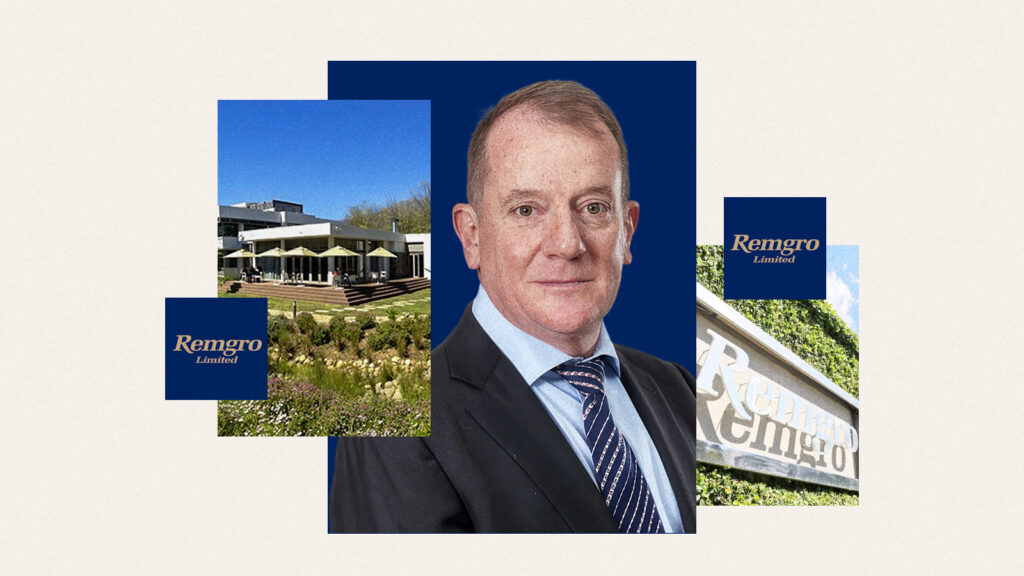
Remgro CEO Jannie Durand said the company’s deal with Vodacom gave him grey hair, but it has finally been put to bed after three years.
Now, he said, the deal is starting to bear fruit for Remgro, with more benefits expected to follow in the coming years.
Durand shared these comments in an interview with BusinessDay TV following the release of Remgro’s results for the 2026 financial year.
The CEO explained that sealing the deal with Vodacom was a difficult process, “that has probably given me the most grey hairs”.
“So, we’re so glad to put it finally to bed, and we can see it already bearing fruit in the results that you’ve just seen coming through now,” he said.
First announced in November 2021, the deal saw Vodacom acquire a 30% co-controlling stake in Maziv, whose parent company is Community Ventures Investment Holdings (CIVH).
Remgro owns a 57% stake in CIVH, and Maziv was established as a subsidiary to facilitate the transaction with Vodacom.
Maziv was created as a holding entity to house all of CIVH’s fibre assets, including Vumatel and Dark Fibre Africa.
Holding a stake in this open-access fibre juggernaut will allow Vodacom to significantly expand its digital infrastructure and accelerate high-speed fibre connectivity across South Africa.
Vodacom was willing to sink billions into the deal to make this happen, with the total transaction valued at R11.83 billion.
This consisted of R6.1 billion in up-front cash and R4.9 billion worth of Vodacom’s existing metro and last-mile fibre assets, all of which were transferred to Maziv.
The telecoms giant also committed additional capital after Maziv acquired a 49.93% stake in Herotel from CIVH.
The Herotel transaction was tacked on to the broader deal to consolidate CIVH’s regional and rural fibre networks under Maziv.
Therefore, to maintain its 30% holding following the Herotel acquisition, Vodacom contributed R825 million in cash for additional Maziv shares.
The uphill battle

While the deal was announced in November 2021, its terms were only finalised in 2023, with all the parties signing on the dotted line in November of that year.
The transaction hit a major hurdle in August 2023, when South Africa’s Competition Commission recommended that the deal be blocked.
The Commission suggested that the Competition Tribunal reject the deal, citing concerns that it would reduce competition in the fixed broadband market.
The Commission and the Tribunal were concerned that the deal would essentially create a fibre duopoly, dominated by MTN and Vodacom.
Thus, the Tribunal blocked the deal in October 2024, ruling that it would substantially prevent or lessen competition.
However, Remgro and Vodacom did not take this rejection lying down, with both companies updating concessions and making additional capital commitments to help the deal go through.
South Africa’s Trade, Industry, and Competition Minister, Parks Tau, also stepped in to voice his approval of the deal, hoping to overturn the Tribunal’s decision.
These efforts paid off, and the Competition Commission announced that it would no longer oppose the merger.
The Competition Appeal Court made this official in July 2025, granting its approval subject to expanded public interest conditions.
Vodacom and Remgro received all the remaining green lights in November 2025, with the deal finally implemented on 1 December 2025. This is when it started to bear fruit for Remgro.
Remgro raking in the cash
On the same day the deal was finalised, Vodacom injected R6.1 billion in cash and transferred its R4.9 billion in assets to Maziv in exchange for its 30% stake.
CIVH also distributed a R2.66 billion pre-implementation dividend to Remgro. In June 2026, Remgro received a secondary dividend of R394 million following the completion of the Herotel deal.
In total, Remgro received R3.06 billion in pre-implementation dividends from CIVH.
In the 2026 financial year, CIVH’s contribution to Remgro’s headline earnings swung from a loss of R93 million in 2025 to a profit of R319 million.
In addition, the transfer of Vodacom’s fibre assets saw Vumatel’s operating profit surge 57% to R2.16 billion.
Similarly, Dark Fibre Africa reported a 10.1% increase in operating profit to R1.24 billion.
All of this translated into a highly profitable year for Remgro, with 2026 also seeing its R15.7 billion Mediclinic deal finalised.
Durand explained that these two deals alone have significantly enhanced Remgro’s profitability, with management now able to focus on Maziv’s operational performance and growth opportunities.




Comments