Well-known South African company goes from hero to zero


Blu Label Unlimited (Blu Label), which owns a significant stake in Cell C, has seen its share price increase rapidly, only to plummet at a similar rate.
The company’s share price is closely tied to the prospects of Cell C, which was listed on the Johannesburg Stock Exchange (JSE) on 27 November 2025.
To understand Blu Label’s volatility this year, it is important to go back to its roots and when it was first listed on the JSE.
Blu Label is a digital distribution company, specialising in prepaid products and the electronic distribution of virtual merchandise.
The company, formerly known as Blue Label Telecoms, was listed on the Johannesburg Stock Exchange (JSE) in 2007.
Its share price increased by 147% over the first decade, reaching a high of R21 per share with a market cap of R19 billion.
However, its upward trajectory was abruptly ended after it acquired a 45% stake in Cell C in August 2017 for R5.5 billion.
Blu Label has big plans to turn the struggling mobile operator around, but it has failed to improve its financial and operational performance.
Cell C has been a drag on Blu Label’s results ever since, and in 2020, it was forced to write down its investment in the mobile operator to zero.
It decided to have a second bite at the cherry, and in 2022, it concluded a second recapitalisation deal to reduce the operator’s R7.3 billion debt burden.
It appointed a new Cell C board, a new CEO, Jorge Mendes, and a new management team. Cell C also changed its operating model to become a Capex-light company.
These changes were much more successful than the 2017 turnaround strategy, and Cell C’s financial performance improved.
Cell C listed on the JSE
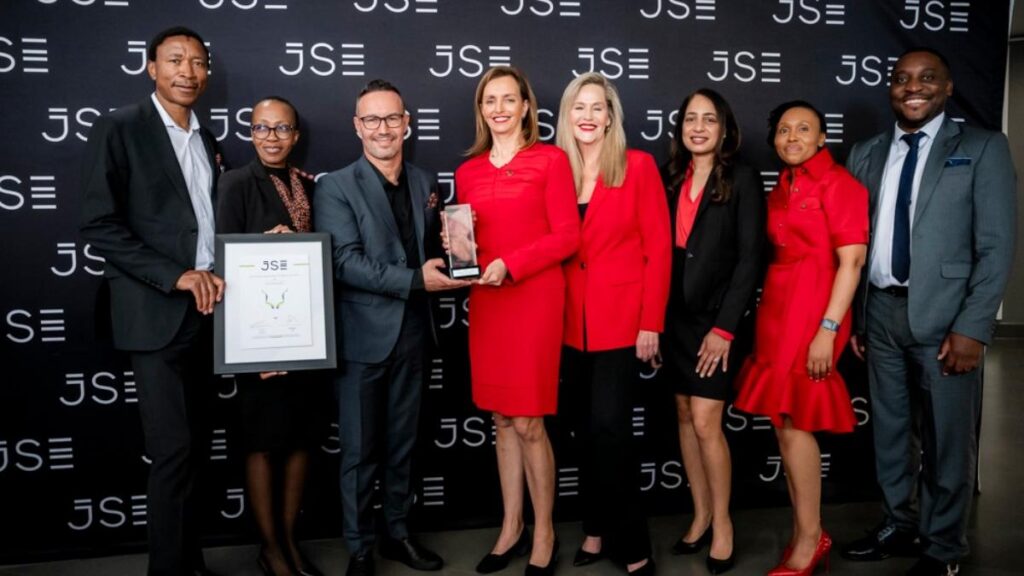
The final part of Blu Label’s strategy was to list Cell C on the JSE to ensure it covers its debt and investment in the operator.
Cell C launched an initial public offering (IPO), which closed on 21 November 2025. Support for the IPO was underwhelming.
Cell C and BLU subsidiary The Prepaid Company (TPC) targeted gross proceeds of up to R6.5 billion from the sale of shares, including an overallotment of R338 million.
Cell C said the proceeds would be used to settle interest-bearing borrowings and other debt obligations. Simply put, Blu Label will get most of the money.
However, it did not achieve these targets. Blu Label initially targeted an offer price between R29.50 and R35.50 per share.
This share price range would have implied a market capitalisation of between R10 billion and R12 billion.
However, following the bookbuild process, Blu Label Unlimited approved a final Offer Price of R26.50 per offer share.
Simply put, demand was significantly lower than anticipated, and Cell C only sold a portion of the shares available during the IPO.
It only raised R2.7 billion, much lower than the planned R6.5 billion. It also meant that Cell C has a significantly lower market cap than initially anticipated.
Cell C started trading on the JSE on 27 November 2025 at an opening price of R27 per share, with a market capitalisation of R9 billion.
Cell C CEO Jorge Mendes said this listing has been “24 years in the making” and that it was the beginning of a new journey for the mobile operator.
Blu Label went from JSE hero to zero in six months

The Cell C turnaround and planned JSE listing were good news for Blu Label, and investors were enthusiastic about the story.
Between February 2024 and August 2025, Blu Label’s share price increased by approximately 400% as investors saw its Cell C issue resolved.
In the four months leading up to August 2025, Blu Label’s share price increased by 77% as the positivity around the Cell C listing increased.
However, over the next three months, it gave back all the share price gains made over the previous four months.
The biggest drop occurred after the company released its full-year financial results for the period ended 31 May 2025.
Analysts highlighted that the sharp share price drop was linked to the rapid share price rise over the last year and very high market expectations.
Investors were expecting spectacular results, and although Blu Label produced good results, they fell short of the high expectations.
Another concern was that the big net profit increase was linked to the reversal of historical impairments related to Cell C’s debt.
Analysts and investors viewed these as non-cash, accounting-driven paper profits rather than profit from improved underlying operational strength.
Blu Label’s slow revenue growth was another concern highlighted among investors, who sought more from the company’s core operations.
The last issue was that the Blu Label board elected not to declare a dividend, which disappointed some shareholders.
Between 21 August 2025 and 28 November 2025, the day of Cell C’s listing, Blu Label’s share price declined by 43%.
The chart below shows the Blu Label’s share price over the last six months, showing its rapid rise and equally rapid decline.






Comments